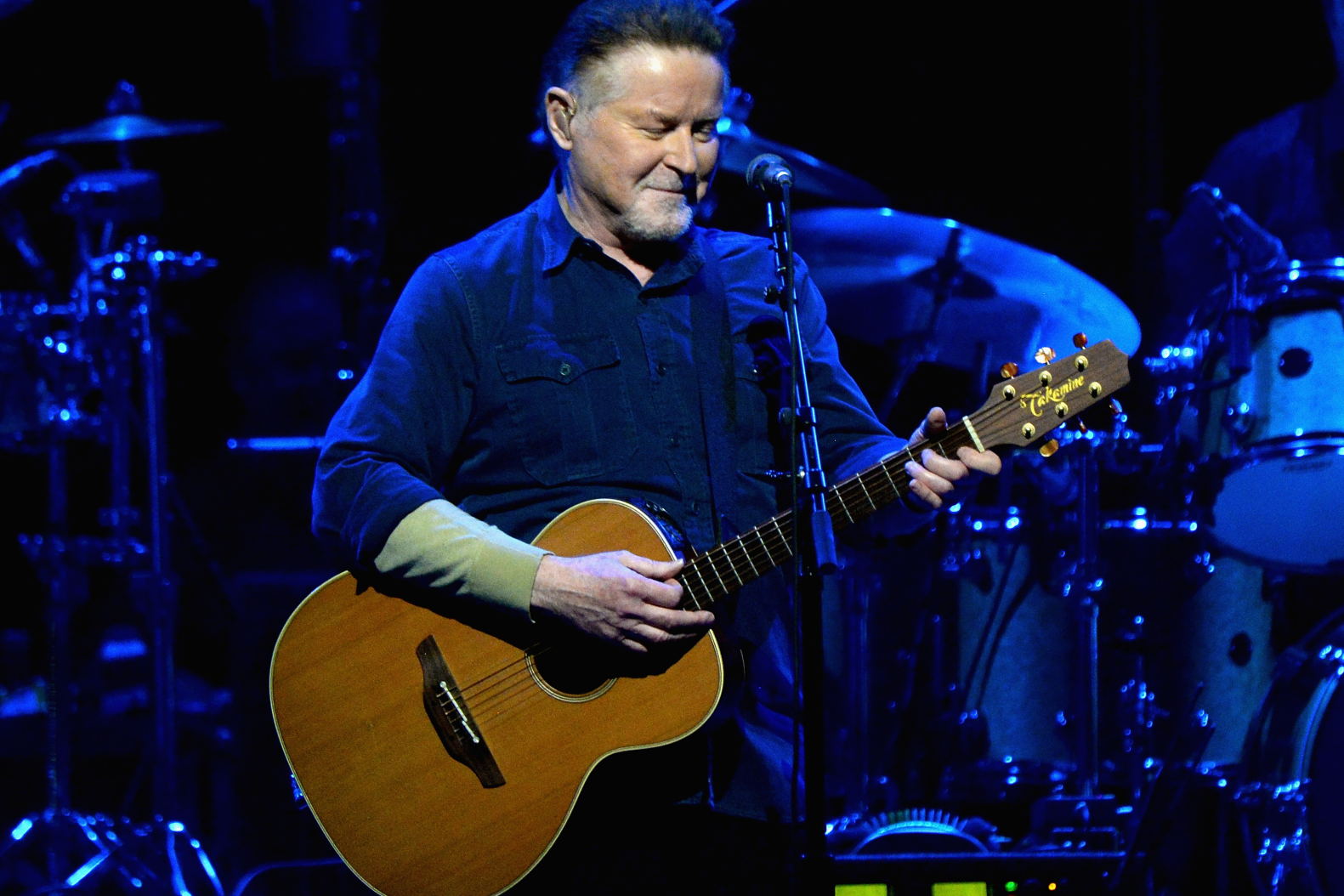
It was a night wrapped in velvet shadows, the kind of evening where memories felt closer than air. The stage lights at the Forum in Los Angeles burned low, painting the room in muted gold, as Don Henley stepped to the microphone. He had stood there thousands of times before, yet this time his shoulders carried something heavier than age, heavier than fame. It was the weight of silence — the things left unsaid to a man he once called brother.
The crowd knew why they had come. A tribute, they called it. A night to honor Glenn Frey, gone far too soon, the co-founder of the Eagles, the restless spirit behind so many anthems of America’s long highways and long heartbreaks. But no one knew that Henley had brought something of his own to bury that night — not flowers, not a speech, but a confession that had gnawed at him for years.
He stood still, eyes closed, fingers gripping the mic stand as if it were the only thing keeping him upright. And then, with a voice that trembled more than it ever had on stage, he said:
“I never said it when I should have. I never told him that I was sorry. For the fights, for the pride, for the silence that stretched between us in those later years. Glenn was my brother — not by blood, but by something stronger. And I thought we had forever. Tonight… let these words be enough.”
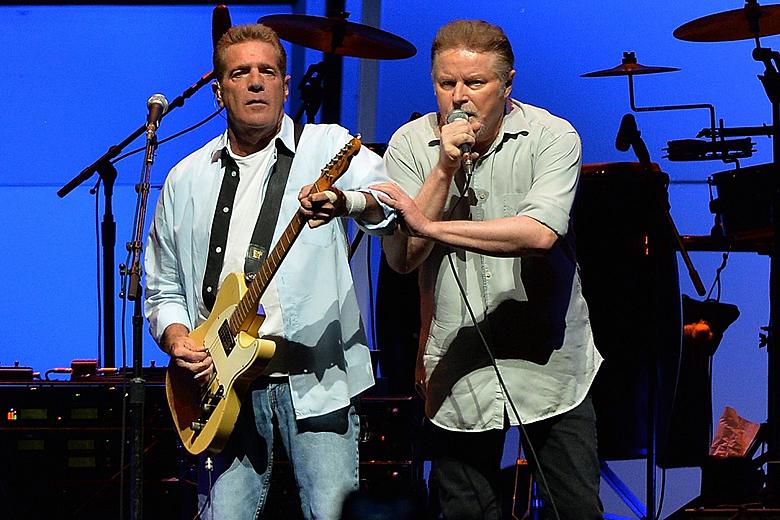
The arena froze. Even the air seemed to stop moving. Fans who had spent their lives belting out “Hotel California” and “Take It Easy” suddenly felt like they were intruding on a private room of grief.
Henley reached for the opening chords of “Desperado.” It was a song the world had sung until it became a cliché, but not tonight. Tonight it felt raw, like an open wound. His voice cracked on the first line, not because of age but because of memory — the memory of two young men in their twenties, sitting in a cramped apartment, chasing harmonies and chasing a dream neither of them believed would stretch this far.
As he sang, flashes of their history seemed to play in the silence between notes: the endless nights on tour buses, the bitter arguments over songs and royalties, the laughter that once filled dressing rooms, the sound of Glenn’s voice, confident and unyielding, pushing them all forward when the road felt endless. They had fought like brothers, loved like brothers, and parted with the same stubbornness that made them legends.
Henley’s eyes glistened. “Desperado, you better let somebody love you…” The words landed heavier now, like he was no longer singing to the crowd, but to the ghost that lingered beside him. To the friend who should have heard them years ago.
In the front rows, fans wept openly. Some closed their eyes, whispering the lyrics like prayers. Others simply stared, understanding that this was not performance — it was penance.
When the final note faded, Henley didn’t bow. He didn’t thank the crowd. He simply stood, gripping the edge of the piano, breathing as though he had run a mile through memory. And then, after what felt like an eternity of silence, he whispered, almost to himself: “I hope he heard me.”
There was no encore that night. None was needed. The audience rose in unison, not with cheers, but with a reverent stillness that felt closer to church than concert. They weren’t applauding a legend. They were bearing witness to a man — a man stripped of armor, a man who had learned too late that pride makes for poor company when death closes the door.
As the house lights lifted, people lingered, unwilling to leave. They spoke in hushed tones of Glenn Frey, of the Eagles, of the years that music had given them. But more than that, they spoke of forgiveness — the kind we deny ourselves until it’s too late.
Backstage, Henley sat alone. No champagne, no celebration, just the quiet hum of the dressing room air conditioner and the sound of his own breathing. On the table lay a setlist scrawled with songs the world adored. But he had crossed most of them out that night. He had chosen only one.
Because sometimes a lifetime of music is not enough to carry the words you failed to say. And sometimes, one broken song, sung through tears, is the closest thing to redemption.
For Don Henley, the stage had become a confessional. And though Glenn Frey was not there to answer, perhaps — just perhaps — the silence had finally spoken back.