Eternal Echoes: When Bocelli, Bublé, and Lambert Turned a Roman Night into a Musical Miracle
In the eternal city of Rome, where emperors once ruled and philosophers once pondered beneath marble skies, a new kind of history was written—one not etched in stone, but sung into the hearts of those lucky enough to bear witness. On this once-in-a-lifetime evening, music didn’t merely entertain — it transcended. It became communion. It became prayer. And at the center of it all stood three icons of the modern vocal world: Andrea Bocelli, Michael Bublé, and Adam Lambert.
The event was called La Notte delle Voci — The Night of Voices — and it lived up to every poetic promise its name carried. Staged under the stars in a centuries-old Roman amphitheater — one that had once echoed with the clash of gladiators and the roar of ancient Rome — this night was reborn with sound not of war, but of wonder.
The stage was framed by golden arches, flickering torchlight, and a sense of solemn majesty. The air was warm but tinged with a breeze that carried the scent of pine, stone, and a thousand untold stories. It was the kind of night where even the moon seemed to lean in closer.

Act I: The Past Awakens
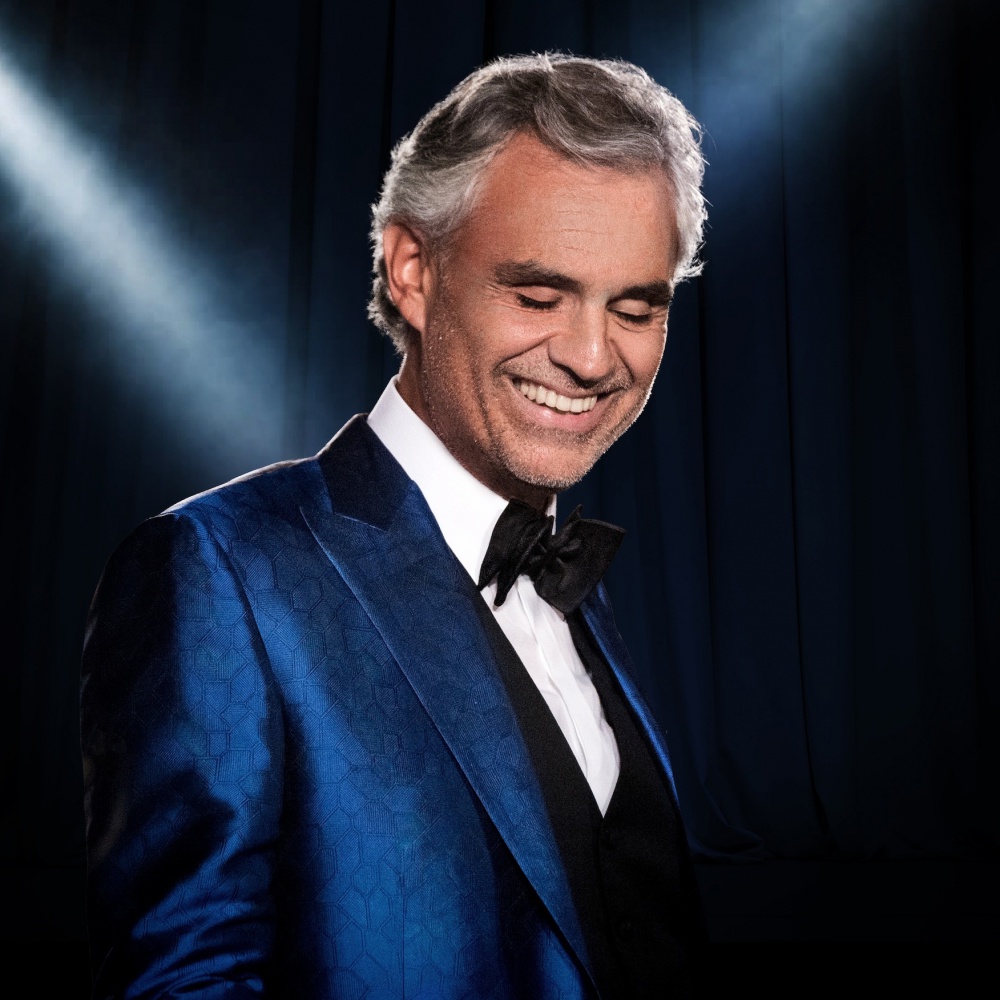
Andrea Bocelli took the stage first, dressed in a suit of ivory white, simple but regal. His very presence seemed to quiet the atmosphere. When he began to sing “Ave Maria”, his voice didn’t rise — it floated. It caressed every pillar, every ear, every soul in attendance. People were already wiping tears away before the second verse began. It was as if Rome itself had gone still to listen.
But then, from the shadows, Michael Bublé emerged — a contrast in a deep navy tuxedo, all charm and warmth, yet reverent. His rendition of “You’ll Never Know” was a velvety glide through nostalgia, wrapped in jazz and memory. He smiled as he sang, but behind it was something deeper — an understanding that this was no ordinary performance.
Act II: Fire Meets Velvet
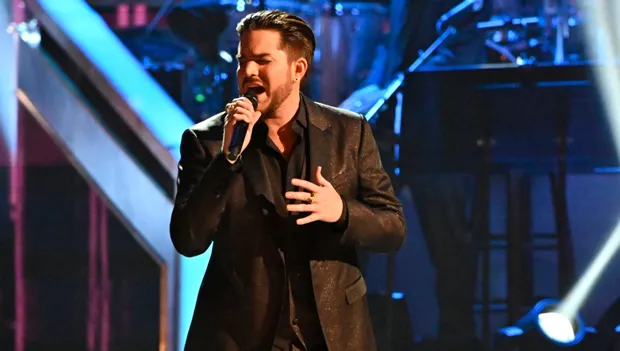
Then, with a spotlight that seemed to split the heavens, Adam Lambert arrived.
Wearing black with silver accents that shimmered like a constellation, Lambert’s energy was palpable. He opened with “The Show Must Go On” — not just sung, but lived. Every note was fire. Every gesture, defiance wrapped in grace. Lambert wasn’t there to compete — he was there to complete the harmony. And when the three men finally stood together, center stage, the amphitheater exhaled as one.
They began a sweeping rendition of “Nessun Dorma.” Bocelli started with quiet strength, Bublé followed with rich emotion, and Lambert delivered the final note with an operatic rock edge so raw it sent shockwaves. The audience — 500 strong, dressed in black-tie elegance — leapt to their feet. Some cheered, others clutched at their hearts. It wasn’t just music; it was resurrection.
Act III: The Sacred and the Sublime
What followed was a concert that defied expectation, era, and ego. The trio moved seamlessly from Queen’s “Who Wants to Live Forever”, delivered like a requiem for lost innocence, to a reinvented “Feeling Good,” where Bublé’s jazz merged with Bocelli’s classic technique and Lambert’s theatrical brilliance. It was impossible to categorize. It wasn’t pop. It wasn’t opera. It wasn’t even crossover. It was alchemy.

During an interlude, Bocelli stepped back and touched Lambert’s shoulder. He whispered, but the microphones caught it: “Now show them what the future sounds like.”
And Lambert did.
With “Believe,” an original anthem that felt like a pledge of hope, his voice soared above the amphitheater. His face was tear-streaked by the end. Bocelli placed a hand on his chest, Bublé embraced him, and for a moment, the entire crowd stood not as audience, but as witness to something sacred.
The Night That Time Forgot
No screens. No fireworks. No spectacle beyond the purity of voice. And yet, it was the most spellbinding experience many had ever known. One woman whispered, “I came for a concert. I leave baptized.” A man near the back wept openly, clutching the hand of his mother — she, too, had grown up with Bocelli, Bublé, and now discovered Lambert’s power.
The final song of the night was a soft, multilingual lullaby blending Italian, English, and silence — the most powerful language of all. As the last note dissolved into the Roman air, there was no applause. Just awe.
For five seconds — maybe more — no one moved. No one breathed. It was as if time had respectfully stepped aside, bowing to music’s supremacy.

The Afterglow
Later that evening, social media exploded with clips from the concert. “I’ve never heard voices melt like that,” one viewer posted. “Rome wasn’t built in a day, but this night rebuilt my soul.” Another simply wrote: “I didn’t know I could feel this much.”
Critics hailed it as a once-in-a-generation moment. A reviewer from La Repubblica called it “a holy trinity of musical devotion.” The New York Times described it as “proof that music, in the right hands, transcends genre, borders, and time itself.”
A Legacy Sealed in Song
What Bocelli, Bublé, and Lambert created that night wasn’t a show — it was a memory stitched into history. A reminder that art, when offered with humility and heart, becomes timeless. That true power needs no amplification, only intention. And that music — pure, human music — is still the strongest force we have against a divided world.
La Notte delle Voci may fade into calendar archives, but its echoes will remain — in the hearts of those who were there, and in every soul that hears even a whisper of that night’s magic.
Because when three titans sing in the heart of Rome, time listens. And eternity sings back.