It happened on a December evening that already felt touched by something ancient. Snow drifted gently outside the old concert hall, gathering on window ledges and muffling the sounds of the busy street. Inside, candles flickered along the aisles, casting soft halos over the audience — aging rock lovers, young musicians, parents with children who grew up hearing these songs on car radios and long holiday drives.
The event was advertised simply as “A Winter Gift: A Night of Music and Memory.” No lineup. No hints. Just a promise that the season would bring “unexpected light.”
Nobody expected this light.
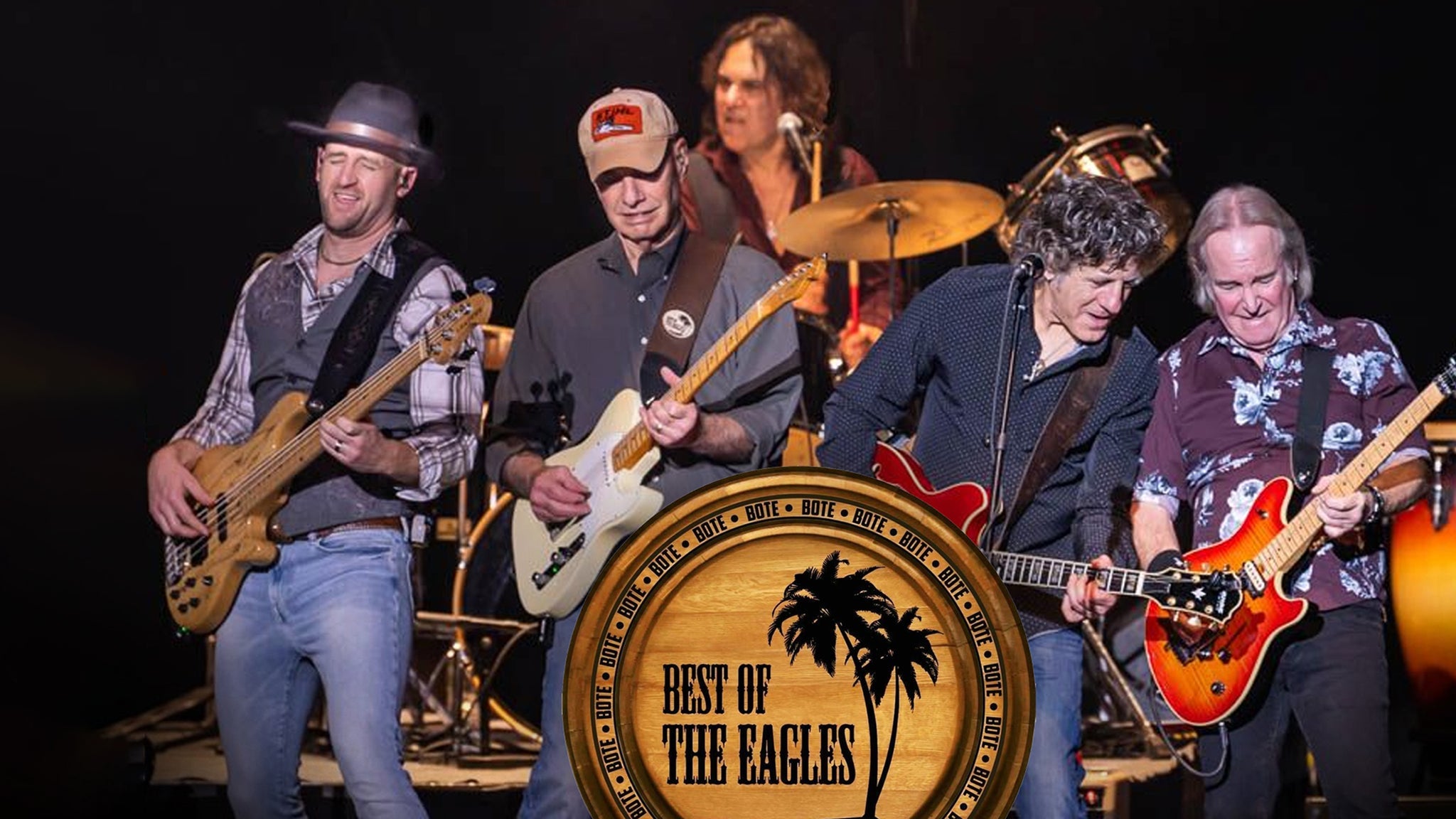
When the emcee stepped aside and the hall fell silent, the stage remained dark for a long breath — long enough for anticipation to become a living thing. Then a low hum of guitar filled the space, a chord so familiar it struck the audience in the chest before their minds caught up.
A ripple ran through the room.
Could it be?
Another spotlight rose.
Then another.
Then two more.
And there they were.
Don Henley, stoic and steady, his face softened by time but his presence unmistakable.
Joe Walsh, with that mischievous glint in his eye, as if no number of years could dull the spark of the band’s wild soul.
Timothy B. Schmit, gentle, almost luminous, fingers resting on his bass with a reverence that felt like prayer.
And beside them — in place of the man who shaped the band’s heart with his harmonies — stood Deacon Frey, carrying the quiet strength of his father, Glenn.
The audience gasped. Some cried out. Others covered their mouths. A few simply wept. It wasn’t just a reunion. It was a resurrection.
A whisper moved across the hall:
“The Eagles… they’re all here.”
Henley stepped to the microphone, his voice low, touched with emotion he didn’t bother hiding.
“We weren’t planning on a show tonight,” he said. “But Christmas… is about coming home. And we thought… maybe it was time.”
Walsh leaned toward his mic with a grin.
“And we missed you guys.”
Laughter — warm, grateful, disbelieving — rolled through the room.
The band began with a soft, stripped-down version of “Peaceful Easy Feeling.” No theatrics. No spectacle. Just pure harmony woven through candlelit air.
And when Deacon Frey stepped forward for the second verse, the hall fell utterly silent.
His voice wasn’t Glenn’s.
But it carried the same honesty.
The same ache.
The same gentle courage.
Henley watched him with eyes that glimmered under the stage lights, as though seeing past and present layered on top of one another.
The next song came like a blessing — “Take It to the Limit,” lifted delicately by Timothy’s soaring vocals, the high notes trembling not from weakness but from the weight of memory.

Fans reached for each other’s hands.
Some closed their eyes.
Some simply cried openly.
By the time Joe Walsh stepped forward with a twinkling riff, the mood shifted. He grinned, raised his guitar, and shouted:
“Alright, let’s jingle some bells!”
Laughter flooded the hall again as they launched into a joyful, bluesy Christmas arrangement of “Please Come Home for Christmas.” The crowd clapped along, shoulders swaying, spirits rising with each playful chord.
But it was the fourth song that changed the night entirely.
Henley adjusted the microphone and said softly:
“This next one… is for Glenn.”
A hush.
A collective inhale.
They began “Seven Bridges Road.”
Four voices.
Four harmonies.
Four men carrying decades of brotherhood, grief, joy, loss, and love — braided together into a single, soaring chord that held the audience suspended in time.
When Deacon joined the harmony, people wept openly.
It didn’t feel like a performance.
It felt like a homecoming.
It felt like Christmas.
The final song was a surprise even to some in the band. Walsh leaned toward Henley, whispered something, and Henley smiled with that quiet, knowing expression fans had missed.
Then he stepped forward.
“We’d like to end with something simple. Something that says what we feel tonight.”

And they began “Silent Night.”
No drummer.
No electric guitars.
Just four voices — blended, tender, imperfect in the most beautiful way — filling the hall with a peace so fragile no one dared move.
Candles flickered.
Snow fell outside.
And inside, time seemed to pause.
When the final note faded, no one clapped at first.
It wasn’t because they didn’t want to.
It was because they couldn’t.
Some moments aren’t meant to be interrupted.
Then applause exploded — long, thunderous, grateful — rising like a wave that refused to end.
Henley stepped back, visibly overwhelmed.
“Thank you,” he said quietly. “For remembering. For still being here. For letting us come home tonight.”
Walsh added:
“Same time next Christmas?”
The crowd roared.
Later, outside the hall, as fans spilled into the snowy night with faces glowing and voices trembling, one rumor whispered from person to person:
The Eagles were considering a limited Christmas tour — not for fame, not for records, but for memory, for healing, for Glenn.
Whether it was true didn’t matter.
What mattered was this night — this single, miraculous December night — when the Eagles reunited not out of obligation, but out of love.
And for everyone lucky enough to witness it, it felt like the greatest Christmas gift music could offer.