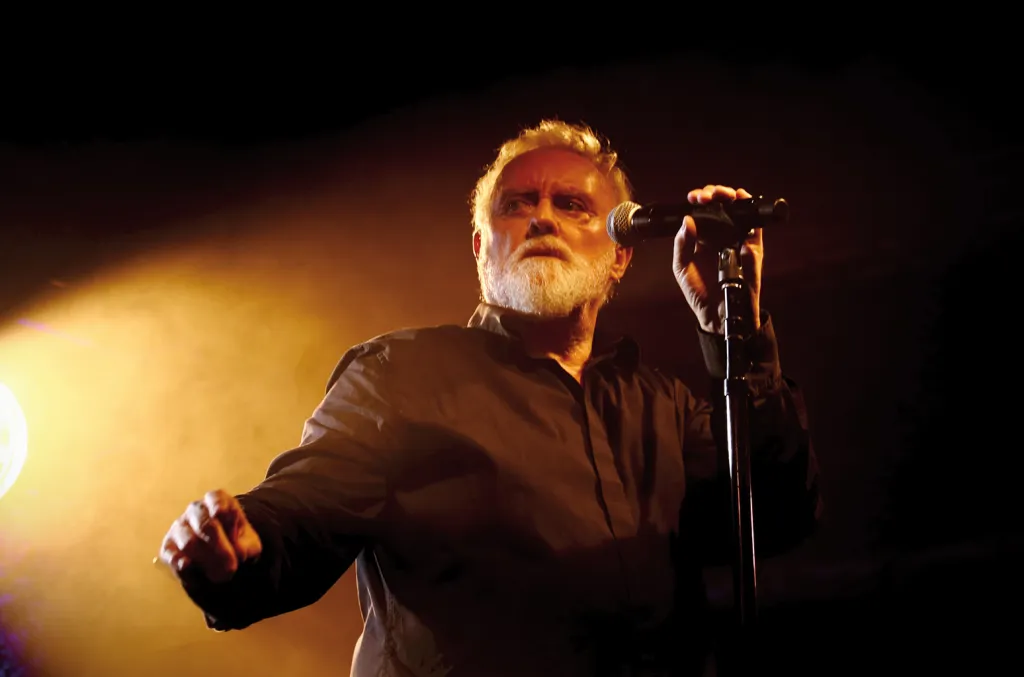
In 2026, as the world quietly marks the 40th anniversary of Queen’s Magic Tour, nostalgia has once again turned 1986 into a golden postcard. Freddie Mercury in the yellow military jacket. Wembley roaring like a cathedral. Fireworks, unity, immortality. The images have been replayed so many times they’ve started to feel untouchable — like the tour was destined to be a perfect ending.
But from inside the machine, Roger Taylor never saw it that way.
Looking back, he didn’t call it a victory lap. He called it what it felt like in real time:
“A suicide mission.”
Too Big to Control
By the summer of 1986, Queen weren’t just famous — they were operating on a scale that was starting to become unmanageable. They weren’t touring venues anymore. They were moving crowds. In one weekend alone, the band played to nearly 400,000 people, a number that even modern stadium tours struggle to comprehend.
And then came Knebworth Park — over 120,000 fans packed into an open field, with limited exits and crowd control that would never pass today’s standards. The atmosphere was electric, but it was also volatile. A mass of human emotion and momentum that couldn’t be fully contained.
From the front, it looked euphoric.
From behind the drum kit, it felt dangerous.
Taylor later admitted the pressure wasn’t abstract — it was physical. The volume, the intensity, the feeling of being swallowed by the size of it all… it made the tour feel less like celebration and more like survival. Queen had reached a level of fame where even performing became a risk.
Wembley Glory, Private Collapse
On paper, the Magic Tour looked flawless:
26 shows across Europe.
Over a million tickets sold.
Two historic sold-out nights at Wembley Stadium.
The filmed performances later captured Queen at full command — Freddie strutting like a general, Brian May slicing through the air with his guitar, the band looking unstoppable.
But Taylor has always been blunt about what the camera didn’t catch.
It filmed the power.
Not the cost.
By the time they were nearing the end, the exhaustion wasn’t just fatigue — it was depletion. Night after night, they were forced to summon a level of energy that never had time to rebuild. Every show demanded everything. And then demanded more.
The Ending They Didn’t Announce
On August 9, 1986, Queen walked on stage at Knebworth Park and unknowingly wrote their final chapter together. Freddie Mercury. Brian May. John Deacon. Roger Taylor. The last time the original four would ever stand under the same lights.
It wasn’t marketed as a farewell. No speeches, no warnings, no final bow meant to signal history.
But Taylor has said the band felt it.
Not because they planned to stop, but because something in them understood that the weight of it all — the exposure, the expectations, the pressure — had become unsustainable. They had reached the ceiling of what a human body and mind could safely endure.
After that, Queen retreated into the studio. The Miracle would arrive in 1989. But the stage — the world tour machine — was over. And soon, Freddie’s health would make sure there was no way back.
Forty Years Later
The Magic Tour is still remembered as the pinnacle of arena rock. In many ways, it was. It was majestic. Monumental. A masterclass in command.
But Roger Taylor’s honesty rebrands it as something darker: not a triumph, but a controlled collapse — the moment Queen reached the absolute limit of what even they could carry.
Sometimes the greatest skill isn’t knowing how to climb higher.
It’s knowing when the height has become lethal.