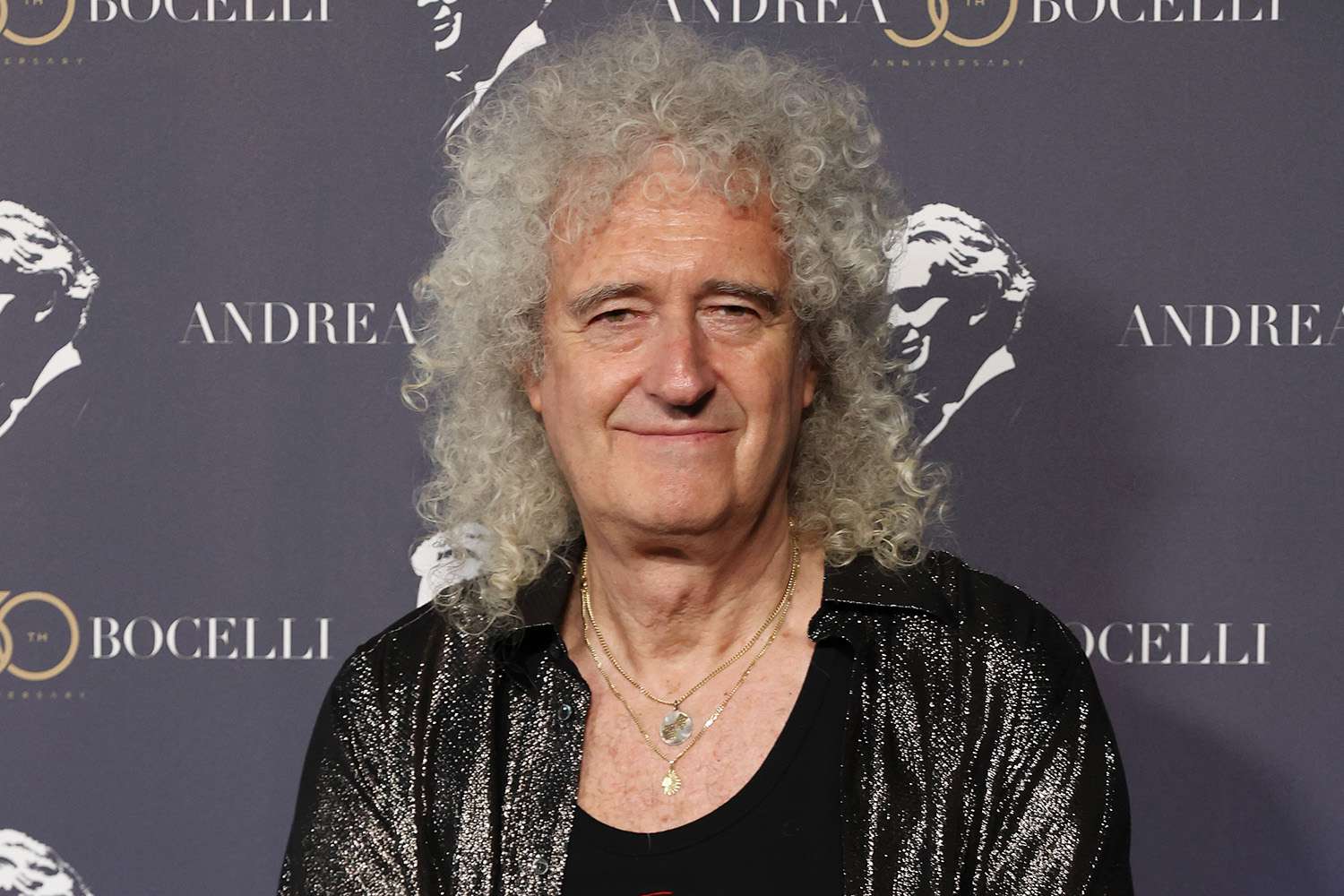
While many rock legends disappear into manicured estates and gated luxury, Brian May chose a legacy that doesn’t revolve around comfort or status. Hidden in rural Dorset, his 157-acre property — known quietly as May’s Wood — isn’t a home, a hobby farm, or a vanity project.
It’s a deliberately protected wildlife sanctuary built for one purpose: keeping animals safe from people.
“This is their kingdom,” May has said. “We are not the owners of this land — we are just the guardians.”
From Threatened Farmland to Living Forest
Back in 2012, a large stretch of farmland near the village of Bere Regis faced growing pressure from developers and hunting interests. Instead of watching it be carved up or exploited, May purchased the entire site with one clear goal: give it back to nature.
Since then, more than 100,000 native trees have been planted — oak, beech, hazel, wild cherry, and ash — transforming what was once intensively farmed land into a fast-growing woodland designed to resemble Britain’s older, wilder ecosystems. Long grass is allowed to spread. Hedgerows are left unmanaged. Undergrowth is encouraged to reclaim space naturally, without “tidying” or artificial control.
The project connects closely to Save Me Trust, the wildlife charity May co-founded with Anne Brummer. Named after Queen’s 1980 song “Save Me,” the organization has become a leading voice opposing the UK badger cull and modern blood-sport hunting.
The “No Humans” Core Zone
At the heart of May’s Wood is its most radical rule: a strict no-human inner sanctuary. This central area is off-limits even to caretakers except in emergencies, allowing wildlife to live without being watched, managed, or disturbed.
To protect it, the sanctuary uses modern systems designed to monitor without interfering:
Night-vision and thermal cameras track movement and wellbeing
Reinforced perimeter fencing helps deter illegal hunters
Silent observation tools gather data without changing animal behavior
The sanctuary also works with Harper Asprey Wildlife Rescue, helping rehabilitate injured badgers, foxes, and hedgehogs before releasing them into May’s Wood — and once released, they are not handled again.
The land isn’t treated as a closed-off island either. Wildlife corridors link it to nearby protected areas, allowing animals to travel naturally across Dorset without being forced into roads or farmland.
Science, Not Aesthetic Rewilding
May’s passion is obvious, but this isn’t just sentimentality. It’s structured, long-term rewilding guided by science. May, who completed his PhD in astrophysics at Imperial College London in 2007, treats the woodland like a living experiment — one built to test whether a true no-kill, no-intervention environment can stabilize and thrive over time.
No pesticides. No artificial feeding. No population “control.”
Just nature rebuilding itself.
Early signs suggest improving biodiversity, stronger soil health, and rising insect and bird populations — the kind of ecological recovery most landowners never allow to happen.
His work reached a wider audience through the 2024 documentary Brian May: The Badgers, the Farmers and Me, directed by Luke Hyams, which challenged the scientific basis behind badger-culling policy in the UK.
A Different Kind of Immortality
Brian May still fills stadiums with “Bohemian Rhapsody” and “We Will Rock You.” But his most enduring creation may never clap back. The forest he planted will take centuries to fully mature — long after tours, charts, and guitars fade into history.
For the foxes, badgers, and hedgehogs now moving freely beneath those 100,000 trees, May’s Wood isn’t a project or a protest.
It’s a kingdom — quiet, protected, and finally theirs.