For decades, the Super Bowl halftime show was never the main attraction. It was filler—marching bands, themed performances, and safe spectacles designed to pass time while viewers waited for the real game to resume. Many people didn’t even watch. Some left their seats. Others changed channels entirely. The halftime show wasn’t something audiences anticipated. It was something they endured.
By the early 1990s, the problem had become impossible to ignore. During Super Bowl XXVI in 1992, a rival network aired a special episode of In Living Color during halftime and successfully pulled millions of viewers away from the Super Bowl. It was a quiet humiliation for the NFL. For the first time, it became clear that the most-watched event in American television could still lose its audience when it mattered most.
The league realized something uncomfortable: halftime wasn’t holding attention. It was bleeding it.
A Risk No One Had Attempted Before
To fix the problem, the NFL had to do something radical. They needed someone who didn’t just entertain—but someone who could command attention so completely that leaving wouldn’t even be an option.
There was only one name powerful enough to do that.
Michael Jackson.
At the time, Jackson wasn’t just a musician. He was the most famous person on Earth. His presence alone could stop cities, overwhelm stadiums, and dominate global media cycles. But bringing him to the Super Bowl wasn’t a safe decision. It was a gamble. The halftime show had never depended on a single superstar before. There was no guarantee it would work.
And Michael Jackson himself had nothing to gain. He was already bigger than the event.
But the NFL understood something deeper. They didn’t need Michael Jackson to elevate his career. They needed him to elevate theirs.
The Moment That Changed Everything
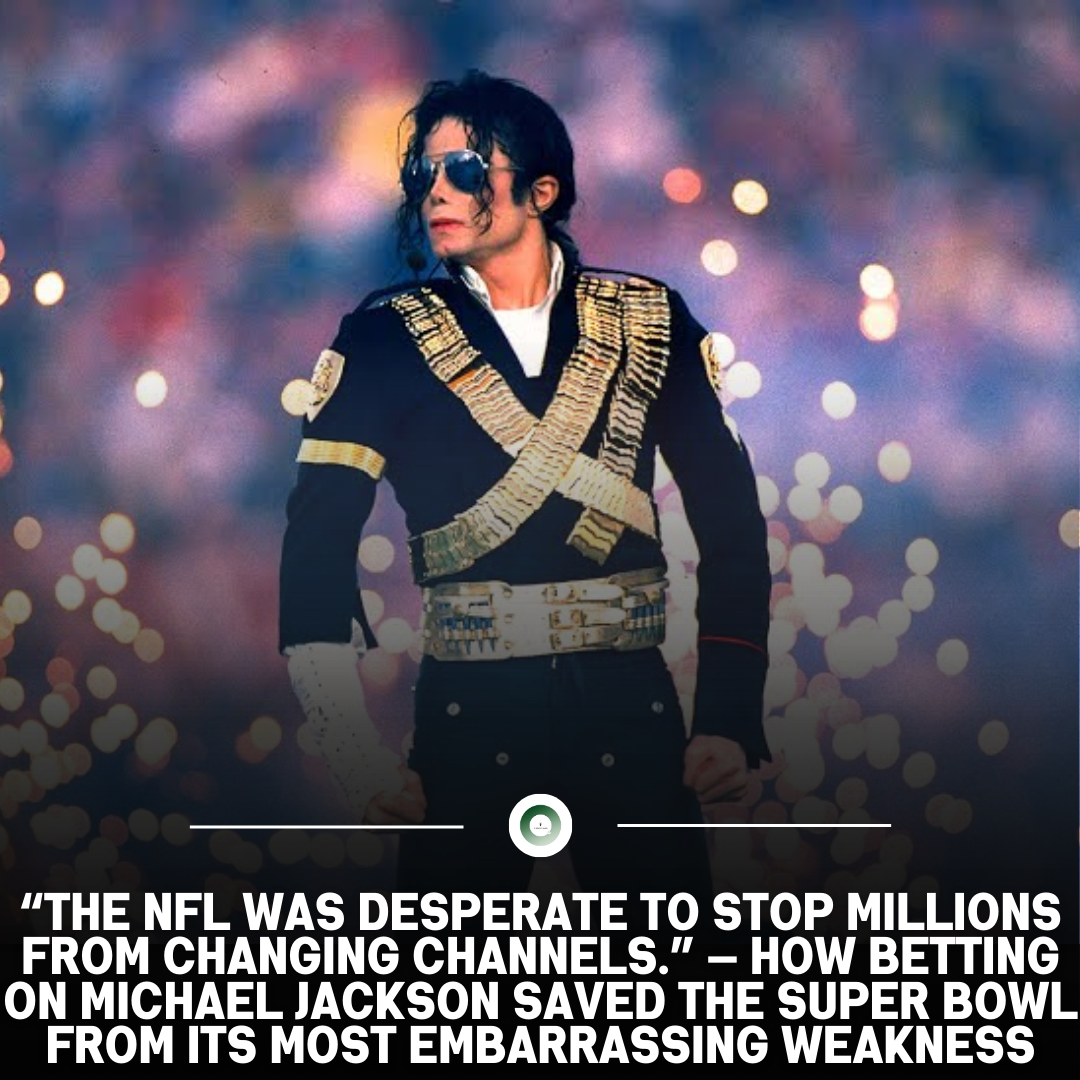
On January 31, 1993, during Super Bowl XXVII, Michael Jackson walked onto the Rose Bowl stage in Pasadena, California. What happened next wasn’t just a performance. It was a shift in power.
He stood completely still for nearly two full minutes.
He didn’t sing. He didn’t dance.
He simply existed.
And the crowd lost control.
More than 100,000 people erupted into a sustained roar, reacting to nothing but his presence. It was a level of authority no halftime performer had ever commanded. In that moment, he proved something instantly: halftime was no longer a break from the event.
It was the event.
When the music finally began—Jam, Billie Jean, Black or White, and Heal the World—the performance transformed into something larger than entertainment. It became cultural dominance, broadcast into homes across the world.
For the First Time in History, Viewers Didn’t Leave
The most important result wasn’t artistic. It was measurable.
For the first time ever, Super Bowl viewership increased during halftime instead of declining.
Millions of people stayed.
Millions more tuned in.
The NFL’s greatest vulnerability had instantly become its greatest strength.
The risk had worked beyond anything they imagined.
The Blueprint That Built the Modern Super Bowl
Everything that defines the Super Bowl halftime show today exists because of that moment.
Before Michael Jackson, halftime was forgettable.
After Michael Jackson, halftime became a global stage reserved only for the biggest artists alive.
Prince performing in the rain. Beyoncé commanding the world. Rihanna floating above the stadium. These weren’t just performances. They were the continuation of a standard Michael Jackson created in a single night.
He didn’t just perform at the Super Bowl.
He transformed it.
The Most Valuable Gamble the NFL Ever Made
The NFL didn’t pay Michael Jackson to save halftime. They invested trust in someone whose presence alone could reshape audience behavior.
And he delivered something far more valuable than a performance.
He delivered permanence.
Because after January 31, 1993, halftime was no longer something people skipped.
It became something the world waited for.