When the lineup for the Super Bowl LVI halftime show was revealed, it was clear that the performance would be more than just entertainment. The stage would bring together some of hip-hop’s most influential figures—Dr. Dre, Snoop Dogg, Mary J. Blige, Kendrick Lamar, and Eminem—for a moment designed to celebrate the genre’s impact on global culture. On paper, it promised explosive performances and decades of iconic music. But in the end, one quiet gesture would become the most powerful moment of the night.
That moment belonged to Eminem.
For years, observers had debated whether the rapper who once shook the music industry with controversy and defiance still held the same cultural weight as he approached his fifties. Some critics wondered if the rebellious voice that defined the late 1990s and early 2000s had faded with time. The Super Bowl stage—one of the most watched events in the world—offered Eminem a chance to answer those doubts in front of an audience of more than 100 million people.
The halftime show itself unfolded as a tribute to hip-hop’s legacy. The production recreated scenes inspired by Los Angeles neighborhoods, reflecting the West Coast roots that shaped much of the genre’s history. Dr. Dre opened the performance with commanding authority, setting the tone for a celebration of the artists who helped bring rap music from underground scenes to the global spotlight.
Snoop Dogg followed with the relaxed confidence that made him one of hip-hop’s most recognizable figures, while Mary J. Blige delivered powerful vocals that reminded audiences of her lasting influence on R&B. Kendrick Lamar added his own energy and precision, representing a newer generation of artists who built upon the foundation laid by the pioneers on stage.
Then Eminem stepped forward.
The first notes of “Lose Yourself” immediately changed the atmosphere inside the stadium. Released in 2002, the song had long been regarded as one of the defining records of Eminem’s career. Its themes of determination, pressure, and seizing opportunity turned it into an anthem that resonated far beyond hip-hop audiences.
Two decades after its release, Eminem delivered the song with the same focused intensity that made it legendary. The crowd echoed the lyrics back to him as millions of viewers at home witnessed a reminder of why the track remains one of rap’s most enduring hits.
Yet the moment that would define the performance came after the music stopped.
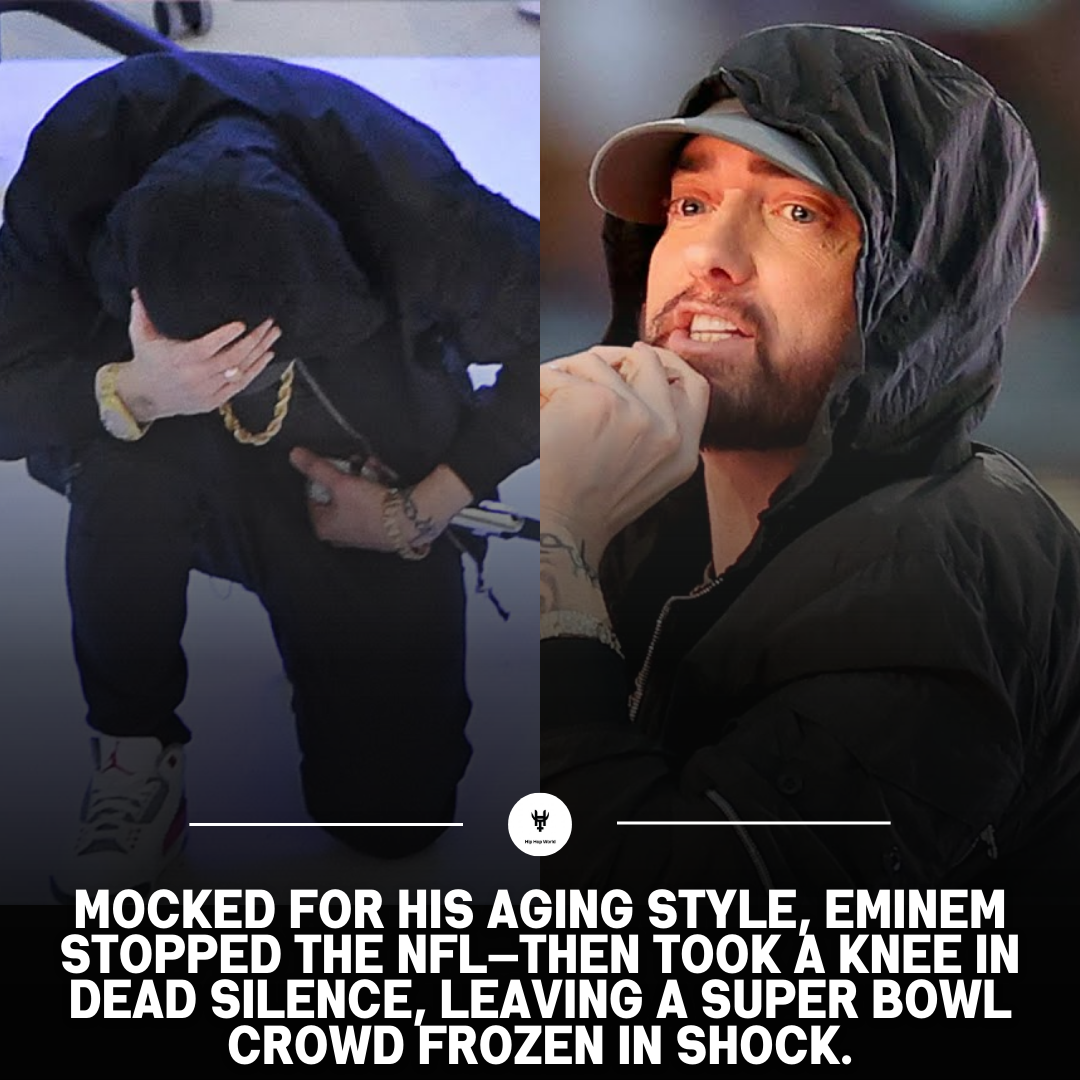
As the show transitioned to its next sequence, Eminem quietly dropped to one knee on the stage. There were no dramatic visuals or announcements accompanying the gesture. For a brief moment, the spectacle of lights, sound, and choreography paused as audiences processed what had just happened.
The act immediately sparked conversation. In recent years, kneeling had become a widely recognized symbol associated with protests for racial equality and social justice, particularly within the world of American sports. By choosing to kneel during one of the most widely viewed broadcasts in the world, Eminem transformed a fleeting moment into a powerful statement.
Within minutes, images of the gesture spread across news outlets and social media platforms. Fans and commentators debated its meaning, but many interpreted it as an expression of solidarity with movements advocating for social justice. For those familiar with Eminem’s career, the act felt consistent with his long-standing reputation for challenging expectations and refusing to remain silent on controversial issues.
The scale of the moment was undeniable. With an estimated television audience exceeding 112 million viewers, the image of Eminem kneeling reached one of the largest global audiences of the year. In a halftime show packed with music, nostalgia, and visual spectacle, that single silent action became the scene people remembered most.
For critics who had questioned whether Eminem’s rebellious edge had softened with age, the gesture offered a clear response. Even at 49, he demonstrated that the defiant spirit that defined his rise to fame was still very much intact.
The Super Bowl LVI halftime show will be remembered as a landmark celebration of hip-hop’s place in mainstream culture. But amid the powerful performances and historic lineup, it was Eminem’s quiet decision to kneel that left the deepest impression.
In a stadium filled with thunderous music and roaring crowds, the moment that echoed the loudest was the one that arrived in silence.
@overtimetom Halftime show was amazing 🤞 #nfl #SuperBowl #sports #football ♬ Venom (Karaoke Instrumental) [Originally Performed by Eminem] – HQ INSTRUMENTALS