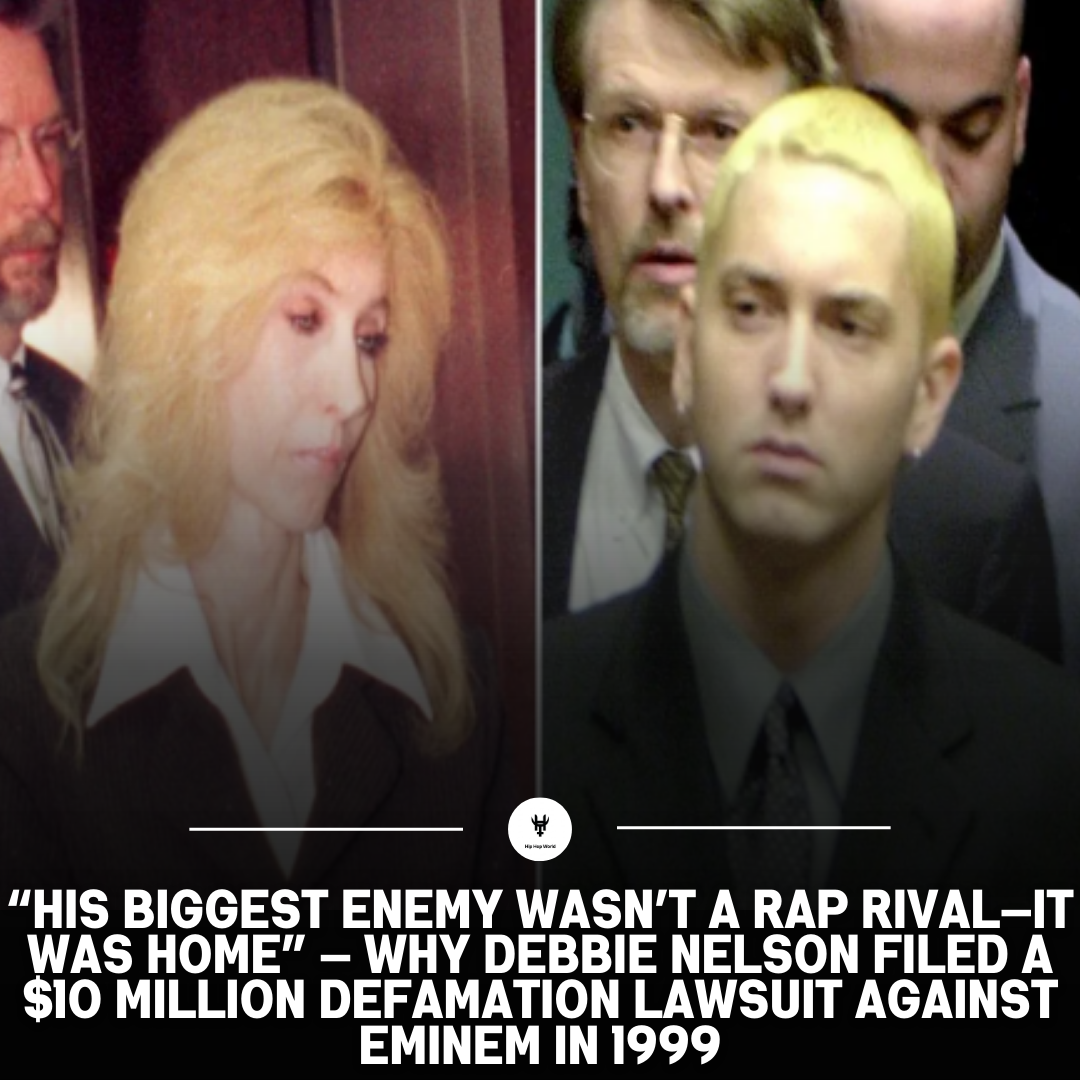
When the Lyrics Hit Home: The Day Eminem’s Mother Took Him to Court
In the late 1990s, as the sound of Slim Shady began echoing across radio stations and MTV screens, the rise of Eminem felt sudden and explosive. His voice carried the anger and dark humor of a troubled childhood in Detroit, and the world listened with fascination. But as the music climbed the charts, something more personal was unfolding behind the scenes—something that would bring his family life into a courtroom.
Among the most painful targets in Eminem’s early lyrics was his mother, Debbie Nelson. Throughout his breakthrough era, especially around the release of the album The Slim Shady LP in 1999, he repeatedly portrayed her as negligent, manipulative, and addicted to prescription drugs. These accusations were not whispered in interviews or buried in obscure verses; they were delivered loudly in songs that millions of people were hearing for the first time.
One of those songs was My Name Is, the track that introduced Eminem to mainstream audiences. The record was playful and shocking at the same time, packed with irreverent humor and biting lines. But embedded within the chaos was a reference to his mother’s alleged drug use. For listeners, it was another outrageous Slim Shady lyric. For Debbie Nelson, it was something else entirely.
As Eminem’s fame accelerated, the comments about his mother began circulating far beyond hip-hop fans. The story of his troubled upbringing became part of the mythology surrounding the new rap superstar. Interviews, magazine features, and televised appearances often revisited the same themes: poverty, family instability, and the difficult relationship between mother and son.
For Nelson, the portrayal felt damaging and humiliating.
By 1999, she made a decision that stunned the music world. She filed a defamation lawsuit against her own son, seeking roughly ten million dollars in damages. The case argued that Eminem’s lyrics and public statements had harmed her reputation by portraying her as a drug abuser and an unfit parent.
The situation quickly became one of the most unusual legal battles in modern music history. A rapper known for turning his personal life into brutally honest storytelling now found that same storytelling scrutinized in a courtroom.
At the time, Eminem was still early in his career but already surrounded by intense controversy. Critics debated whether his music was satire, confession, or something in between. Supporters praised his willingness to expose painful truths about his past. Opponents accused him of crossing lines that should never be crossed.
The lawsuit forced those questions into a new arena.
A Family Conflict in Public View
Court proceedings unfolded while Eminem’s career continued its meteoric rise. The Detroit rapper had become one of the most talked-about artists in the world. Yet the legal dispute with his mother followed him everywhere, often appearing in headlines alongside his chart success.
For observers, the case represented something deeper than a financial disagreement. It exposed the tension between artistic expression and personal responsibility. Eminem’s music had always drawn directly from his own life experiences. But when those experiences involved real people—especially family—the consequences became far more complicated.
The court ultimately ruled partially in Debbie Nelson’s favor. The initial award was far smaller than the ten million dollars she had requested, amounting to twenty-five thousand dollars. After legal expenses were deducted, the amount she reportedly received was only a fraction of that sum.
The verdict ended the legal battle, but it did little to heal the emotional divide between mother and son. For years afterward, their relationship remained strained and distant.
Meanwhile, Eminem continued to build one of the most successful careers in hip-hop history. Albums followed, controversies came and went, and the Slim Shady persona evolved with time. Yet the story of his family conflict never fully disappeared from the narrative surrounding him.
Years Later, a Different Tone
More than a decade after the lawsuit, Eminem revisited the subject in a very different way.
On the album The Marshall Mathers LP 2, he released the song Headlights. The track stood out immediately to longtime listeners. Instead of anger or sarcasm, the tone was reflective and restrained.
In the song, Eminem acknowledged the pain and bitterness that had defined their relationship for so long. Rather than repeating the accusations of earlier years, he addressed the situation with a sense of regret and maturity that surprised many fans.
For an artist whose identity had once been built on confrontation, the shift felt significant.
The moment suggested that time had reshaped his perspective. Fame, age, and distance from the chaos of his early life seemed to allow a more complicated understanding of the past.
The Legacy of a Difficult Chapter
Looking back, the lawsuit between Eminem and his mother remains one of the most striking personal conflicts ever connected to hip-hop culture. It revealed how closely Eminem’s art was tied to the realities of his life, and how painful those realities could become when exposed to the world.
The case also captured a broader moment in music history. At the turn of the millennium, hip-hop was expanding into the mainstream with unprecedented force. Artists were pushing boundaries of honesty and storytelling, sometimes in ways that blurred the line between art and personal confrontation.
For Eminem, that tension became deeply personal.
His rise from Detroit’s struggling neighborhoods to global superstardom was fueled by brutally honest storytelling. But honesty, especially when it involves family, can carry consequences that reach far beyond the studio.
Today, the lawsuit stands as a reminder of the complicated relationship between life and art. Eminem built a career by turning his experiences into music that millions connected with. Yet those same experiences also revealed the human cost of telling the truth too loudly, too publicly, and too soon.
And in the end, behind the headlines and the courtroom drama, the story was not simply about a rapper and a lawsuit. It was about a fractured family navigating pain under the harsh light of global fame.