Some live performances are memorable because they are flawless. Others stay with people because they feel real.
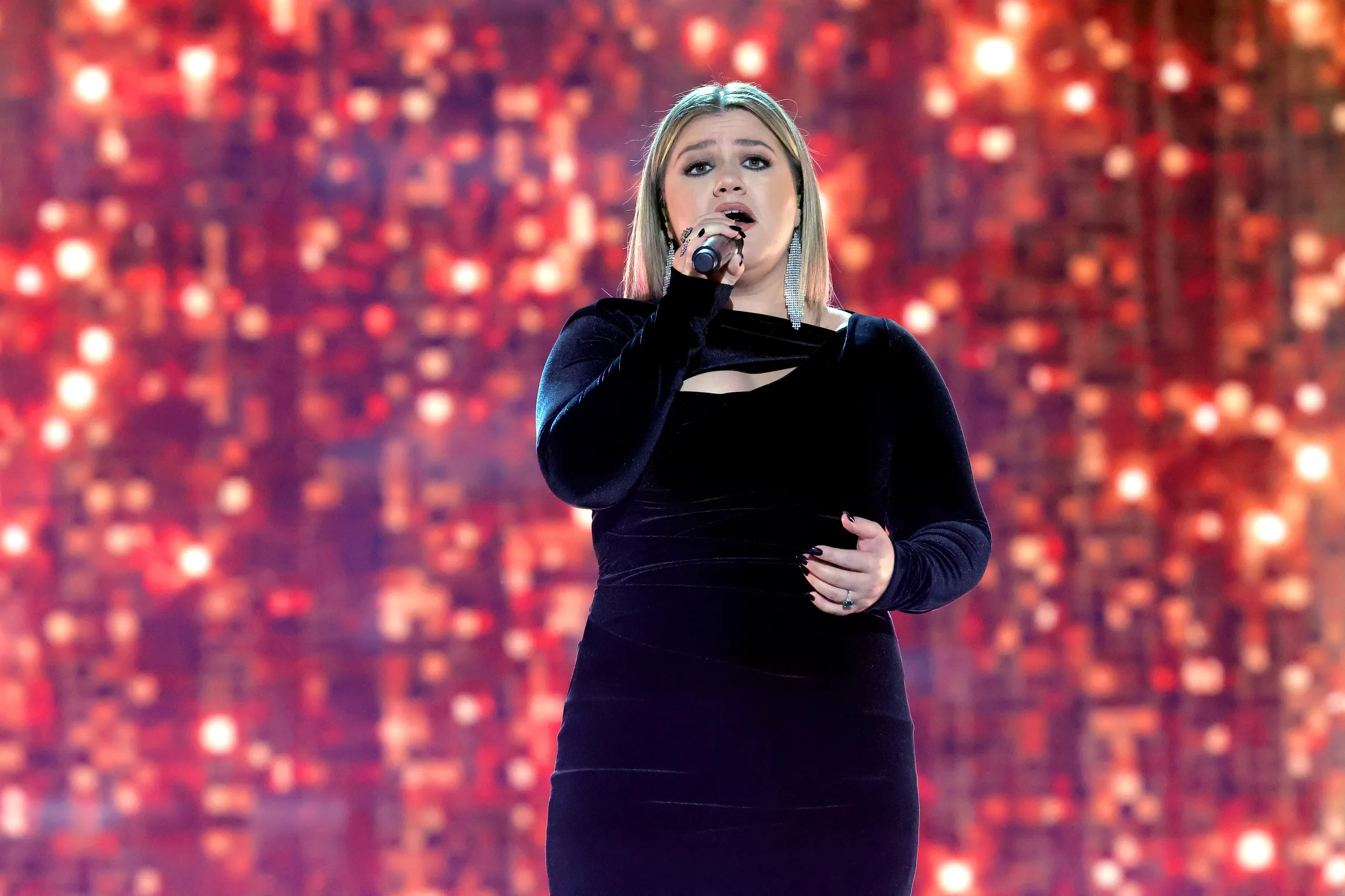
The moment Kelly Clarkson stepped onto the stage to sing “Just Give Me a Reason,” it was clear this would lean toward the latter. There was no spectacle driving the performance—no elaborate staging, no distracting theatrics. Just a familiar song, a powerful voice, and a layer of lived experience that gave every lyric new weight.
What no one expected was how that moment would evolve.
A breakup song, reinterpreted in real time
“Just Give Me a Reason” has always stood apart from typical breakup anthems. Instead of anger or finality, it sits in a fragile space—right before a relationship collapses or just after it starts to fracture. It’s a conversation, not a conclusion.
When Clarkson took on the song, she didn’t treat it like a cover. She treated it like testimony.
Her voice carried a different kind of tension—less theatrical heartbreak, more reflective ache. The kind that comes after the dust settles. The kind that doesn’t need to be explained because it’s already been lived.
That shift changed the song’s emotional center. What was once a duet about trying to fix something began to feel like a solo reflection on what couldn’t be fixed.
And then everything shifted again.
The moment the performance became something else
Midway through the performance, Pink emerged—not as a headliner, not as a planned spectacle, but as a presence that felt almost organic to the moment.
When she joined in, the song returned to its original structure: two voices in dialogue. But now, it carried layers that didn’t exist in the studio version.
Instead of playing characters, the two singers felt like they were sharing perspective.
Clarkson’s delivery remained grounded in emotional exposure, while Pink’s entrance added balance—less pleading, more understanding. The contrast didn’t compete; it completed the moment.
Their harmonies weren’t just technically strong—they felt conversational. Like two people finishing each other’s thoughts, not just matching notes.
Why the chemistry worked instantly
Collaborations often rely on rehearsal, staging, and precision. This one felt different.
There was a looseness to the interaction—small gestures, exchanged glances, a spontaneous laugh—that made the performance feel unscripted in the best way. At one point, Clarkson leaned into a soaring vocal run, and Pink’s playful reaction cut through the intensity just enough to humanize the moment.
That balance is rare.
Too much polish can make a performance feel distant. Too much spontaneity can make it fall apart. What happened here lived right in between: controlled enough to sound exceptional, relaxed enough to feel alive.
Both artists are known for commanding stages individually. Together, they created something less about dominance and more about connection.
A song about relationships becomes a moment about artists
Originally, “Just Give Me a Reason” was written as a dialogue between two partners trying to salvage what’s left of their relationship. That structure is what made it resonate globally—it didn’t take sides.
But in this performance, the meaning subtly evolved.
Instead of focusing on a romantic relationship, the duet began to reflect something broader: shared emotional experience. Two artists, both known for channeling personal stories into music, meeting in a space where the song became a vessel rather than the point.
It wasn’t about who sang it better. It was about what they brought to it.
Clarkson brought immediacy—the sense that the lyrics were still unfolding in her life. Pink brought perspective—the voice of someone who has navigated similar emotional terrain and knows how to sit with it.
Together, they transformed the song from a plea into a conversation about resilience.
Why audiences responded so strongly
The performance quickly gained traction online, not because it was heavily promoted, but because it felt shareable in a different way.
People didn’t just comment on vocal ability. They pointed out moments: a reaction, a smile, a note that carried more emotion than expected. Viewers recognized something familiar in the interaction—not perfection, but honesty.
That’s what made it replayable.
In an era where many live performances are engineered for virality, this one stood out by not trying too hard to achieve it. The emotional authenticity did the work on its own.
The enduring appeal of stripped-back performances
Both Clarkson and Pink have built careers on vocal power, but their most memorable moments often come when everything is dialed down.
A minimal arrangement forces the voice—and the emotion behind it—to take center stage. There’s no production to hide behind, no distraction from the story being told.
In this case, the simplicity worked in their favor. It allowed the performance to breathe. It gave space for subtlety. And it made the eventual duet feel like a natural escalation rather than a staged reveal.
It’s a reminder that sometimes the most impactful performances aren’t about adding more—but about removing everything unnecessary.
More than a duet—it was a reminder
What made this moment resonate wasn’t just the surprise or the vocal talent. It was the sense of timing.
Two artists known for emotional transparency met in a song that demands it. One brought a fresh layer of vulnerability. The other brought familiarity and grounding. Together, they created something that felt both new and deeply recognizable.
It didn’t feel like a reunion for the sake of nostalgia. It felt like a continuation—of a song, of shared experiences, of the kind of artistry that doesn’t rely on spectacle to connect.
And that’s why people are still watching, still sharing, still talking about it.
Because every once in a while, a performance doesn’t just sound good.
It feels true.