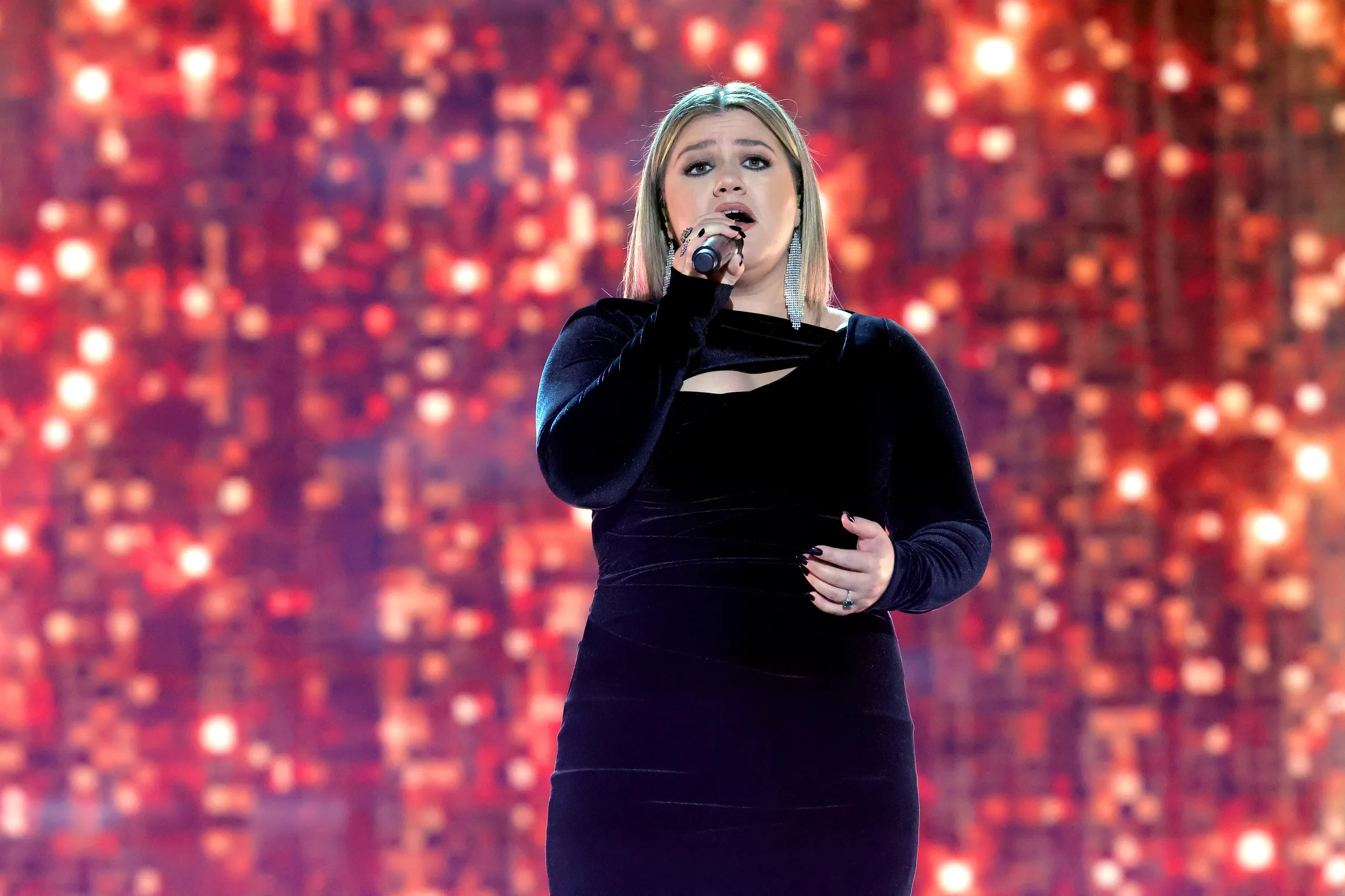
There’s a quiet risk every songwriter carries: once a song is released, it no longer belongs entirely to them. It travels. It changes. And sometimes—if the right voice finds it—it transforms.
That’s exactly what happened when Kelly Clarkson stepped into her “Kellyoke” spotlight and took on Luke Combs’ “Better Together.”
What unfolded wasn’t just a cover.
It was a reinterpretation so emotionally precise that even the man who wrote the song had to rethink it.
The Danger of Familiar Songs
“Better Together” is the kind of track that feels settled.
Built on warmth, simplicity, and steady devotion, it’s a song that doesn’t try to overwhelm. Luke Combs’ original delivery leans into grounded sincerity—clear, direct, and deeply rooted in country storytelling. It’s the musical equivalent of certainty.
That’s what made Clarkson’s version so striking.
She didn’t disrupt the song.
She destabilized it—just enough to reveal something new.
Slowing Down to Say More
From the first line, Clarkson shifted the emotional gravity.
The tempo felt slightly stretched, as if time itself had softened. Phrases lingered longer than expected. Pauses carried weight. Instead of moving the listener forward, she held them in place.
That subtle pacing change did something powerful: it turned the song inward.
Where Combs’ version feels like a declaration of love, Clarkson’s felt like a reflection on it.
Restraint as a Superpower
Clarkson is known for vocal power—the kind that can fill arenas and lift choruses into the stratosphere. But here, she chose something far more difficult:
Restraint.
She pulled back.
Lines faded into near-whispers. Notes weren’t pushed—they were released. Even her signature runs appeared sparingly, almost as emotional punctuation rather than display.
That control reframed the song’s emotional tone. It didn’t ask for attention.
It invited vulnerability.
A Shift in Perspective
Perhaps the most profound change came from something less technical and more interpretive: perspective.
When Clarkson sang the lyrics, they no longer felt like firm statements of love. They felt like something closer to quiet admissions—fragile, personal, and almost uncertain in their honesty.
The chorus, familiar as it is, took on a different emotional shape.
In Combs’ voice, it reassures.
In Clarkson’s, it searches.
That shift alone was enough to make the song feel newly written.
When the Artist Becomes the Audience
Cameras caught Luke Combs watching.
And his reaction said everything.
There was no competitive tension. No sense of ownership being challenged. Instead, there was recognition—the kind that comes when you hear your own work reflected back at you in a way you didn’t expect.
Later, he joked that Clarkson’s voice is “a curse.”
But beneath the humor was something real.
Because what Clarkson does isn’t imitation.
It’s translation.
She takes a song and filters it through her own emotional lens until it feels entirely lived-in—sometimes so completely that even the original artist hears it differently.
The Art of Inhabiting a Song
Many singers cover songs.
Few inhabit them.
Clarkson’s approach isn’t about honoring the original by recreating it. It’s about honoring it by discovering what else it can hold.
That means:
- Letting lyrics shift meaning through tone
- Allowing silence to carry as much weight as sound
- Finding emotional spaces the original didn’t emphasize
It’s a risk. Because when you change too much, you lose the essence.
But when you get it right, you expand it.
Why This Moment Resonated
The performance didn’t go viral because it was technically flawless—though it was.
It resonated because it revealed something deeper about music itself.
Songs aren’t fixed.
They evolve with the voices that carry them.
And sometimes, it takes a completely different perspective to unlock a new layer of truth within something already beloved.
Not Replacement—Revelation
Clarkson didn’t replace Combs’ version of “Better Together.”
She reframed it.
The original still stands—warm, steady, and rooted. But now it exists alongside another version that feels more introspective, more searching, more delicate.
Two interpretations.
Same words.
Different emotional worlds.
Final Thought
There’s a reason moments like this linger.
They remind us that great songs aren’t defined solely by how they’re written—but by how they’re felt.
And sometimes, it takes a voice willing to step gently into someone else’s story to show just how much more that story can hold.
For Luke Combs, the song may never sound quite the same again.
And for Kelly Clarkson?
Just another day quietly reshaping the way we hear music.
@kellyclarksonshow ‘Better Place’ 🎶 @*NSYNC #Kellyoke #NSYNC #KellyClarkson


