Some songs carry a reputation so formidable that they become almost sacred—admired, studied, but rarely approached. Whitney Houston’s “Run to You” has long lived in that space.
It isn’t just a song. It’s a vocal gauntlet.
And for decades, most singers made the same decision: don’t risk it.
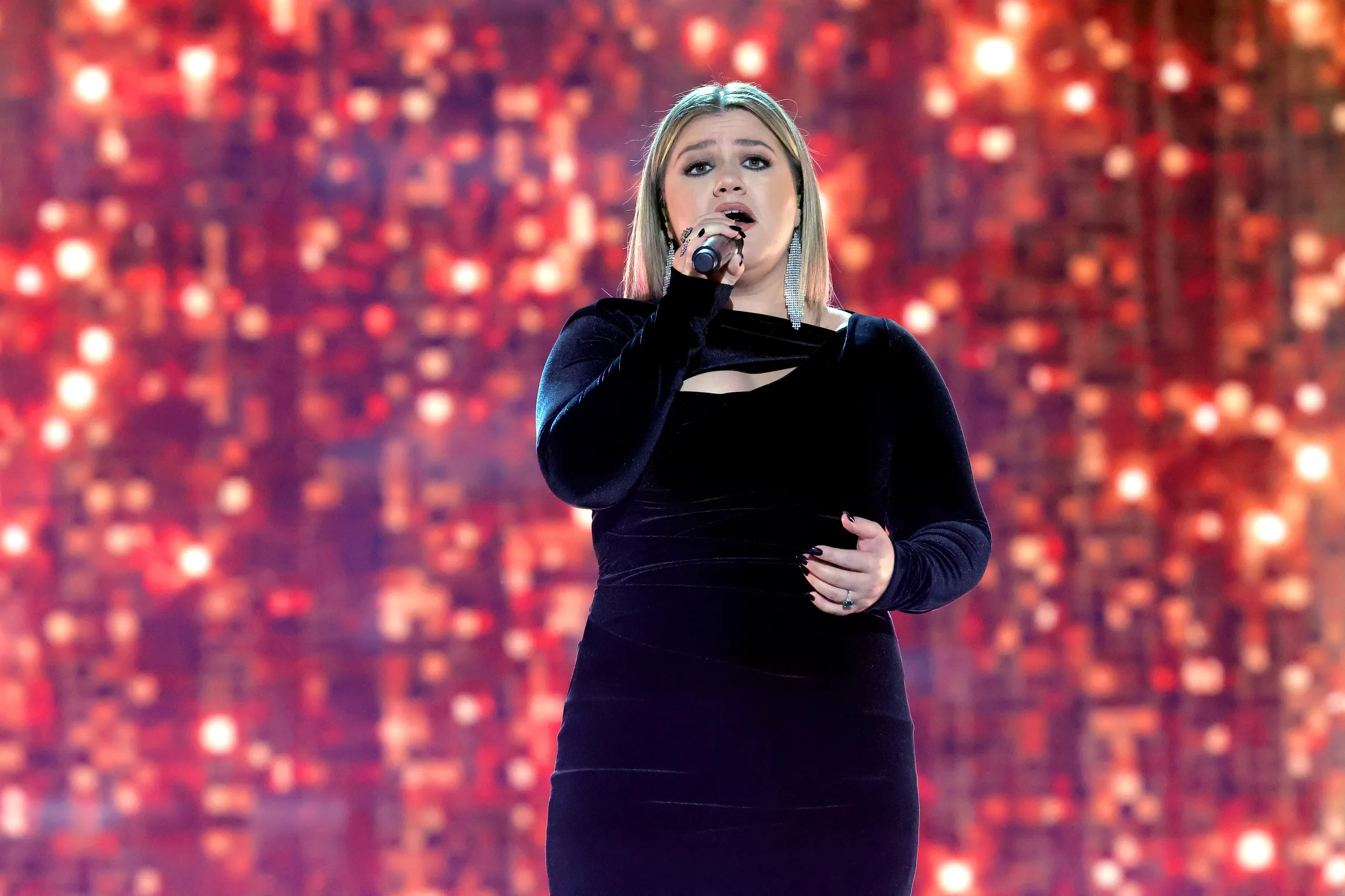
Then Kelly Clarkson stepped onto the “Kellyoke” stage—and did exactly that.
The Myth of the “Impossible Song”
“Run to You” isn’t intimidating because it’s loud or flashy. It’s intimidating because it demands everything at once.
The structure itself is unforgiving:
- A soft, exposed opening that leaves no room for vocal instability
- Gradual emotional build that requires restraint, not force
- A final ascent packed with sustained high notes that test endurance and control
There’s no shortcut through it. No moment to hide.
That’s why most artists choose to admire it from a distance.
Clarkson chose differently.
A Risk That Couldn’t Be Edited
Unlike studio recordings, “Kellyoke” performances happen in real time. No second takes. No post-production fixes. Just voice, breath, and presence.
That’s what made the decision more than bold—it made it vulnerable.
Because attempting a song like “Run to You” live doesn’t just risk imperfection.
It risks collapse.
But Clarkson didn’t approach it as a challenge to conquer.
She approached it as a story to carry.
Starting Smaller to Go Bigger
From the opening lines, Clarkson made a crucial choice: she held back.
No early vocal fireworks. No attempt to prove capability upfront. Instead, she leaned into softness—almost conversational in tone, letting each lyric settle naturally.
That restraint wasn’t caution.
It was strategy.
By preserving energy and emotional clarity early, she created space for the song to grow organically—just as it was designed to.
Precision Over Power
As the performance progressed, something subtle shifted.
Her tone deepened. The vibrato tightened. Breath control became more deliberate, almost invisible. Each phrase felt placed rather than pushed.
Where many singers approach Whitney Houston’s catalog with intensity, Clarkson approached it with calibration.
She didn’t try to overpower the song.
She aligned with it.
The Climb Everyone Was Waiting For
Every listener familiar with “Run to You” knows what’s coming: the final climb.
It’s the moment where the song either soars—or falls apart.
The notes sit high. They demand sustained support. And perhaps most challenging of all, they require emotional clarity while under physical strain.
This is where most performances falter.
Clarkson didn’t falter.
She ascended.
Each high note landed clean—centered, supported, and free of visible strain. There was no sense of reaching. No tension creeping into the sound. Just control.
And when she hit the final peak, it didn’t feel forced.
It felt earned.
The Reaction: More Than Applause
The audience didn’t wait for the end.
They reacted in real time—mid-phrase, mid-note—because they recognized what was happening: a moment that rarely occurs, where preparation, instinct, and courage align perfectly.
Online, the response was immediate.
Millions of views. Endless commentary. And a recurring sentiment that cut through the noise: this wasn’t just a great cover—it was a defining one.
Why This Performance Worked
Clarkson’s success didn’t come from trying to replicate Whitney Houston.
That would have been impossible—and unnecessary.
Instead, she did something far more effective:
- She respected the song’s structure
- She trusted her own vocal identity
- She balanced technique with emotional truth
Her voice carries a different texture—earthier, more grounded—but that contrast became a strength. It allowed the song to feel familiar yet newly alive.
Honoring Without Imitating
There’s a fine line when covering legendary material.
Lean too far into imitation, and the performance loses authenticity. Move too far away, and it loses connection to the original.
Clarkson found the balance.
She honored Whitney’s architecture—the phrasing, the emotional arc, the integrity of the composition—while allowing her own voice to shape the experience.
That’s what made the performance resonate.
Not because it replaced the original.
But because it expanded it.
The Bigger Meaning Behind the Moment
What this performance ultimately revealed goes beyond vocal ability.
It speaks to a deeper truth about artistry:
Some songs aren’t meant to remain untouched.
They’re meant to be approached with enough respect, skill, and courage to uncover new dimensions within them.
Clarkson didn’t just sing “Run to You.”
She proved that even the most intimidating material can evolve when placed in the right hands.
Final Thought
Whitney Houston’s legacy remains singular—untouchable in its impact and influence.
But on that stage, Kelly Clarkson showed something equally powerful:
That greatness doesn’t live in imitation.
It lives in interpretation.
And sometimes, all it takes to transform a “forbidden” song into a defining moment is a voice willing to meet it—note for note, emotion for emotion—without fear.