Some performances look difficult.
Others are difficult.
And then there are the rare ones that make you question how they were even possible in the first place.
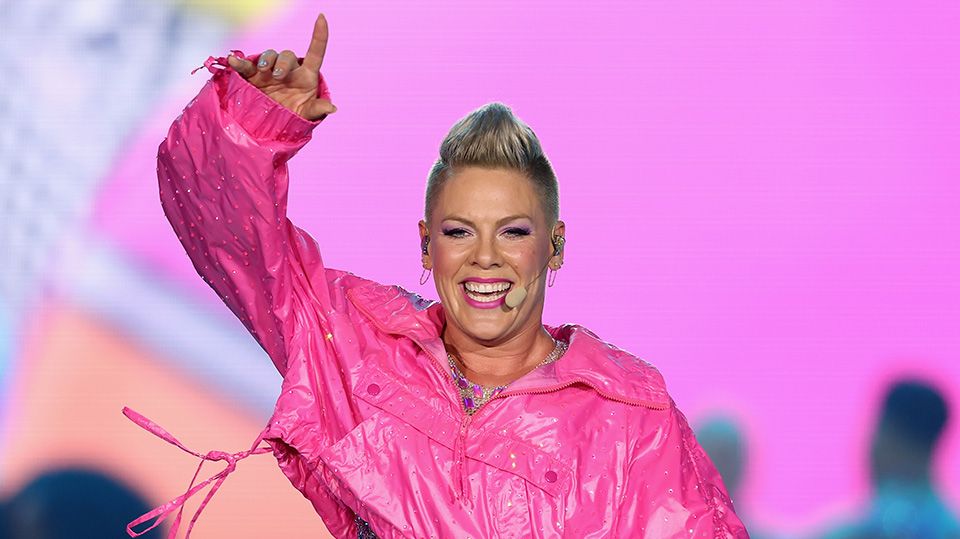
Pink’s 2012 American Music Awards performance of “Try” belongs firmly in that last category—not because it was dramatic, but because it was real in a way most live performances aren’t.
When pop stopped playing it safe
By 2012, the rules of live pop performance were already well established.
High-energy choreography? Use backing tracks.
Complex staging? Simplify the vocals.
Physically demanding routines? Pre-record what you can.
It wasn’t deception—it was practicality. The human body has limits, and singing at full power while being thrown, lifted, and slammed across a stage pushes directly against them.
Pink didn’t ignore those limits.
She challenged them.
This wasn’t choreography—it was controlled chaos
The performance of “Try” wasn’t built around synchronized dance or clean formations. It drew from a style of movement rooted in tension—physical storytelling that mimics conflict rather than polish.
With partner Colt Prattes, the routine unfolded like a relationship under pressure.
There were no soft transitions.
She was dragged. Flipped. Pushed. Pulled. Thrown to the ground and lifted again without pause. The movements weren’t designed to look pretty—they were designed to feel real.
That choice changed how the audience experienced the song.
It wasn’t just something to watch.
It was something to feel.
The part most people didn’t fully process
The choreography alone would have been impressive.
But that’s not what made the performance legendary.
She sang. Live. The entire time.
No obvious reliance on backing tracks to carry the load. No stepping out of the routine to “catch” the vocal. No visible compromise between movement and sound.
And that’s where things get genuinely unusual.
Because from a physiological standpoint, what she did is incredibly hard.
Why this performance is so difficult to replicate
To understand why so few artists attempt anything like this, you have to look at what the body is doing during a performance like “Try.”
Singing well requires:
- Controlled breathing
- Stable posture
- Consistent airflow
Now add:
- Rapid, forceful movement
- Sudden impacts (falls, lifts, throws)
- Constant changes in body position
Each of those disrupts breath control—the foundation of vocal performance.
When you’re slammed to the ground, your diaphragm tightens.
When you’re lifted, your core engages differently.
When you’re spun or pulled, your balance shifts.
All of that makes sustained, controlled singing exponentially harder.
Most performers solve this by adjusting one side of the equation.
Pink didn’t.
The athletic foundation behind the voice
What makes her capable of pulling this off isn’t just vocal ability—it’s physical conditioning.
Before she was known for aerial performances, Pink had a background in gymnastics and athletic training. That foundation shows up clearly in “Try.”
She isn’t just enduring the choreography.
She’s controlling it.
Her core stability allows her to absorb impact without completely losing breath support. Her timing allows her to phrase vocals around movement rather than against it. And her stamina keeps the performance from collapsing halfway through.
This is not just singing.
It’s full-body coordination at a high level.
The illusion of effortlessness
One of the most striking aspects of the performance is how controlled it feels, even at its most chaotic moments.
That’s not accidental.
Great performers don’t eliminate effort—they manage how it appears.
Pink allows the audience to see the struggle in the choreography, but she doesn’t let that struggle overwhelm the music. The breathiness, the slight roughness at certain moments—it all works with the emotional tone of the song rather than against it.
Instead of hiding the physical strain, she integrates it.
And that makes the performance feel more honest.
The myth of “the only one who can do it”
It’s tempting to say she’s the only artist capable of this kind of performance.
That’s not entirely true.
There are performers with strong vocals. There are dancers with elite physical control. There are artists who can handle demanding choreography.
What’s rare is the combination—and the willingness to fully commit to it live.
Most artists optimize for consistency.
Pink, in this moment, optimized for impact.
Why the performance still stands out
More than a decade later, the “Try” performance is still referenced—not because it was technically perfect, but because it felt uncompromised.
It didn’t take shortcuts.
It didn’t separate singing from movement.
It didn’t soften the edges to make things easier.
Instead, it leaned into difficulty—and made that difficulty part of the storytelling.
A new standard, or an outlier?
After that performance, there was a noticeable shift in how audiences talked about “live” vocals.
Viewers became more aware. More curious. More critical of what they were actually hearing versus what they were being shown.
In that sense, Pink didn’t just deliver a standout moment.
She raised expectations.
But she also set a bar that’s intentionally hard to reach.
Because performances like this come with trade-offs—risk, inconsistency, physical strain. Not every artist wants or needs to operate at that level.
And that’s okay.
What the performance ultimately proved
At its core, “Try” wasn’t about showing that something was possible.
It was about showing what happens when an artist refuses to separate their voice from their body.
No safety net of perfect stillness.
No division between singer and performer.
No compromise between emotion and execution.
Just one continuous, demanding expression.
Why it still matters
In an industry that often prioritizes polish, this performance reminded people of something simpler:
Perfection isn’t always what makes something powerful.
Sometimes it’s the visible effort.
The breath you hear between lines.
The impact you see in movement.
The sense that what’s happening could fall apart—but doesn’t.
That tension is what makes it memorable.
And that’s why, years later, people don’t just remember that Pink performed “Try.”
They remember how it felt to watch her do it.