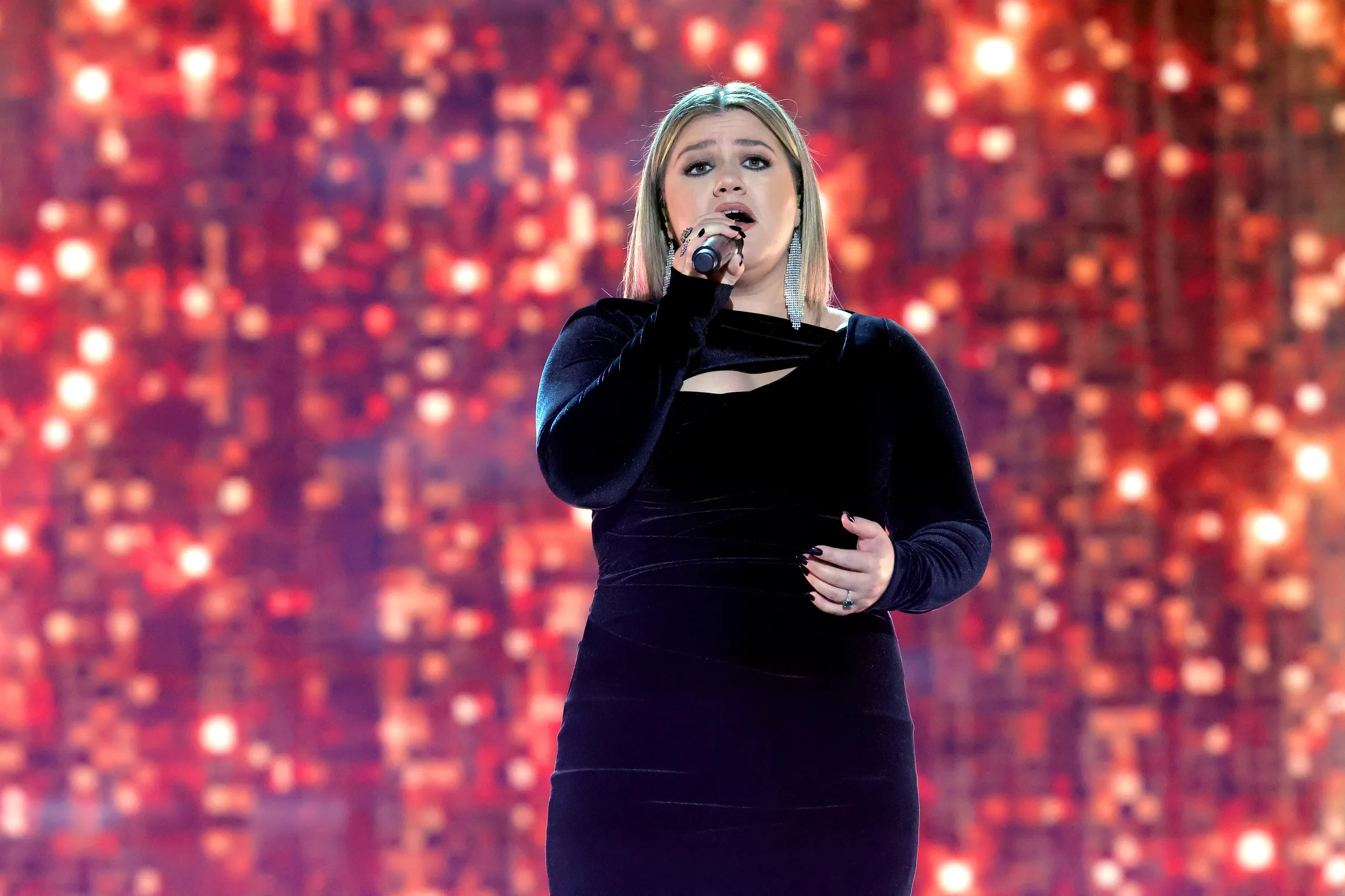
Not every performance is meant to impress.
Some are meant to be held carefully.
When Kelly Clarkson chose to sing Demi Lovato’s “Anyone” on Kellyoke, she stepped into one of the most emotionally exposed songs in modern pop—not to reinterpret it, but to sit inside it.
And for a few minutes, the show stopped feeling like television.
A song that carries its own history
“Anyone” isn’t just another ballad.
It’s a document of a moment—written during a period when Demi Lovato has said she felt unheard, unseen, and close to breaking. The song’s power doesn’t come from complexity or production. It comes from how little it hides.
That creates a unique challenge for anyone covering it.
You can’t decorate it.
You can’t overpower it.
You can only respect it.
Clarkson understood that.
Choosing restraint over ability
Kelly Clarkson is known for doing the opposite of what she did here.
She can fill a room with sound. She can elevate a chorus into something explosive. She can turn almost any song into a vocal showcase.
But with “Anyone,” she pulled back.
Not because she couldn’t do more.
Because doing more would have been wrong.
Her delivery stayed close to the emotional center of the song—quiet, controlled, and intentionally fragile. Notes weren’t stretched for effect. Phrases weren’t reshaped for drama.
She didn’t try to “perform” the pain.
She let it exist.
The weight of singing someone else’s truth
Covering a song like this isn’t just a technical decision—it’s an ethical one.
When a song is tied so closely to a real-life crisis, the line between interpretation and intrusion becomes thin. The goal shifts from making the song your own to making sure you don’t take something away from it.
Clarkson approached it like a listener who happened to be singing.
You could hear it in the way she held certain lines—especially the ones that speak directly to isolation. There was space. Hesitation. A sense that she was aware of what those words meant beyond the melody.
It didn’t feel like ownership.
It felt like care.
The moment the room changed
Live television rarely allows for silence.
There’s usually movement, reaction, applause—something to keep the energy flowing.
But as the performance unfolded, the room settled.
The audience didn’t respond loudly. They didn’t interrupt the moment. They listened.
And that silence became part of the performance.
Because silence, in a song about not being heard, carries its own meaning.
When imperfection becomes the point
Technically, Clarkson’s voice is one of the most controlled in contemporary music.
But here, control wasn’t the priority.
There were moments where her voice softened to the edge of breaking. Where breath was audible. Where the delivery felt less polished than usual.
Those choices weren’t mistakes.
They were alignment.
Because a perfectly executed version of this song might have felt disconnected from what it represents.
This version didn’t.
Why millions responded without saying much
The reaction to the performance wasn’t explosive.
It was quiet.
People shared it. They commented. But the tone wasn’t loud excitement—it was recognition.
Many viewers described the same feeling: not being entertained, but being understood.
That’s rare.
Especially in a format designed for daily consumption, where moments are meant to pass quickly and make way for the next segment.
This one lingered.
Two artists, one emotional language
Part of what gave the performance depth is the shared context between Clarkson and Lovato.
Both have lived publicly. Both have navigated personal struggles under scrutiny. Both understand what it means to express vulnerability in front of an audience that doesn’t always know what to do with it.
Clarkson didn’t need to recreate Lovato’s experience.
She understood the emotional language of it.
And that understanding shaped the performance more than any vocal choice could.
The difference between covering a song and carrying it
There’s a difference between singing a song well and carrying what it represents.
Clarkson didn’t try to redefine “Anyone.”
She didn’t try to make it bigger.
She held it steady.
That’s a harder task than it sounds.
Because it requires restraint, awareness, and a willingness to step back even while standing at the center.
What made this moment matter
In the end, the performance wasn’t about vocal range or reinterpretation.
It was about attention.
Attention to the meaning behind the lyrics.
Attention to the emotional weight of the song.
Attention to the responsibility of singing something so personal.
And in a world where most performances aim to stand out, this one did something else.
It stayed honest.
When music becomes something else
For a brief moment, “Anyone” stopped being a song on a set list.
It became a conversation—one that didn’t require answers, only acknowledgment.
Clarkson didn’t resolve the pain in the lyrics.
She didn’t soften it.
She gave it space.
And sometimes, that’s the most powerful thing a performer can do.
Not fill the silence.
But respect it.