The streets of Los Angeles have always carried history in their silence.
On most days, that history stays beneath the surface—unspoken, but understood. Decades of tension, rivalry, and survival etched into neighborhoods that learned long ago how to exist within conflict. But in 2016, something unusual began to take shape.
Not in a studio. Not on a stage.
In the streets.
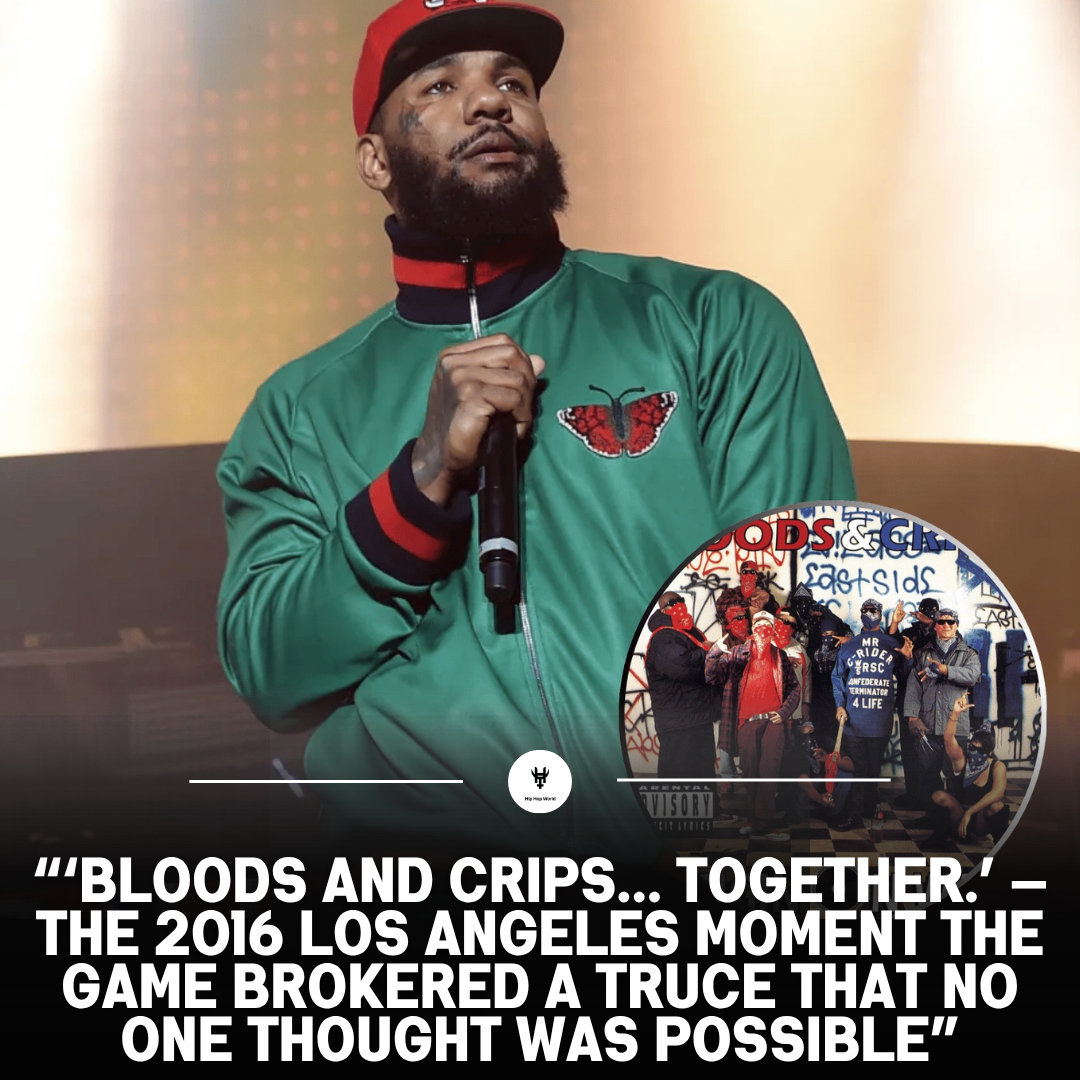
At the center of it was The Game, an artist whose connection to those streets ran deeper than music. And beside him, watching closely and later speaking on it, was Snoop Dogg.
What unfolded wasn’t planned like a performance.
It was something far more difficult.
A City on Edge
The moment didn’t come out of nowhere.
Across the United States, tensions were rising. Conversations around policing and racial injustice were no longer distant—they were immediate, visible, and impossible to ignore. In Los Angeles, a city with its own long and complicated history with law enforcement, that pressure felt even heavier.
Frustration was building.
But so was a question no one had answered yet—what happens when that frustration stops turning inward?
The Decision That Changed the Direction
Instead of allowing that energy to deepen old divisions, The Game made a move that carried risk.
He reached across lines that had defined entire generations. Lines that weren’t symbolic—they were real. Rivalries that had shaped identities, protected territory, and, at times, cost lives.
He didn’t ask for history to be erased.
He asked for something else.
To focus on what they all shared.
That idea—simple on the surface—was anything but simple in reality.
Because it meant asking people to stand next to those they had spent years standing against.
When the Streets Chose Something Different
What followed wasn’t chaos.
It was something quieter, and far more powerful.
Thousands gathered, moving toward the headquarters of the Los Angeles Police Department. But this wasn’t a march built on confrontation. It was built on presence.
People walked together.
Side by side.
Groups that once defined themselves through opposition now shared the same direction, the same purpose, the same message. The streets that had seen division were now carrying something else—unity, even if only for a moment.
And for those who witnessed it, that image alone was enough to shift perception.
From Protest to Conversation
According to Snoop Dogg, the significance of that day didn’t end when the march did.
It opened a door.
For years, communication between law enforcement and the communities most affected by it had been shaped by distance and distrust. But this time, representatives didn’t remain outside that conversation—they stepped into it.
Engagement followed.
Dialogue replaced distance, even if only temporarily.
It didn’t solve everything. It didn’t erase the past.
But it changed the tone.
And sometimes, that’s where change begins.
A Moment That Meant More Than It Solved
It would be easy to look at that day and expect a resolution.
But that’s not what it was.
The unity was real—but it was also fragile. The issues were deeper than a single march could address. The history was too complex to rewrite overnight.
Still, something had happened that couldn’t be ignored.
For a brief moment, the narrative shifted.
Not because the problems disappeared—but because people chose to respond differently to them.
The Power Behind the Platform
For The Game, it was a reminder that influence doesn’t have to stay within music.
It can move beyond it.
It can organize, connect, and, when necessary, challenge the way things have always been done. His role wasn’t about performance—it was about presence, about using visibility to create something tangible in the real world.
For Snoop Dogg, witnessing that moment reinforced something he had always understood—that unity, when it comes from within the culture itself, carries a different kind of weight.
It doesn’t need to be forced.
It just needs to be chosen.
The Image That Stayed Behind
Long after the streets cleared, one image remained.
Former rivals walking together through Los Angeles.
No slogans could fully capture it. No headline could simplify it.
Because what it represented wasn’t an ending.
It was a possibility.
A reminder that even the most deeply rooted divisions are not permanent. That under enough pressure—and with the right kind of leadership—something different can emerge.
Not perfect.
Not permanent.
But real enough to be remembered.
And sometimes, that’s enough to change how the next moment begins.