At the height of its power, Death Row Records didn’t just dominate hip-hop—it defined it. The sound, the image, the influence—everything flowed through its walls. From the outside, it looked untouchable. From the inside, it was something else entirely.
For Dr. Dre, the environment had begun to shift. What started as a creative stronghold slowly turned into a space where tension replaced focus, and chaos began to compete with the music itself.
And at some point, the success stopped feeling like success.
The Breaking Point Behind the Scenes
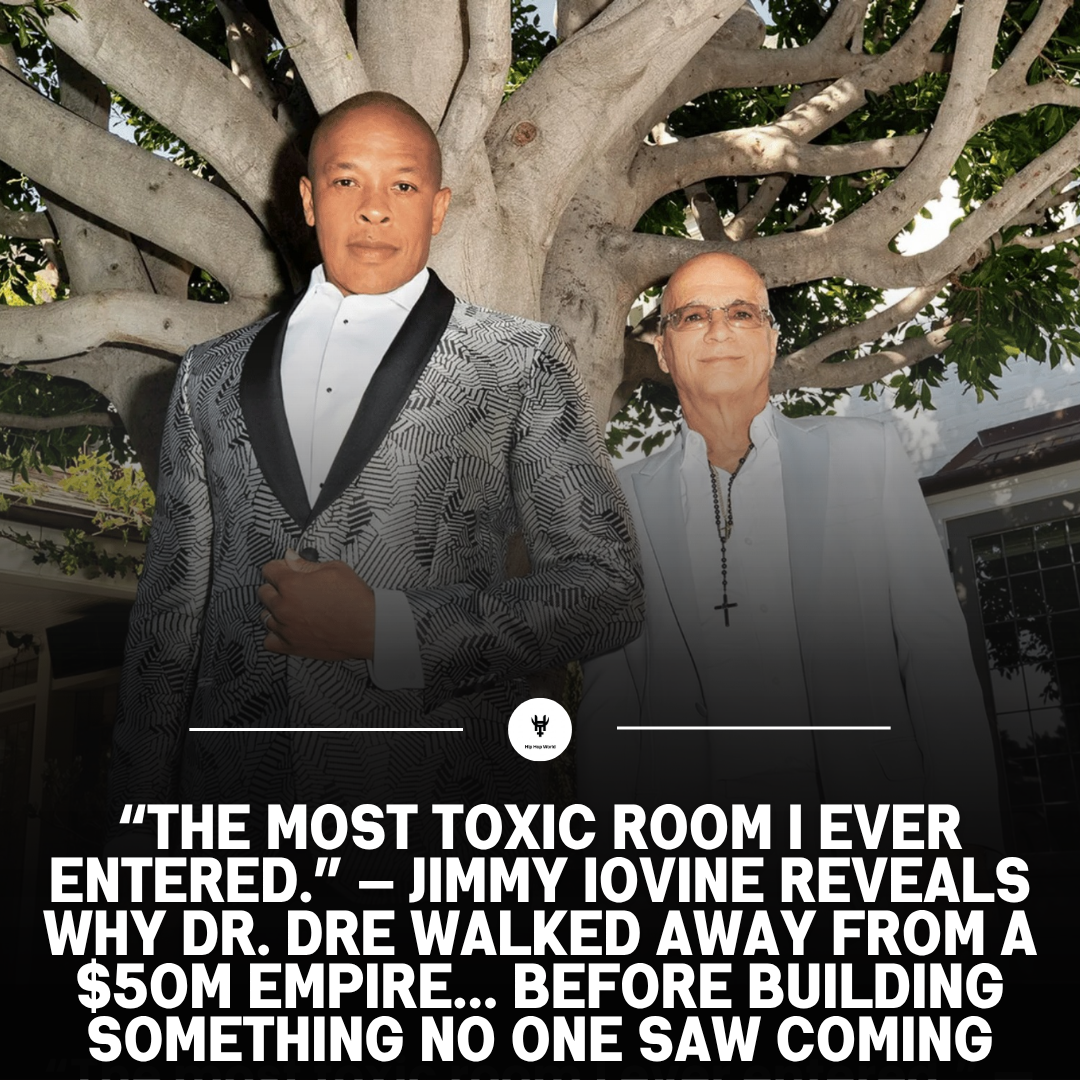
According to Jimmy Iovine, the atmosphere inside Death Row had become something he would later describe as “the most toxic room” he had ever entered. It wasn’t a casual observation—it was a reflection of how far things had drifted from what they once were.
For Dre, whose approach to music was built on precision, control, and detail, that kind of environment wasn’t just uncomfortable—it was limiting.
Every decision, every sound, every session mattered to him. And when that level of control started slipping, so did his ability to create the way he wanted.
The problem wasn’t success.
The problem was what it was costing him.
A Decision That Looked Like a Loss
Walking away wasn’t logical.
At least, not on paper.
Death Row was generating massive revenue. The influence was global. The position was secure. Leaving meant giving up more than just a role—it meant leaving behind ownership, equipment, and a future built on guaranteed returns.
But that’s exactly what Dre did.
He stepped away from everything he had helped build, leaving behind millions in potential earnings. No safety net. No clear path forward.
From the outside, it looked like a loss.
From the inside, it was something else.
Starting Over Without Guarantees
What came next wasn’t immediate success.
It was uncertainty.
With the creation of Aftermath Entertainment, Dre essentially reset his career. No built-in dominance. No guaranteed audience. Just the same standards he had always held—and the freedom to apply them without compromise.
This time, the environment matched the vision.
There were no shortcuts. No distractions pulling focus away from the music. Just the work.
And slowly, that foundation began to rebuild something stronger than before.
A Partnership That Extended Beyond Music
That same commitment to control and clarity would later shape Dre’s partnership with Jimmy Iovine in a completely different arena.
Together, they launched Beats Electronics—a move that initially didn’t make sense to many. A music producer entering the tech space, focusing on sound quality in a market already saturated with audio products.
But Dre approached it the same way he approached everything else.
Detail mattered. Experience mattered. The way something sounded—and felt—mattered.
With Iovine’s business strategy aligning with Dre’s creative instincts, the brand grew from skepticism to dominance. What started as an extension of their shared philosophy became something much larger.
Eventually, Apple acquired Beats in a deal valued at approximately $3.2 billion—transforming what began as a risk into one of the most successful artist-driven ventures ever built.
Reframing the Decision
Looking back, Iovine’s reflection changes how the moment is understood.
Leaving Death Row wasn’t a misstep. It wasn’t a loss of opportunity.
It was a decision rooted in survival—creative, personal, and long-term.
Because staying would have meant something else entirely.
It would have meant compromising the very standards that defined Dre’s work.
What the Story Really Shows
In music—and in business—success is often measured by what you hold onto. Contracts. Revenue. Position.
But this story suggests something different.
That sometimes, the most important move isn’t the one that secures what you have.
It’s the one that protects what you are.
For Dr. Dre, walking away from millions wasn’t the end of his influence.
It was the moment that made everything that followed possible.