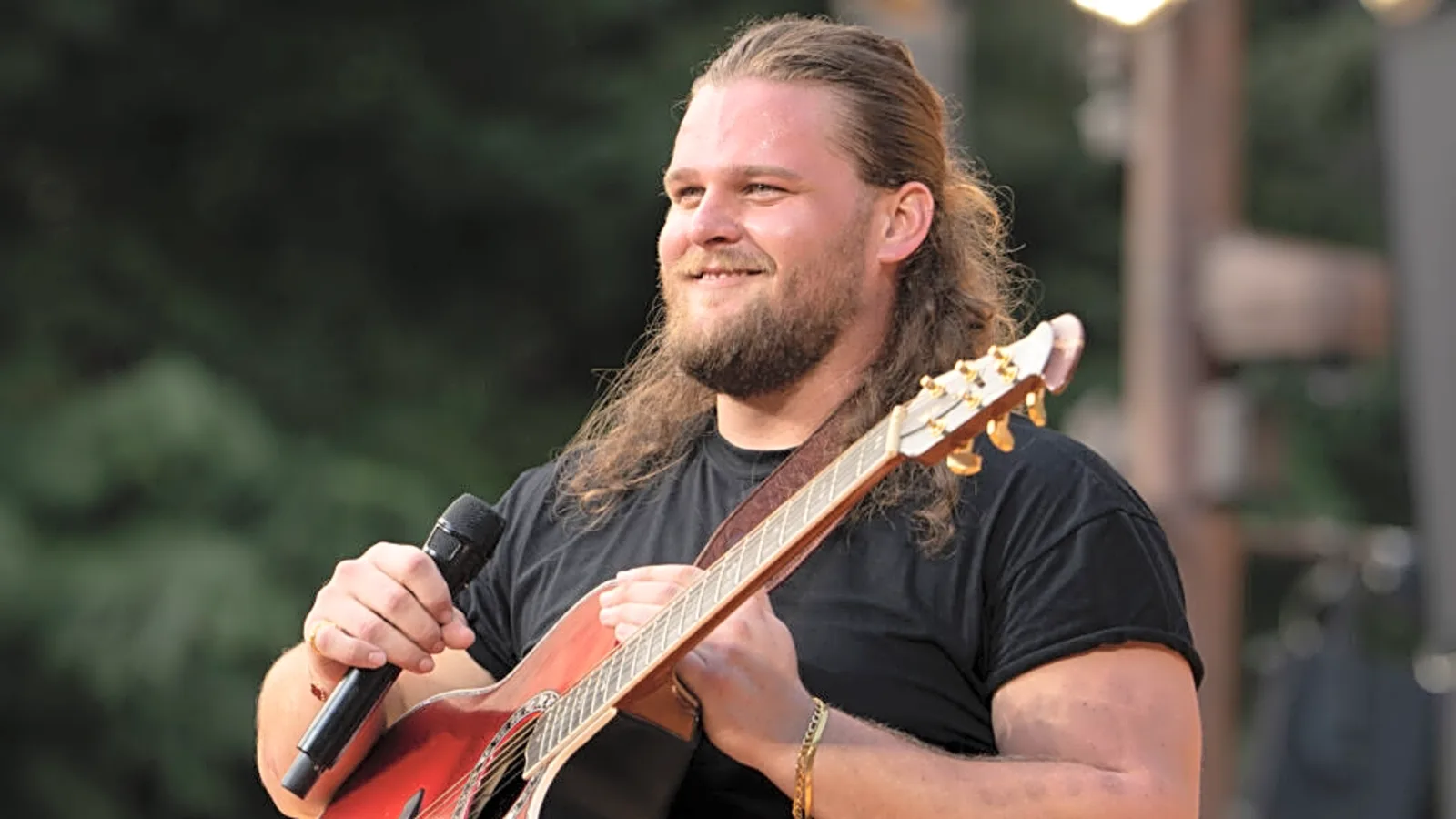
Under the bright lights in Hawaii, with the stage set and the expectations quietly building, Chris Tungseth stepped into a moment that still didn’t feel entirely real to him. The scale of it—the audience, the cameras, the weight of the competition—stood in sharp contrast to everything that had come before. Not long ago, his world had been much smaller, measured in local rooms and familiar faces.
Now, it had expanded beyond anything he had imagined.
A Path He Never Planned
Chris didn’t arrive at this stage through years of calculated ambition. In fact, the path began almost by accident. A friend signed him up for American Idol without telling him, setting off a chain of events that would carry him from a quiet life in Fergus Falls, Minnesota, to one of the most recognized platforms in music.
For someone who grew up singing mostly in church and occasional gatherings, the transition was sudden. What had once been personal and contained was now public and amplified. Performances that once reached dozens were now reaching thousands—and soon, millions.
Yet even as the stage grew larger, the foundation of his music remained the same.
Carrying Something Deeper Onto the Stage
Behind the performances was a story Chris had not initially planned to share. Music had always been a way for him to process life quietly, not something he intended to use as a platform for personal hardship. There was hesitation in bringing those parts of his life into such a public space.
But eventually, that changed.
Songs like “Jealous” took on a different meaning for him—less about their original context and more about the realities he had lived through. After losing his father to leukemia in 2023 and navigating his mother’s ongoing health struggles, the lyrics carried a weight that went beyond performance.
What had once been private began to shape how he stood on stage.
The Turning Point: Choosing to Be Seen
There came a moment where the decision shifted—from holding back to opening up. It wasn’t about turning personal tragedy into something performative. It was about allowing authenticity to exist alongside the music.
That choice changed how people responded.
Instead of simply watching a contestant, audiences began to connect with a person. The feedback he received reflected that shift, with people recognizing something honest in the way he shared his experience.
It wasn’t just about voice or technique anymore. It was about presence.
From Local Rooms to a National Stage
The contrast between where Chris started and where he now stood became part of the story itself. From open mics, bars, and small gatherings in his hometown to televised performances judged by Carrie Underwood, Lionel Richie, and Luke Bryan, the scale of change was difficult even for him to fully grasp.
Yet through it all, there was a sense of grounding that didn’t shift.
Back home, the support continued to grow. Fergus Falls, a close-knit community, rallied behind him as one of their own stepped onto a national stage. For those who knew him long before the spotlight, the moment carried a different kind of pride—one rooted in familiarity rather than surprise.
What This Moment Really Represents
By the time Chris reached the Top 20, the journey had already taken on a meaning that went beyond competition. It wasn’t just about advancing rounds or impressing judges. It was about navigating the space between personal reality and public performance—and finding a way to bring both together.
What began as an unexpected opportunity became something more intentional. Not a reinvention, but a continuation of who he had always been, now seen on a larger scale.
And that may be what makes this moment resonate the most.
Because for Chris Tungseth, standing under those lights isn’t just about chasing something new. It’s about carrying everything that brought him there—and choosing, finally, to let it be seen.