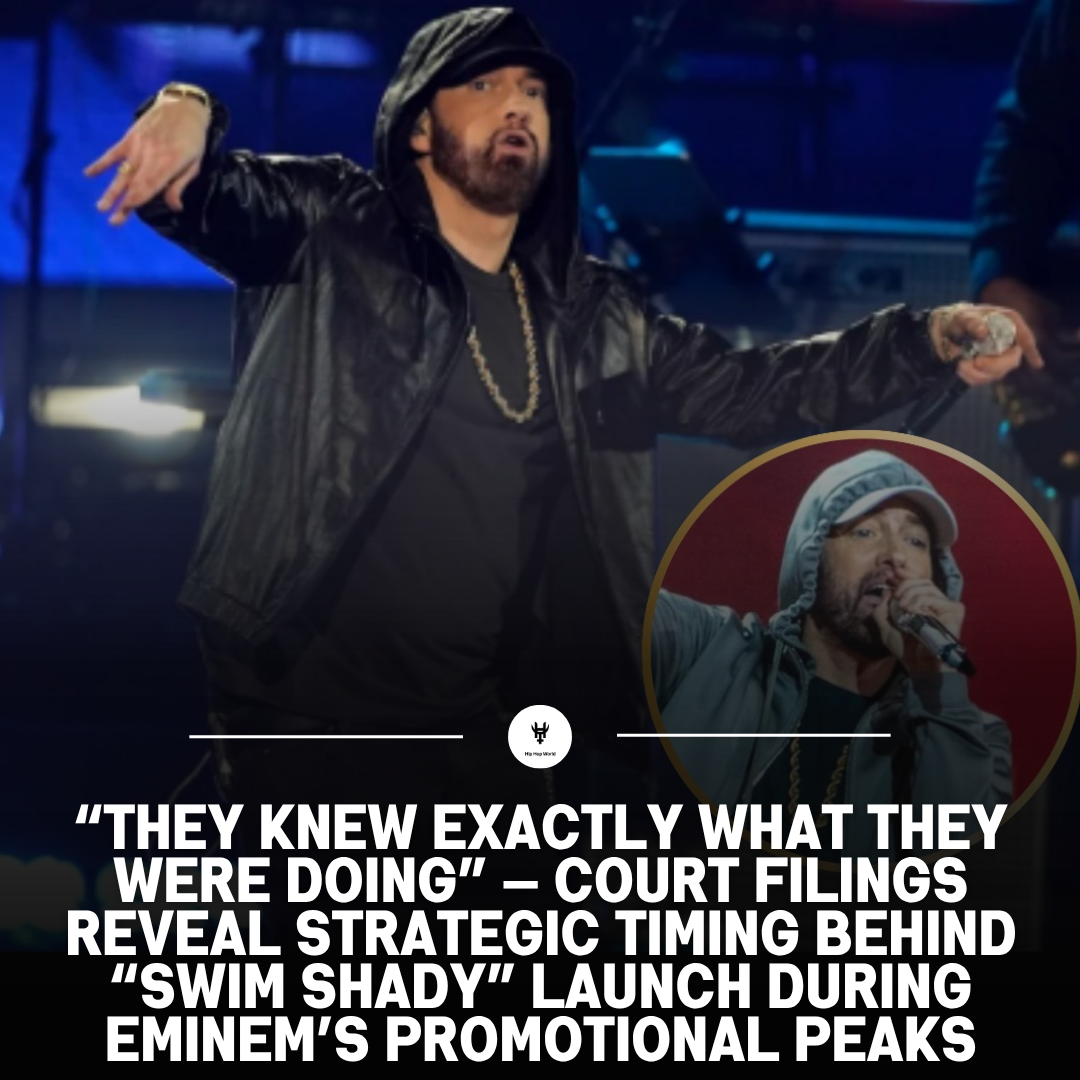
In a quiet conference room far from the noise of the stage, the kind of battle Eminem built his name on was unfolding again—only this time, there was no beat, no mic, no crowd. Just documents, filings, and a name that meant everything.
For decades, Eminem has treated identity as something earned, not borrowed. From Detroit’s unforgiving streets to the global rise of Slim Shady, every layer of his persona was built through pressure, resistance, and survival. The name wasn’t branding—it was biography. And that is precisely why this moment feels different.
When a Name Becomes a Battleground
The emergence of a corporate entity calling itself “Swim Shady” might have seemed, at first glance, like another clever spin in a culture built on wordplay. But beneath that surface was something far more serious—an attempt to attach itself to a name that carries decades of cultural weight.
Eminem’s team responded not with spectacle, but with clarity. The message was direct: this wasn’t parody, and it wasn’t coincidence. It was, in their words, disrespect. Not just toward the artist, but toward the meaning behind the name itself.
The Line That Was Already Drawn
Before the situation reached public attention, there had already been warnings. Legal notices were sent, asking for a simple correction—to step away from a name that was never theirs to begin with. But instead of retreating, the company moved forward, leaning into the belief that ambiguity could protect them.
For Eminem, that decision changed everything. This was no longer about confusion—it was about intent.
Those close to the situation suggest that what triggered the escalation wasn’t just the use of the name, but the implication behind it. The idea that a legacy could be repurposed, reshaped, and resold without the struggle that created it.
The Turning Point Hidden in Plain Sight
As the case moved deeper into legal territory, something unexpected surfaced. Court filings began to reveal a pattern—one that suggested this wasn’t a random naming decision, but a calculated move.
According to the evidence presented, the timing of the brand’s activity aligned closely with Eminem’s own promotional peaks. Engagement metrics were tracked. Opportunities were identified. And a name with global recognition was positioned at just the right moment to benefit from that visibility.
It was a shift in narrative—from imitation to strategy.
And in that shift, the stakes changed. This was no longer just about protecting a name. It became about protecting the value behind it.
More Than a Lawsuit
Across the music industry, the reaction has been measured but unmistakable. Conversations around ownership, identity, and artistic control have resurfaced with urgency. While figures like Travis Kelce and P!nk have spoken broadly about owning one’s narrative in the past, this moment gives those ideas a new kind of weight.
Because what’s being tested here isn’t just a trademark. It’s a boundary.
If a name like “Shady” can be repurposed without consequence, then the line between creator and consumer begins to blur. And in an industry built on authenticity, that blur carries real consequences.
Standing Ground in a Different Arena
Eminem has never avoided confrontation. From lyrical battles to public scrutiny, his career has been defined by resistance as much as talent. But this moment feels quieter, more calculated.
There are no diss tracks here. No public theatrics. Just a firm, deliberate stance.
And yet, the message feels just as strong.
The Weight of a Name
As the case moves toward its resolution, the outcome will extend far beyond a single brand name. It will define how far influence can stretch—and where it must stop.
Because in the end, this isn’t about ownership on paper. It’s about ownership of meaning.
And some names, no matter how widely recognized, were never meant to be borrowed.