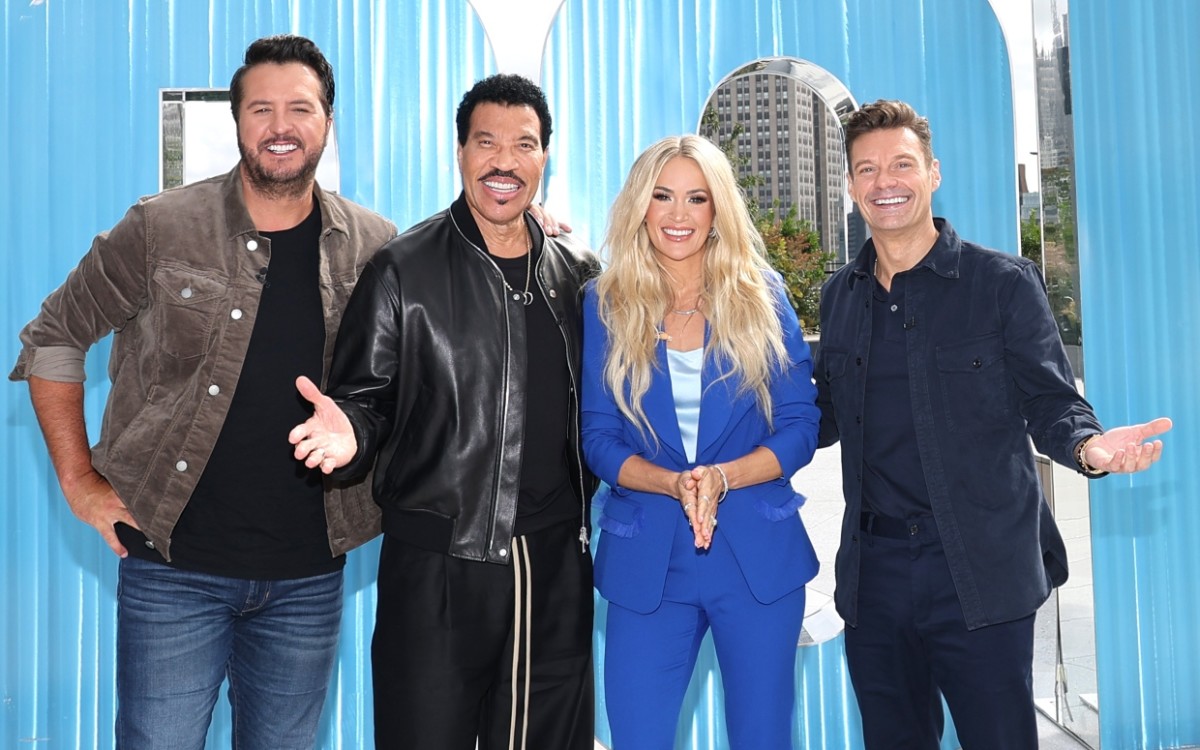
The stage was set for answers, but none came.
As the lights dimmed on another live episode of American Idol, the remaining contestants stood side by side, waiting for a moment that never arrived. Weeks of performances had led here. The votes had been cast. The tension was real. And yet, instead of resolution, the night ended in uncertainty.
A Result Night Without Results
For the first time in the show’s long history, elimination was paused—not because of controversy or error, but because of scale. As Ryan Seacrest addressed the audience in the final moments, his tone carried both surprise and restraint. The volume of votes had surged beyond expectation, driven by a system the show had only recently introduced.
“Tens of millions,” he explained, describing a voting pace unlike anything the production had seen before.
The decision was immediate. No one would go home that night. Every vote would be carried forward, verified, and accounted for before the competition could move ahead.
When Innovation Changes The Moment
This season marked a shift in how the audience connects with the show. Beyond traditional online and text voting, viewers were now able to cast their choices through platforms like Instagram, Facebook, and TikTok—bringing the experience closer to real-time engagement.
It was a move designed to meet a new generation where they already are. But on this night, that same accessibility reshaped the structure of the show itself.
Even the judges—Luke Bryan, Lionel Richie, and Carrie Underwood—appeared caught off guard by the announcement. What had always been a predictable rhythm suddenly felt open-ended.
The Tension That Carries Forward
Instead of closure, the episode delivered anticipation. The contestants would have to wait another week to learn their fate, with results now set to be revealed live at the beginning of the next show. Only then would the competition narrow, moving forward with fewer voices but even higher stakes.
Behind the scenes, the reasoning was clear. Accuracy mattered more than speed. Every vote—no matter how it was cast—needed to be counted, verified, and respected.
A New Era, Still Finding Its Shape


The introduction of social media voting had been years in the making. Producers had long explored ways to deepen audience interaction, recognizing that viewing habits—and attention—had shifted. The goal was simple: make participation easier, faster, and more immediate.
But with that shift comes unpredictability.
On a show built on timing and structure, even a small disruption can echo across the entire experience. And this wasn’t small.
The Night That Didn’t End
As the contestants left the stage, nothing had been decided—and somehow, everything had changed. The competition hadn’t paused, but it had stretched, pulling the tension into the next episode.
Because in that unexpected silence, one thing became clear.
The power of the audience has never been greater. And for the first time, even the show itself had to wait for it.