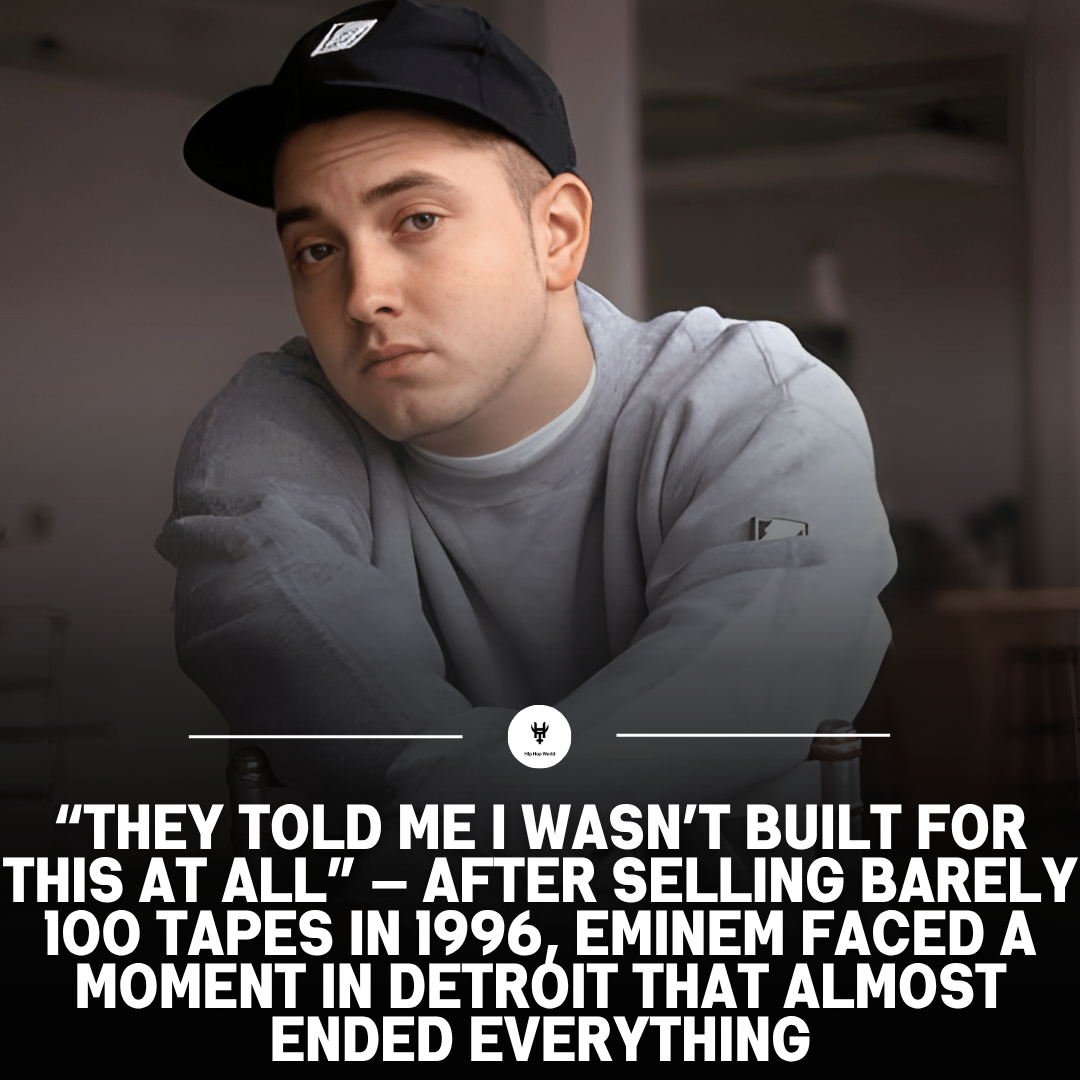
In 1996, long before the world knew the name Eminem, there was a quieter moment in Detroit that almost went unnoticed. A debut album titled Infinite had just been released, carrying the hopes of a young artist trying to break through. There were no headlines, no buzz, no immediate reaction.
Just silence.
A City That Didn’t Respond
Detroit’s hip-hop scene wasn’t easy to impress. It demanded originality, presence, and something that couldn’t be easily compared. For Marshall Mathers, Infinite was supposed to be an introduction—a way in.
Instead, it became a setback.
The album barely circulated beyond local reach, and when it did, the response was harsh. Some DJs dismissed his sound, comparing it to established artists like Nas, suggesting it lacked a distinct identity. For an artist already trying to find his place, that criticism didn’t just sting—it lingered.
It made one thing clear: being good wasn’t enough.
More Than Music
At that point, music wasn’t just a dream—it was survival. Eminem was navigating financial pressure, raising a family, and trying to build something out of very little. When Infinite failed to connect, it didn’t feel like a temporary setback.
It felt final.
Years later, he would reflect on that time as one of the darkest periods of his life. The rejection, combined with everything happening outside of music, pushed him close to walking away entirely.
For a moment, it looked like the story might end before it ever began.
The Shift No One Saw
But something changed in that low point.
The criticism—especially the idea that he sounded like someone else—forced a realization that reshaped everything. Technical ability and clean delivery weren’t going to separate him. If anything, they were holding him back.
What followed wasn’t an improvement.
It was a transformation.
The Birth Of Something Unavoidable
Out of that frustration came Slim Shady—a persona that rejected control, ignored expectations, and leaned fully into chaos. Where Infinite was structured and measured, Slim Shady was unpredictable, aggressive, and impossible to overlook.
It wasn’t just a stylistic shift. It was a decision to stop fitting in.
And once that voice emerged, everything changed.
The same industry that had once dismissed him now had no choice but to pay attention.
Looking Back From A Different Place
From the perspective of 2026, Infinite no longer feels like a failure in the traditional sense. It reads more like a breaking point—the kind that forces a complete reset.
Without that rejection, the path forward might have looked very different.
There would have been no urgency to change. No pressure to evolve. No reason to create something as distinct as Slim Shady.
What It Really Meant
Not every beginning starts with momentum. Some start with doubt, silence, and the feeling that nothing is working.
For Eminem, 1996 wasn’t the year success arrived.
It was the year he realized that if he wanted to be heard, he would have to become someone the world couldn’t ignore.