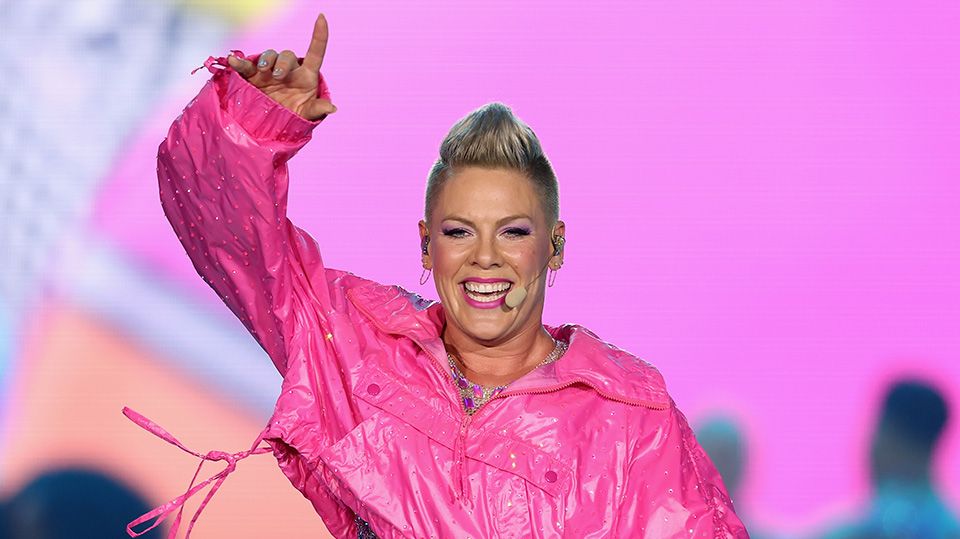
Today, P!nk is known for doing things most performers would never even attempt.
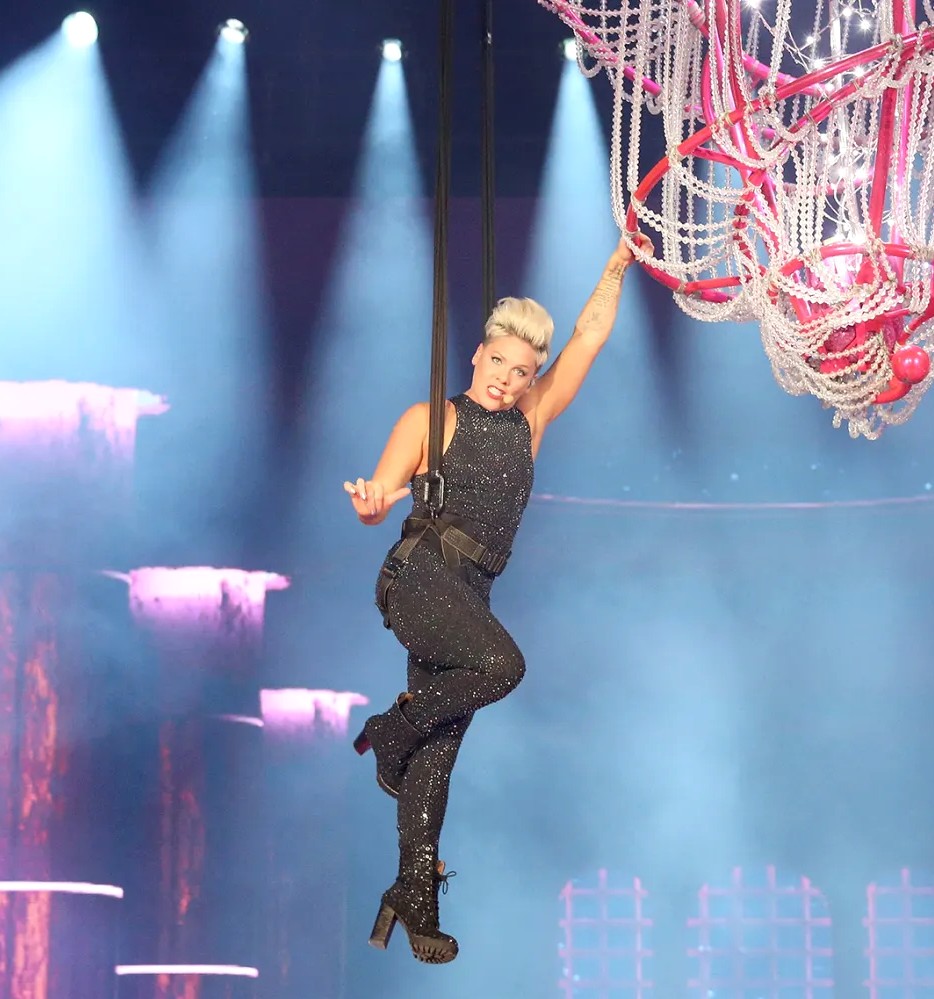
She flies across packed arenas suspended by harnesses. She sings upside down while spinning through the air on silk ribbons. She transforms concerts into adrenaline-fueled spectacles that look more like Olympic events than traditional pop shows.
Which is why fans are always stunned to learn one surprising truth about her early career:
P!nk once suffered from severe stage fright.
Long before she became one of the most fearless live entertainers in music, the singer reportedly battled intense anxiety before performances. Despite the confidence and rebellious energy audiences associated with her image, stepping in front of large crowds initially filled her with overwhelming fear.
And at the beginning of her rise to fame, that fear was powerful.
Like many young artists suddenly thrown into the spotlight, P!nk struggled with the crushing pressure of live performance. She worried constantly about making mistakes, being judged publicly, and failing in front of massive audiences. Behind the scenes, the nerves became so intense that performing sometimes felt emotionally paralyzing.
Fans who know her only as the daring arena superstar soaring over crowds often find that almost impossible to imagine.
But according to P!nk, the anxiety was very real.
What changed everything wasn’t eliminating the fear entirely — it was learning how to redirect it.
Instead of trying to suppress her nervous energy, she discovered something unexpected: movement helped control the panic. The more physically active she became onstage, the less trapped she felt inside her anxious thoughts.
That realization completely transformed her relationship with performing.
Over time, P!nk began turning concerts into highly physical experiences filled with constant movement, choreography, climbing, running, and eventually aerial acrobatics. Rather than standing still under the pressure of thousands of eyes watching her, she gave her body and mind something else to focus on.
The fear didn’t disappear.
It evolved into energy.
By channeling adrenaline into physical performance, she effectively trained herself to convert anxiety into momentum instead of panic. What started as a coping mechanism slowly became one of the most recognizable trademarks of her entire career.
And the transformation was extraordinary.
The same artist once terrified of standing in front of a crowd eventually became the performer willing to launch herself high above arenas while singing live in midair. Her concerts grew into massive productions combining athleticism, theater, and emotional intensity in ways few pop stars had ever attempted before.
Ironically, the thing that once scared her most became the space where she ultimately felt strongest.
Psychologists often describe stage fright as the body entering a heightened adrenaline state — racing heartbeat, overthinking, muscle tension, and fear responses triggered by intense public attention. P!nk’s approach worked because she stopped fighting the adrenaline and learned how to use it physically instead.
Rather than freezing under pressure, she moved directly through it.
Fans connected deeply with her honesty about anxiety because it shattered the stereotype that successful performers are naturally fearless. P!nk openly showed that confidence is often built slowly through experience, discomfort, and repetition — not magically inherited from birth.
That vulnerability became part of what made her so inspiring.
She didn’t overcome fear by shrinking herself or becoming more cautious.
She overcame it by becoming even bolder.
Over the years, her live performances came to symbolize resilience, courage, and total commitment. Audiences admired not only her voice, but the sheer determination required to perform such physically demanding routines night after night while maintaining emotional connection with the crowd.
Many younger artists have since pointed to P!nk as proof that vulnerability and strength can exist side by side. Her journey showed that someone can experience fear intensely and still become extraordinary at the very thing that terrifies them most.
And perhaps that’s why her concerts resonate so emotionally with fans.
Behind the aerial stunts, breathtaking acrobatics, and stadium-sized productions is someone who understands anxiety personally — someone who transformed fear into fuel instead of allowing it to become a limitation.
In the end, P!nk didn’t conquer stage fright by pretending it wasn’t there.
She conquered it by learning how to fly directly through it.