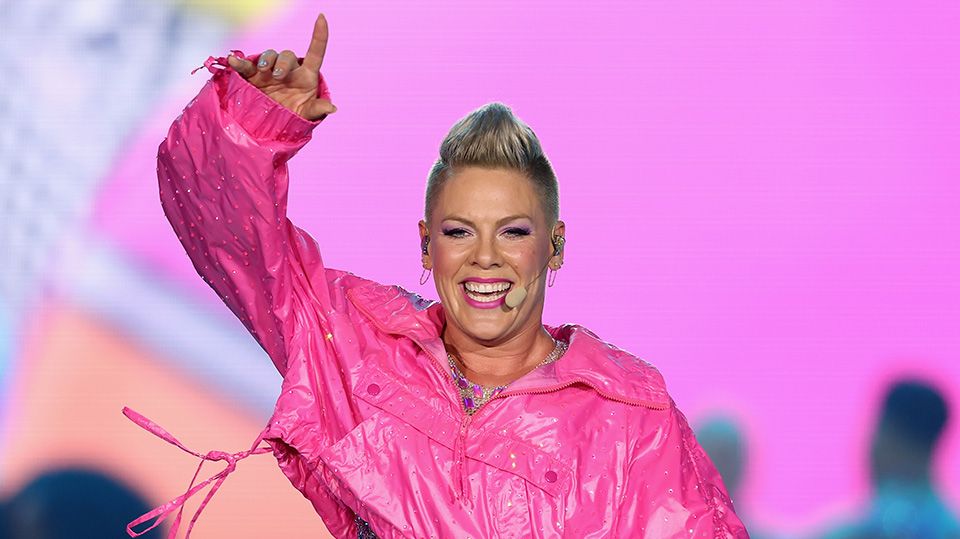
Long before Pink became one of the most fearless live performers in modern music, she was a 19-year-old newcomer desperate to prove she belonged in an industry dominated by giants.
And one backstage encounter with Prince would become one of the most painful lessons of her entire career.
It lasted only minutes.
But according to stories Pink later reflected on herself, that brief exchange permanently closed the door on what could have become one of pop music’s most fascinating collaborations.
The backstage meeting that changed everything
In 1998, Pink was still navigating the earliest stage of her career. Armed with undeniable talent but also the defensive confidence of a young artist fighting for legitimacy, she reportedly approached Prince backstage after one of his concerts with a bold request: she wanted to collaborate.
For most rising musicians, even speaking to Prince was intimidating.
But Prince did not respond with excitement, praise, or industry politeness.
Instead, he asked her one question:
“Do you own your masters?”
At the time, Pink reportedly answered no.
And Prince immediately replied:
“Call me when you do.”
A lesson mistaken for rejection
To Prince, the comment reflected a philosophy that had defined much of his career.
For years, the legendary artist had battled record labels over ownership rights, famously protesting the music industry’s control structures and warning younger performers about the dangers of surrendering artistic power. To him, ownership was not business trivia — it was survival.
But for a teenage Pink, the exchange landed very differently.
Instead of hearing mentorship, she heard dismissal.
Feeling insulted and caught off guard, she reacted emotionally, later admitting she responded with attitude and called Prince rude before walking away from the conversation entirely.
And with Prince, those moments mattered.
Why the fallout mattered so much
Prince was notoriously selective about collaboration.
Talent alone was never enough to gain access to his creative world at Paisley Park. He valued discipline, humility, artistic independence, and energy. Once a relationship fractured early, it was extremely rare for him to revisit it later.
That single backstage clash reportedly ended any realistic possibility of the two artists ever working together.
And music fans still wonder what was lost because of it.
The collaboration that never happened
The timing makes the story especially haunting.
Only a few years later, Pink would reinvent herself completely with her breakthrough album Missundaztood, abandoning polished R&B expectations for emotionally explosive pop-rock built around vulnerability, rebellion, and raw honesty.
Many fans believe a Prince collaboration during that artistic transformation could have produced something extraordinary — a collision between her gritty emotional intensity and his legendary funk, songwriting discipline, and genre-defying creativity.
Instead, the partnership never even began.
Pink later realized Prince was right
As her career evolved, Pink eventually acknowledged that she misunderstood the encounter.
In later interviews, she reflected on how insecurity often disguised itself as aggression during her early years in the industry. What she initially interpreted as arrogance, she later recognized as wisdom from someone trying to teach her something important.
And history ultimately validated Prince’s warning.
Over the following decades, artist ownership rights became one of the music industry’s defining battles, with performers increasingly fighting to control their masters, publishing, and creative independence — exactly the issue Prince had spent years publicly confronting.
What sounded harsh in 1998 eventually looked prophetic.
A silence that could never be repaired
When Prince died in 2016, any chance of reconciliation disappeared forever.
Pink went on to build one of the most successful careers of her generation, selling millions of records, winning Grammys, and becoming internationally respected for her live performances and authenticity.
But some doors never reopen.
And for many fans, this remains one of modern music’s greatest “what if” stories — not because of scandal or rivalry, but because one misunderstood conversation erased an entire future before it ever had the chance to exist.