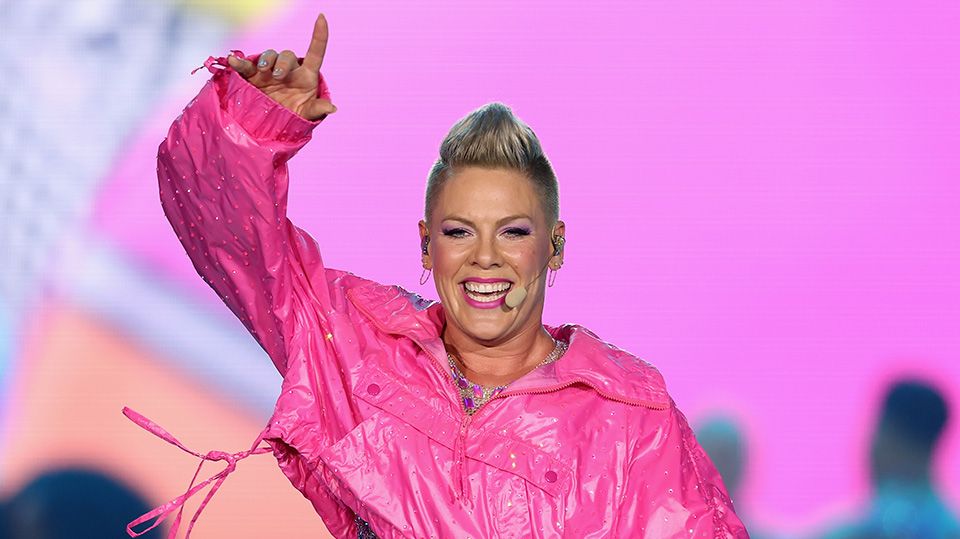
For decades, fans assumed Pink chose her famous name because of her hair, her personality, or some playful childhood nickname.
The real story is far stranger.
And according to actor Steve Buscemi, it all traces back to one of the most violent cult films ever made.
Long before Pink became a global pop icon, she was simply Alecia Moore — a rebellious teenager growing up near Philadelphia with a sharp attitude, little patience for authority, and a personality that reportedly reminded her friends of one very specific fictional criminal.
That criminal was Mr. Pink.
The bizarre movie connection nobody expected
The origin of Pink’s stage name reportedly comes directly from Reservoir Dogs, the brutal breakout crime film directed by Quentin Tarantino that transformed independent cinema in the early 1990s.
Inside the film, Steve Buscemi plays Mr. Pink — a paranoid, sarcastic, fast-talking thief trapped inside a disastrous robbery gone violently wrong. The character became infamous for his nervous energy, anti-authority attitude, and explosive arguments, particularly during the movie’s legendary opening diner scene.
According to Pink’s longtime explanations, friends began calling her “Pink” because they believed her personality resembled Buscemi’s chaotic on-screen criminal.
And somehow, the nickname never disappeared.
Steve Buscemi reportedly found the connection hilarious
Over the years, Buscemi has reportedly joked about the surreal reality that one of the world’s biggest music stars essentially borrowed her identity from one of cinema’s most unstable gangsters.
And honestly, the connection makes more sense the deeper fans look.
Before evolving into a more emotionally vulnerable songwriter later in her career, Pink initially built her entire public image around confrontation, rebellion, sarcasm, and unpredictability. While many pop stars of the late 1990s embraced polished perfection, she leaned aggressively in the opposite direction.
Why the name secretly fit perfectly
From the beginning, Pink projected toughness rather than glamour.
Hits like Get the Party Started, So What, and Raise Your Glass helped establish her as one of pop music’s most defiant personalities — loud, fearless, sarcastic, emotionally raw, and completely uninterested in fitting traditional celebrity expectations.
That energy oddly mirrored the same aggressive unpredictability that made Mr. Pink memorable decades earlier.
Even as her music matured into more personal territory involving motherhood, heartbreak, mental health, and addiction recovery, the rebellious identity tied to the “Pink” persona never fully disappeared.
The cult-film legacy behind a global superstar
Meanwhile, Reservoir Dogs itself became one of the most influential independent films in modern cinema history. Its hyper-stylized violence, morally complicated characters, and razor-sharp dialogue helped launch Tarantino into superstardom while permanently reshaping crime films for an entire generation.
The fact that the movie also indirectly inspired the branding of a future Grammy-winning artist only adds another bizarre layer to its legacy.
Because beneath the sold-out stadiums, aerial acrobatics, and platinum albums lies an unexpectedly chaotic origin story — one rooted not in glamour or branding strategy, but in a nervous fictional criminal screaming through a collapsing heist movie.
And somehow, that strange cinematic connection helped create one of the most recognizable identities in modern music.