Some performances entertain a crowd for a few minutes.
Others feel like history unfolding in real time.
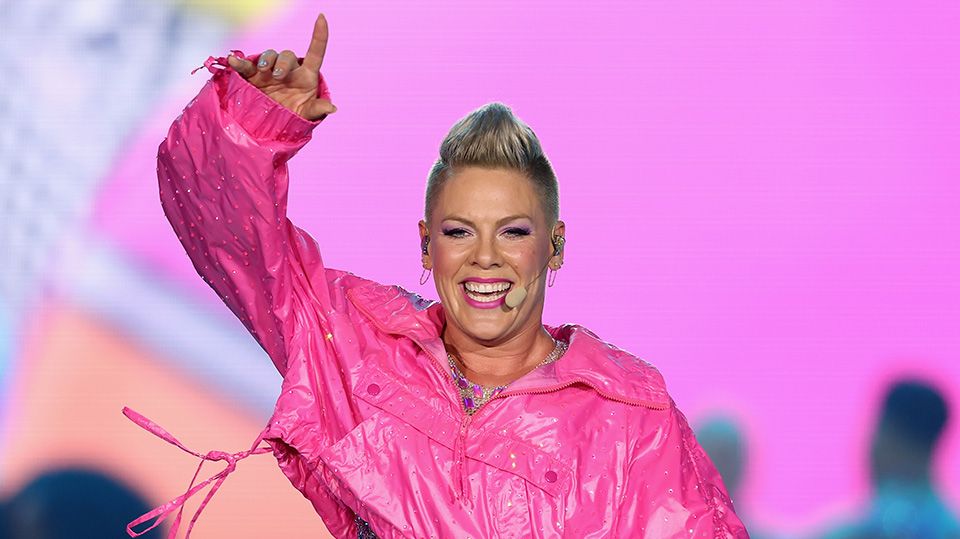
That’s exactly what happened when P!nk, Brandi Carlile, and Zac Brown Band came together for a deeply emotional performance of “Coat of Many Colors,” one of the most personal and beloved songs ever written by Dolly Parton.
The performance didn’t rely on flashy production or dramatic stage tricks. It didn’t need to.
Instead, it leaned entirely on the emotional power of the song itself — and the unmistakable respect each artist had for the woman who wrote it.
Originally released in 1971, “Coat of Many Colors” tells the true story of Dolly Parton’s childhood growing up in poverty in rural Tennessee. Inspired by her real life, the song recounts how Parton’s mother lovingly stitched together a coat from scraps of fabric because the family could not afford new clothes.
But what could have been a heartbreaking story became something far more meaningful.
Through the song, Dolly transformed hardship into a lesson about dignity, gratitude, and understanding that love matters more than material wealth. Over the decades, “Coat of Many Colors” has become far more than just a country classic — it has become one of the defining songs of her entire career.
That emotional weight was fully present during the tribute performance.
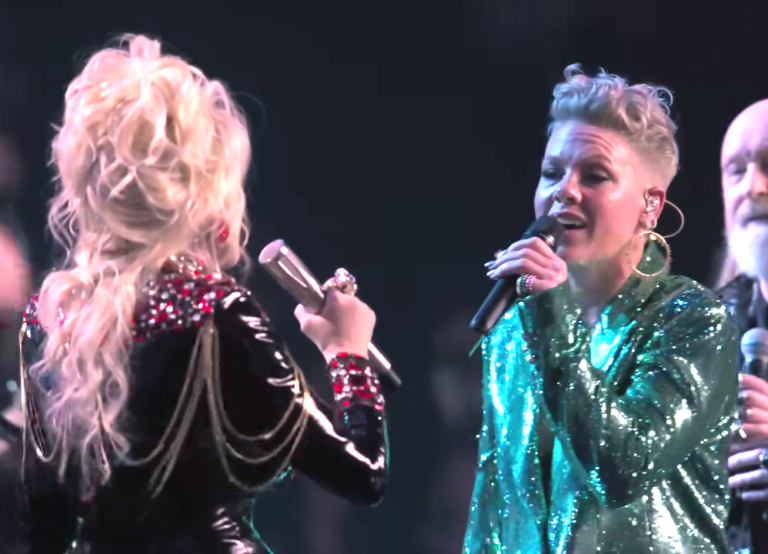
P!nk brought a raw intensity to the stage, delivering the lyrics with the kind of emotional strength that immediately commanded attention. Brandi Carlile added warmth and soul, her voice wrapping around the song’s message with quiet sincerity. Meanwhile, Zac Brown Band grounded the performance in rich harmonies and subtle country instrumentation that honored the song’s roots without overpowering it.
Together, the collaboration felt intimate, honest, and deeply respectful.
Rather than reinventing the song, the artists allowed its storytelling to remain front and center — a choice that made the performance feel even more powerful.
And the emotional celebration of Dolly Parton’s legacy didn’t stop there.
Later that same night, the atmosphere shifted from heartfelt tribute to full-scale musical event when Dolly herself returned to the stage for a massive all-star performance of “Jolene” during her 2022 induction into the Rock and Roll Hall of Fame.
If “Coat of Many Colors” showcased tenderness and vulnerability, “Jolene” exploded with pure star power.
As the opening notes of the iconic song rang through the venue, an unforgettable lineup of artists joined Dolly under the spotlight. Alongside P!nk and Brandi Carlile were music legends including Sheryl Crow, Annie Lennox, Pat Benatar, and even heavy metal icon Rob Halford — all backed by Zac Brown Band.
The combination sounded unlikely on paper.
But onstage, it became electric.
Released in 1973, “Jolene” remains one of Dolly Parton’s most recognizable songs, telling the story of a woman desperately pleading with another woman not to steal her lover. Over the years, the song has transcended genres, inspiring countless covers from artists across country, rock, pop, folk, and beyond.
That genre-crossing legacy was fully displayed during the Hall of Fame performance.
Watching rock stars, country singers, pop artists, and even a metal vocalist unite around the same song became a powerful reminder of just how influential Dolly Parton’s music truly is. Few artists possess a catalog capable of connecting audiences across generations and musical styles the way hers does.
And that was the real beauty of the night.
These performances weren’t simply tributes. They were proof of Dolly Parton’s extraordinary impact on music itself.
Whether through the emotional storytelling of “Coat of Many Colors” or the fiery drama of “Jolene,” the evening showed how her songs continue to inspire artists from every corner of the industry — and why her music still feels timeless decades after it was first written.
For fans watching, it became more than a concert moment.
It felt like an entire generation of musicians gathering together to say thank you to one of the greatest songwriters of all time.