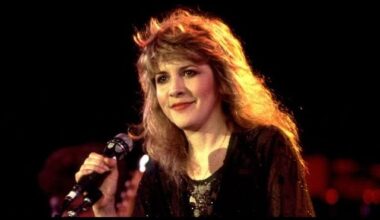
Just three days after the world lost Ozzy Osbourne, Alice Cooper took the stage at London’s O2 Arena and turned a concert into a heartfelt tribute. Then Johnny Depp appeared with his guitar, and together they performed one of Black Sabbath’s most unforgettable songs: “Paranoid.”

On July 25, 2025, rock history and grief met in the same room. What began as an Alice Cooper concert became a moment of remembrance for a musician whose voice, imagination, and influence helped shape heavy metal.
It was not a planned farewell from Ozzy himself. It was something different: fellow artists using the music he helped create to honor a legacy that had touched generations.
THREE DAYS AFTER THE WORLD LOST THE PRINCE OF DARKNESS
Ozzy Osbourne died on July 22, 2025, at the age of 76. His passing came only weeks after his final live performance with Black Sabbath at the “Back to the Beginning” concert in Birmingham.
The news was felt far beyond the heavy-metal community. Ozzy had spent decades becoming one of rock’s most recognizable figures, first as the frontman of Black Sabbath and later through his successful solo career.
His voice helped establish a sound that changed the direction of hard rock and metal. His personality, stage presence, and unmistakable sense of unpredictability made him a cultural icon.
By the time Alice Cooper arrived at London’s O2 Arena three days later, the loss was still painfully fresh.
Cooper chose to honor Ozzy through the language they both understood: loud guitars, a powerful performance, and a song that helped change music forever.
ALICE COOPER CHOSE A BLACK SABBATH CLASSIC
The song was “Paranoid,” Black Sabbath’s landmark track released in 1970.
Short, direct, and instantly recognizable, “Paranoid” became one of the defining songs of early heavy metal. Its driving riff and urgent energy helped establish the sound that countless bands would explore in the decades that followed.
For Alice Cooper, performing it was a fitting way to honor Ozzy.
Cooper and Osbourne belonged to different but closely connected chapters of rock history. Both developed distinctive stage identities, built long careers, and proved that rock performers could become far more than musicians standing behind microphones.
Their styles were different, but they shared an understanding of rock as something that could challenge expectations and leave a lasting impression.
On this night, Cooper placed the focus on the music that had helped make Ozzy a legend.
THEN JOHNNY DEPP JOINED HIM ONSTAGE
The performance gained another memorable dimension when Johnny Depp made a surprise appearance.
Depp joined Cooper and his band during “Paranoid,” bringing his guitar into the performance of the Black Sabbath classic.
Known internationally for his acting, Depp has also maintained a serious interest in music. He and Cooper share a connection through Hollywood Vampires, the rock supergroup that also includes Aerosmith guitarist Joe Perry and Tommy Henriksen.
His appearance gave the tribute an unexpected quality. Rather than watching from the audience, Depp stepped onto the stage and became part of the musical salute.
The performance brought together two artists from different corners of entertainment, united by their appreciation for a musician whose influence extended well beyond one genre.
WHY “PARANOID” WAS THE RIGHT SONG
Some songs become so closely associated with their creators that hearing them performed by other musicians carries a special weight.
“Paranoid” is one of those songs.
Its riff is among the most recognizable in heavy metal, and its place in Black Sabbath’s history is inseparable from Ozzy’s contribution as the band’s original singer.
The track helped introduce audiences to a heavier, darker sound that would influence generations of musicians. Its legacy can be heard in the work of bands that followed Black Sabbath, from traditional heavy metal acts to later thrash and alternative-metal artists.
Performing it after Ozzy’s death gave the song a new emotional context.
The notes remained familiar. The riff still carried the same force. But the circumstances surrounding the performance made it feel different.
It was no longer simply a classic being played live. It was a reminder of the man whose voice had helped make it immortal.
A TRIBUTE THROUGH MUSIC, NOT WORDS ALONE
There are many ways to remember a legend. Some artists speak about the influence someone had on their lives. Others share photographs, stories, or personal memories.
A live tribute can do something words sometimes cannot.
It allows the music itself to carry the message.
As Cooper and his band played “Paranoid,” the performance connected the audience to a song that had survived more than half a century. Depp’s appearance added to the moment, turning the cover into a special onstage collaboration.
No performance can replace the original recording or reproduce the moment Black Sabbath first brought the song to the world. That is not the purpose of a tribute.
The purpose is to acknowledge what the music means—and to keep it alive.
For fans mourning Ozzy, hearing one of his most famous songs played by fellow artists offered a chance to remember the music alongside the person behind it.
THE NIGHT DIDN’T END WITH “PARANOID”
Depp remained onstage for “School’s Out,” one of Alice Cooper’s signature songs. The concert also included a special appearance by members of Cooper’s original band.
At the end of the show, Ozzy’s “Crazy Train” was played as the evening came to a close.
That detail made the tribute especially poignant. “Crazy Train” is one of the defining tracks from Ozzy’s solo career, a song that helped establish him as a force in his own right after Black Sabbath.
Its place in his story is significant. Ozzy had already helped change heavy metal with Sabbath, yet he went on to build another major musical legacy beyond the band.
From “Paranoid” to “Crazy Train,” his music spanned different eras while retaining the unmistakable personality that made him unique.
The London concert acknowledged both sides of that legacy: the groundbreaking Black Sabbath frontman and the solo artist who continued to inspire audiences around the world.
TWO ROCK ICONS, ONE SHARED RESPECT
Alice Cooper and Ozzy Osbourne were not identical performers. They developed their own sounds, stage personas, and careers.
Yet both understood how rock music could become a complete experience—part sound, part theatre, and part connection with an audience.
Cooper’s career helped establish theatrical shock rock as a major force in popular music. Ozzy’s work with Black Sabbath helped lay the foundations of heavy metal. Their influence reached musicians who would later create entirely new branches of rock.
That shared history made Cooper’s tribute feel natural.
Rather than attempting to imitate Ozzy’s personality or recreate a Black Sabbath concert, Cooper and his band approached the music as fellow artists paying respect to a giant of the genre.
Depp’s surprise appearance made the gesture even more memorable.
OZZY’S INFLUENCE REACHES FAR BEYOND ONE GENERATION
One of the clearest signs of a lasting musical legacy is the number of different generations that continue to discover it.
For fans who followed Black Sabbath from the beginning, “Paranoid” may bring back memories of discovering a sound that seemed unlike anything else on the radio.
For younger listeners, the song can be an introduction to the roots of heavy metal—and to the artist whose voice became synonymous with its early development.
Ozzy’s career crossed musical boundaries and generations. He became a solo star, a television personality, and a familiar figure even to people who had never attended a metal concert.
Yet the foundation of his legacy remained the music.
The riffs, recordings, performances, and songs continue to introduce his work to new listeners. Tributes like Cooper’s are another way those songs remain part of the present rather than being confined to the past.
A LEGACY THAT CANNOT BE REPLACED
Tributes inevitably invite comparisons with the original artist. But the point of honoring Ozzy was never to become Ozzy.
His voice, personality, and place in music history were his own.
Alice Cooper brought his own stage experience to the performance. Johnny Depp brought his guitar and his appreciation for the music. Together with Cooper’s band, they delivered their interpretation of a Black Sabbath classic at a moment when the rock world was still processing an enormous loss.
The original song remains untouched by that distinction. Black Sabbath created it, and Ozzy’s contribution remains part of its identity.
What the tribute added was a new chapter in the song’s long life.
It showed how music can connect artists across different careers—and how a song written decades earlier can still carry meaning when the world changes around it.
WHEN THE MUSIC BECOMES A GOODBYE
Ozzy Osbourne’s death marked the end of a remarkable life, but it did not end the connection between his music and the people who loved it.
That connection was visible in the tributes that followed his passing. Artists from across rock and metal honored him in their own ways, drawing attention to the songs, performances, and influence that made him such a singular figure.
At London’s O2 Arena, Alice Cooper and Johnny Depp chose “Paranoid.”
It was a song from the beginning of Black Sabbath’s rise, performed at a moment when fans were saying goodbye to the singer who helped make the band legendary.
The performance could not bring Ozzy back. It could not recreate the early days of Sabbath or erase the sadness of his passing.
But it could remind the audience of what remains: the music, the memories, and the influence that continues to travel from one generation to the next.