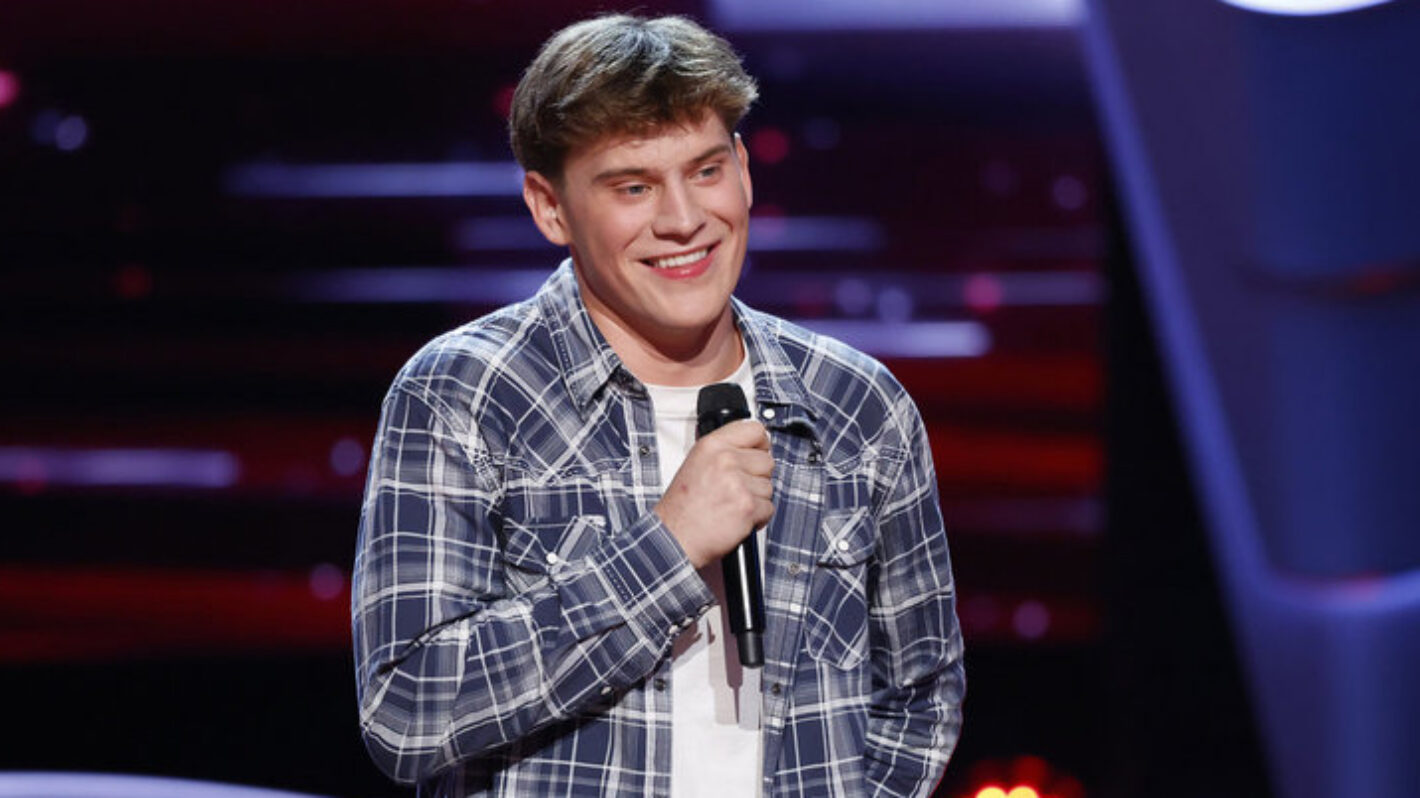
Imagine stepping onto a national television stage without ever having performed a proper professional gig, only to discover that one of country music’s most respected legends has noticed your voice. For 19-year-old Joe Henley, that extraordinary experience became part of his journey on The Voice Season 30 when Randy Travis praised his Blind Audition.
Now, the young singer from Grand Bay, Alabama, is preparing for an even greater challenge. Having secured a place in the Top 13, Henley must move beyond impressing celebrity coaches and begin winning over viewers whose votes could determine his future in the competition.
But there is something particularly fascinating about his rise. At a time when many aspiring country artists draw inspiration from contemporary chart hits, Henley has built his musical identity around the traditional country sound associated with artists such as Keith Whitley, Don Williams, and George Strait.
His approach has already earned him recognition from established performers, enthusiastic feedback from the coaches, and a place among the remaining contestants. The question now is whether that classic style can carry him all the way to the finale.
Henley’s journey began on the September 21 premiere, when he performed Travis Tritt’s 1991 hit “Anymore” during his Blind Audition.
Choosing a song associated with such a distinctive country vocalist was a significant decision for an inexperienced performer. Tritt’s music demands emotional conviction, vocal character, and the ability to communicate the story behind a song without allowing technical flourishes to overshadow its meaning.
Henley’s performance earned chair turns from Kelly Clarkson and Riley Green, immediately giving him an important choice.
Clarkson brought extensive experience as a Grammy-winning singer and former American Idol champion. Green, meanwhile, represented the country music world that had influenced Henley throughout his upbringing.
What happened during the coaches’ attempts to recruit him became one of the most memorable details of his audition.
Henley revealed that he was already a fan of Green and identified “My Way” as his favourite song by the country star. Green responded by picking up a guitar, and the two performed part of the song together.
For a young singer who had never played a professional show, suddenly sharing a musical moment with an established country artist must have been a remarkable experience.
It also helped make his coaching decision easier. Henley chose Team Riley, beginning a partnership that would become central to his progress through the competition.
But the attention did not stop with the two coaches.
Following the audition, Randy Travis praised Henley’s performance on Instagram, complimenting his vocals and interpretation of the song. The country legend also expressed confidence in the young singer’s potential.
That recognition carried particular significance because Travis is closely associated with the traditional country sound that Henley admires.
During the 1980s, Travis helped bring a more traditional approach to mainstream country music, becoming known for his distinctive baritone voice and emotionally direct performances.
His influence remains important to artists who value classic country storytelling and vocal authenticity.
For Henley, receiving praise from someone with that musical background represented a different kind of validation from advancing in a television competition.
The Voice coaches are expected to evaluate contestants and identify potential. An established country legend publicly recognising a newcomer offers another indication that the performance has reached beyond the programme itself.
Of course, one compliment does not guarantee a successful recording career. But for a singer at the very beginning of his professional journey, such encouragement can become an important milestone.
Henley’s next major challenge arrived during the Battle Rounds on October 12.

Green paired him with Kenna Elpers for a performance of “Don’t Mind If I Do,” the country song Green recorded with Ella Langley.
The pairing required Henley to demonstrate a different set of abilities from those he had shown during his solo audition.
Instead of carrying an entire performance independently, he needed to share the stage, coordinate with another vocalist, and maintain his musical identity within a duet.
Battle performances can be particularly demanding because contestants must work together while knowing that their coach may ultimately select only one of them to continue.
After hearing both singers, Green chose Henley as the winner, ending Elpers’ journey and allowing the Alabama teenager to advance.
The decision moved him closer to the live rounds, but it did not guarantee his place.
Another difficult selection awaited during Cut Week on November 2, when the competition introduced a format requiring coaches to make especially consequential decisions about their remaining artists.
Each coach could send two contestants directly into the Top 12, while other team members competed for a final opportunity to advance.
Green selected Cade Mower and the duo Ferryn & Brinkley as his automatic choices.
That left Henley competing against Allie Rae, Everett Bounds, Keiyana Osmond, and Kayleigh Matthews for the remaining place on Team Riley.
The stakes were unmistakable. Henley had already survived his audition and Battle performance, but another strong showing was necessary to keep his journey alive.
For that crucial performance, he returned to the traditional country music that had shaped his identity.
Henley chose Keith Whitley’s 1988 classic “Don’t Close Your Eyes,” a song that places considerable emphasis on emotional storytelling and vocal interpretation.
The selection was especially meaningful given Whitley’s influence on Henley’s musical development.
Rather than choosing material simply because it was contemporary or commercially familiar, Henley leaned into the classic country style that had helped distinguish him from other contestants.
That decision paid off.
His performance impressed the coaches, and Green ultimately selected him for the final place on his team.
Clarkson also offered an especially encouraging assessment, saying she would be astonished if Henley failed to reach the finale.
For a contestant who had entered the competition with no professional gig experience, such praise represented another remarkable moment.
It also created a new level of expectation.
Once a coach publicly identifies a contestant as someone capable of reaching the finale, viewers may begin evaluating that artist differently.
Every subsequent performance becomes an opportunity to demonstrate whether the prediction was justified.
Henley’s advancement also meant that the other contestants competing for Green’s final spot were eliminated.

That is one of the realities of The Voice: talented performers can deliver memorable performances and still find their journeys ending because of the competition’s limited places.
For Henley, the result secured a place in the Top 13 and brought him closer to the live shows.
But the next stage introduces a challenge that is different from anything he has faced so far.
During the live rounds, audience votes become a decisive factor in determining which artists continue.
A contestant can impress coaches with vocal technique, musical knowledge, and potential, but public voting requires a broader connection.
Viewers must feel sufficiently invested in a performance and an artist’s journey to offer their support.
Henley’s traditional country style could be an advantage in that environment.
Country music has a long history of audiences forming strong emotional connections with singers who communicate personal stories through familiar melodies and direct vocal delivery.
His influences, including Whitley, Don Williams, and George Strait, represent an approach in which the interpretation of a song can be just as important as vocal power.
However, there are also challenges.
The Voice brings together contestants representing different genres, vocal styles, and musical backgrounds. A performer specialising in traditional country must find ways to stand out among artists whose performances may feature dramatic arrangements or more contemporary production.
Henley will need to demonstrate that his musical identity is not simply an imitation of the singers who inspired him.
That distinction is important for any emerging artist.
Influences can provide a foundation, but building a lasting career requires developing something recognisably personal.
The most successful country performers often draw from earlier generations while introducing qualities that make their music distinctive.
Henley’s next appearance is scheduled for November 16 at 9 p.m. ET, when Team Riley competes during the second live show.
The Season 30 finale is scheduled for December 14, leaving several important stages between his current position and the possibility of winning.
In my view, the most compelling aspect of Henley’s journey is not simply that he received praise from Randy Travis or that Clarkson sees him as a potential finalist.
It is that a 19-year-old with almost no professional performance experience has remained committed to a traditional musical style while progressing through an intensely competitive television environment.
His journey raises an interesting question about what audiences want from the next generation of country artists.
Do listeners primarily want performers who embrace current musical trends, or is there still a strong appetite for younger singers who preserve the emotional simplicity and storytelling traditions of classic country?
Henley’s progress suggests that the latter approach can still attract meaningful attention, although his long-term success remains uncertain.
As he prepares to perform for America’s votes, he has an opportunity to show whether his classic sound can connect with a national audience as strongly as it has with the coaches.
And with Randy Travis already having recognised his talent, the stakes feel particularly exciting for supporters of traditional country music.
Could Joe Henley become the next major young voice in classic country, regardless of whether he wins The Voice? Or will the pressure of the live rounds prove to be his greatest challenge yet?