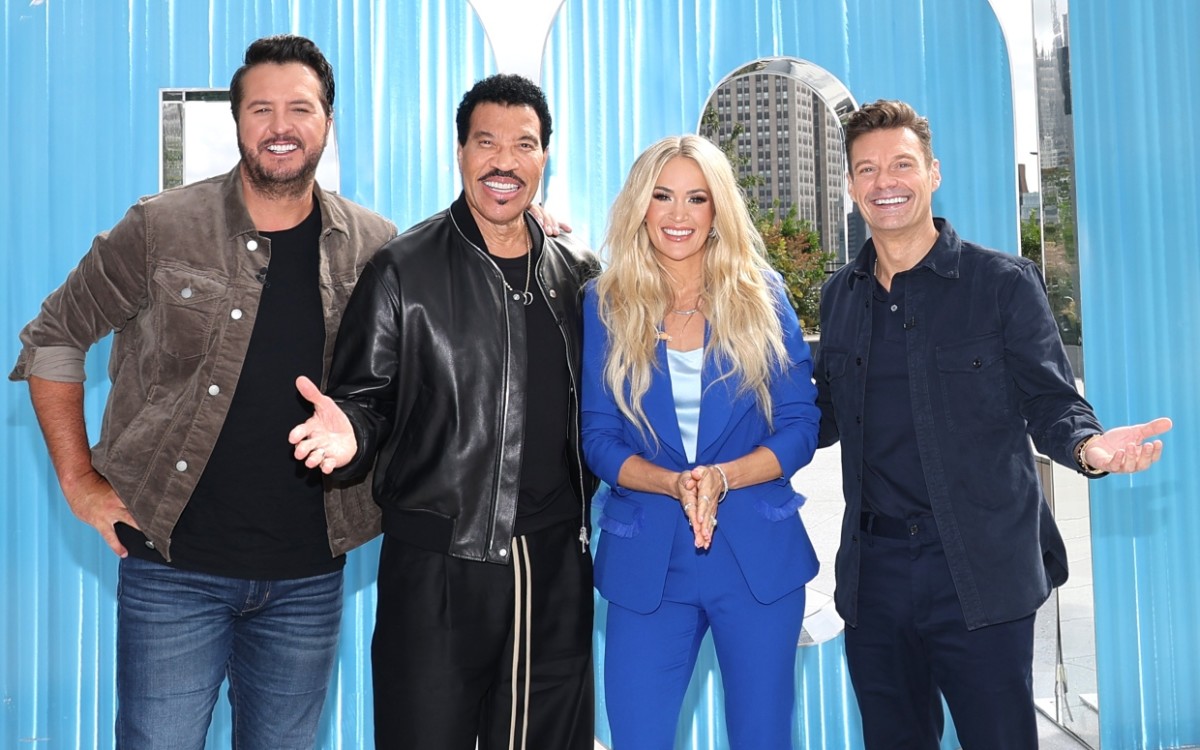
Lionel Richie has spent decades building a legendary career in pop and R&B, but one of his most interesting musical connections has always been with country music. Now, nearly 40 years after recording a country-influenced hit with Alabama, the American Idol judge is bringing that part of his musical history back into the spotlight with two of the genre’s biggest stars.
And the timing couldn’t be more fitting.
As American Idol prepares to celebrate its landmark 25th season, Richie, Carrie Underwood, and Luke Bryan have released a live recording of “Deep River Woman,” transforming a memorable television performance into a song fans can enjoy beyond the show.
The single arrived on November 13, capturing a collaboration that originally took place during the previous American Idol finale. But while the release celebrates the friendship between the three judges, it also tells a much bigger story about Richie’s musical influences and a connection to country music that some listeners may not fully appreciate.

For audiences who know Richie primarily through songs such as “Hello,” “All Night Long,” and “Endless Love,” his history with country music might seem surprising. Yet the singer’s relationship with the genre stretches back to his childhood in Alabama, long before he became an internationally recognized recording artist.
Growing up, Richie was surrounded by a mixture of musical traditions. R&B, gospel, and country music were all part of the environment that shaped his understanding of songwriting and performance.
He listened to the Grand Ole Opry and artists including Dottie West, Conway Twitty, and Buck Owens. Those influences would eventually find their way into his own compositions, even when the finished songs were marketed primarily to pop and R&B audiences.
That background helps explain why “Deep River Woman” occupies such an interesting place in Richie’s catalog.
Originally recorded with the country group Alabama in 1986, the song brought together Richie’s soulful vocal style and the harmonies associated with one of country music’s most successful bands.
The collaboration wasn’t simply an unusual experiment between artists from different genres. It demonstrated how naturally Richie’s songwriting could move between musical traditions that were often treated as separate categories.
The original recording reached No. 10 on Billboard’s Hot Country Songs chart, while also appearing on the Billboard Hot 100 and Adult Contemporary chart. Those results reflected the song’s ability to connect with audiences beyond a single musical format.
Richie and Alabama also performed the song at the 1986 CMA Awards, placing their collaboration directly in front of the country music community.
Nearly four decades later, the American Idol performance brought the song into a very different setting.
This time, Richie was joined by Carrie Underwood and Luke Bryan, two performers whose careers have been deeply connected to country music and whose presence on American Idol gives the collaboration an additional layer of significance.
Underwood’s connection to the programme is especially meaningful. She won American Idol in 2005 before building a successful career as a country recording artist. Her journey from contestant to established star and judge represents one of the show’s most recognizable success stories.
Bryan, meanwhile, arrived at the judging panel with an established career in country music, bringing his experience as a performer to the process of discovering new talent.
Together, the three artists represent different musical backgrounds and different relationships with the television competition.
That is part of what makes their version of “Deep River Woman” such an appropriate release ahead of American Idol’s anniversary season.
The collaboration connects Richie’s long-standing songwriting history with the careers of two country artists who have helped introduce the genre to contemporary audiences. It also highlights a side of the judges that viewers don’t always get to experience during the competition itself.
Most weeks, audiences watch Richie, Underwood, and Bryan evaluate aspiring performers, discuss vocal choices, and decide which contestants deserve another opportunity.

But when the three share a stage as musicians, their relationship changes. Instead of judging someone else’s performance, they become collaborators, bringing their individual experiences to the same song.
That distinction gives the recording an appeal beyond the novelty of hearing three familiar television personalities sing together.
Richie has described the original song as personally meaningful, and the opportunity to revisit it with his fellow judges added another dimension to that connection.
Underwood also expressed appreciation for the opportunity to perform a classic Richie recording alongside its original artist and Bryan.
For Bryan, the collaboration carried particular significance because of his admiration for Richie. He has spoken about respecting not only Richie’s musical achievements but also the person he has come to know while working alongside him.
Those comments suggest that the recording represents more than a routine promotional release connected to a television programme.
It captures a musical relationship that has developed through the judges’ shared experience on American Idol.
But perhaps the most compelling aspect of the new single is the way it invites listeners to reconsider Richie’s place in country music history.
Although his name is most commonly associated with pop and soul, his songwriting has long contained elements that country artists recognize.

Richie has previously identified songs such as “Stuck on You” and “Easy” as examples of material shaped by country influences, even if he didn’t fully recognize those connections while writing them.
The crossover became particularly clear when Conway Twitty recorded “Three Times a Lady,” demonstrating how one of Richie’s compositions could find a different musical expression through a country performer.
These connections reveal something important about the relationship between country and R&B.
Both traditions have long placed considerable emphasis on storytelling, emotional expression, and memorable melodies. While their instrumentation and production styles can differ, those shared qualities can make certain songs feel equally natural in either setting.
“Deep River Woman” is a particularly clear example of that overlap.
The original collaboration with Alabama introduced the song through a combination of country harmonies and Richie’s distinctive vocal identity. The American Idol recording revisits that same musical relationship through a new combination of performers.
And with Underwood and Bryan involved, the song now connects two different eras of country music.
The release also arrives at a moment when American Idol has an opportunity to reflect on its own musical legacy.
Over 25 seasons, the programme has introduced audiences to performers from numerous genres, including country, pop, rock, gospel, and R&B. Some contestants have gone on to build major recording careers, while others have used the exposure to develop more specialized musical paths.
Underwood’s presence on the judging panel provides a direct connection to that history. She knows what it means to compete on the show before facing the challenges of establishing a professional career.
Richie and Bryan bring different perspectives, shaped by their own experiences in the recording industry.
Their collaboration on “Deep River Woman” brings those perspectives together in a way that feels especially relevant as the anniversary approaches.
In my view, the most interesting part of this release isn’t simply that three American Idol judges recorded a song together. It’s that they chose a piece of music that reveals an important and sometimes overlooked chapter of Richie’s career.
Rather than introducing an entirely new composition, the trio has given listeners a reason to revisit a recording that already connected two major American musical traditions nearly 40 years ago.
That decision makes the single both a celebration of American Idol’s present and a reminder of the musical history its judges bring to the programme.
And it raises an interesting possibility for the upcoming anniversary season: could more performances featuring the judges’ own musical catalogs become part of the celebration?
For now, fans can hear Richie, Underwood, and Bryan together on their newly released live version of “Deep River Woman.”
But the bigger question may be which version listeners prefer. Does the original 1986 collaboration with Alabama remain the definitive recording, or have Carrie Underwood and Luke Bryan helped introduce Lionel Richie’s country classic to a new generation in a way that deserves equal recognition?