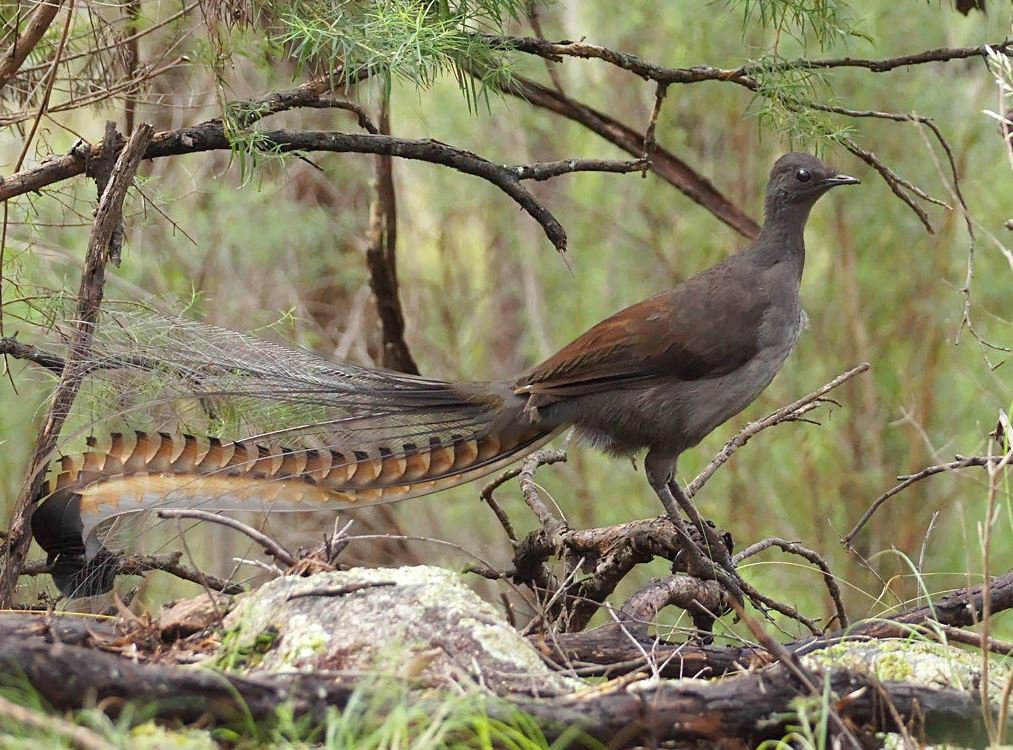
Imagine walking through an Australian forest and suddenly hearing a camera shutter, a car alarm, a mobile phone ringing or even the sound of a chainsaw.
You might assume someone is nearby. But what if all those sounds were coming from a single bird?
Meet the lyrebird, one of the most extraordinary vocal performers in the animal kingdom. This remarkable Australian bird is famous for its ability to imitate an astonishing variety of sounds, including the calls of other birds, animals and even noises created by humans.
Some lyrebirds have been recorded reproducing sounds that seem almost impossible for a wild bird to copy.
But how does this animal do it, and why has evolution given it such an incredible ability?
1. The Bird That Can Sound Like Almost Anything
Lyrebirds are native to Australia and are particularly famous for their extraordinary vocal abilities.
There are two living species: the superb lyrebird and Albert’s lyrebird.
The superb lyrebird is especially well known for its ability to imitate sounds from its environment.
Its vocal repertoire can include:
- Other bird species singing in the forest.
- The calls of kookaburras and other wildlife.
- Camera shutters and mechanical noises.
- Car alarms and electronic sounds.
- Chainsaws and other human-made noises.
What makes this even more impressive is how accurately the bird can reproduce many of these sounds.
It doesn’t simply make noises that vaguely resemble its surroundings. It can reproduce remarkably convincing copies of complex sounds.
2. How Can a Bird Copy a Camera or Chainsaw?
The secret lies in the lyrebird’s remarkable vocal anatomy and ability to learn sounds.
Birds produce sounds using a specialised vocal organ called the syrinx, located where the trachea divides into the bronchi.
Unlike the human voice box, the syrinx can produce highly complex sounds through the control of specialised muscles and membranes.
Lyrebirds are particularly skilled at controlling their vocalisations.
They listen to sounds around them and can learn to reproduce them with impressive precision.
Their ability to imitate different sounds is not simply an automatic response. It involves vocal learning, memory and practice.
This makes them some of nature’s most fascinating sound imitators.
3. Why Do Lyrebirds Imitate Other Animals?
One of the main reasons lyrebirds imitate sounds is communication and attracting mates.
Male superb lyrebirds are famous for their elaborate courtship displays.
During the breeding season, a male performs a remarkable routine involving singing, dancing and displaying its spectacular tail