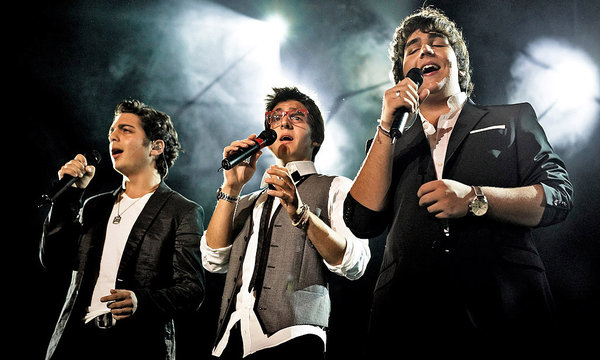
When Annalisa and Gianluca Ginoble walked onto the stage together to perform Shallow on Tutti Per Uno, it didn’t feel like a planned television moment. It felt like something unfolding in real time — fragile, bold, and completely alive.
There was a split second before the first note where the room seemed to settle. The lights softened. The band held back. And then the voices came in, one after the other, meeting carefully in the middle. Annalisa didn’t push. She didn’t need to. Her tone carried a quiet confidence, the kind that comes from knowing exactly when to hold back. Gianluca answered her with warmth and restraint, letting the power build naturally instead of forcing it.
What made the performance linger wasn’t volume or spectacle. It was the listening. You could see it in the way they watched each other — small nods, steady breathing, eyes locked just long enough to say, I’ve got you. That kind of connection can’t be rehearsed into existence. It either happens, or it doesn’t.
As the song opened up, the contrast between their voices became the heart of the moment. Annalisa’s clarity and emotional precision sat perfectly against Gianluca’s operatic depth. Neither tried to dominate. They shaped the song together, letting silence do as much work as sound. Every pause felt intentional. Every swell earned.
In the audience, people leaned forward without realizing it. Some stopped recording. Others forgot to blink. This wasn’t a crowd reacting to a hit song they recognized — it was a room responding to honesty. When the chorus hit, it didn’t explode. It expanded. Slowly. Beautifully.
For fans of Il Volo, this performance showed another side of Gianluca — less grand, more intimate. For those who follow Annalisa, it was a reminder of how deeply she understands emotional pacing. Together, they turned “Shallow” into something quieter and somehow heavier, as if the song had been waiting for this exact pairing.
When the final note faded, there was a beat of silence before the applause. Not because people didn’t know what to do — but because no one wanted to rush out of the moment. Some performances end when the music stops. This one stayed in the air.
And that’s the kind of television people remember.