Queen never believed in staying still. Even at the height of their fame, when most bands would protect a winning formula, Queen did the opposite. They chased new sounds, new structures, and new risks—often abandoning what had just made them successful in order to discover something entirely different. Yet somehow, no matter how far they wandered, they always sounded unmistakably like themselves.
That was Brian May’s quiet certainty. No matter the direction, Queen’s identity would remain intact.
It’s almost impossible to predict Queen’s evolution by listening to their earliest work. A listener who first heard “Keep Yourself Alive” would never imagine the operatic ambition of “Bohemian Rhapsody.” And just when they seemed to define stadium rock with “We Will Rock You,” they pivoted again—venturing into funk territory with “Another One Bites the Dust.” They refused to belong to a single genre. They didn’t move within categories. They dissolved them.
And yet, the result never felt scattered.
It felt intentional.
Even when Freddie Mercury wasn’t singing, Queen’s musical fingerprint remained undeniable. Brian May’s layered guitar orchestrations, John Deacon’s melodic bass lines, and Roger Taylor’s explosive precision created a sound that was both disciplined and unpredictable.
But if there was one element Queen mastered better than anyone, it was theatrical contrast.
They could move effortlessly between emotional extremes. Albums like A Night at the Opera demonstrated this perfectly. Heartbreaking ballads like “Love of My Life” existed alongside playful, almost whimsical compositions such as “Lazing on a Sunday Afternoon” and “Seaside Rendezvous.” These weren’t distractions—they were balance. Queen understood that drama required both tension and release.
Which raises an almost impossible question: if Queen could be everything, what song truly defined them?
Most would immediately point to “Bohemian Rhapsody.” Its scale, complexity, and cultural impact make it the obvious answer. But Queen were never defined by a single moment of operatic brilliance. Their identity wasn’t confined to grandeur alone.
Nor could it be reduced to their biggest commercial successes. “Another One Bites the Dust” introduced Queen to an entirely new audience with its hypnotic bassline and funk influence. Yet even that song only represented one fragment of their creative spectrum.
Brian May himself offered a different answer.
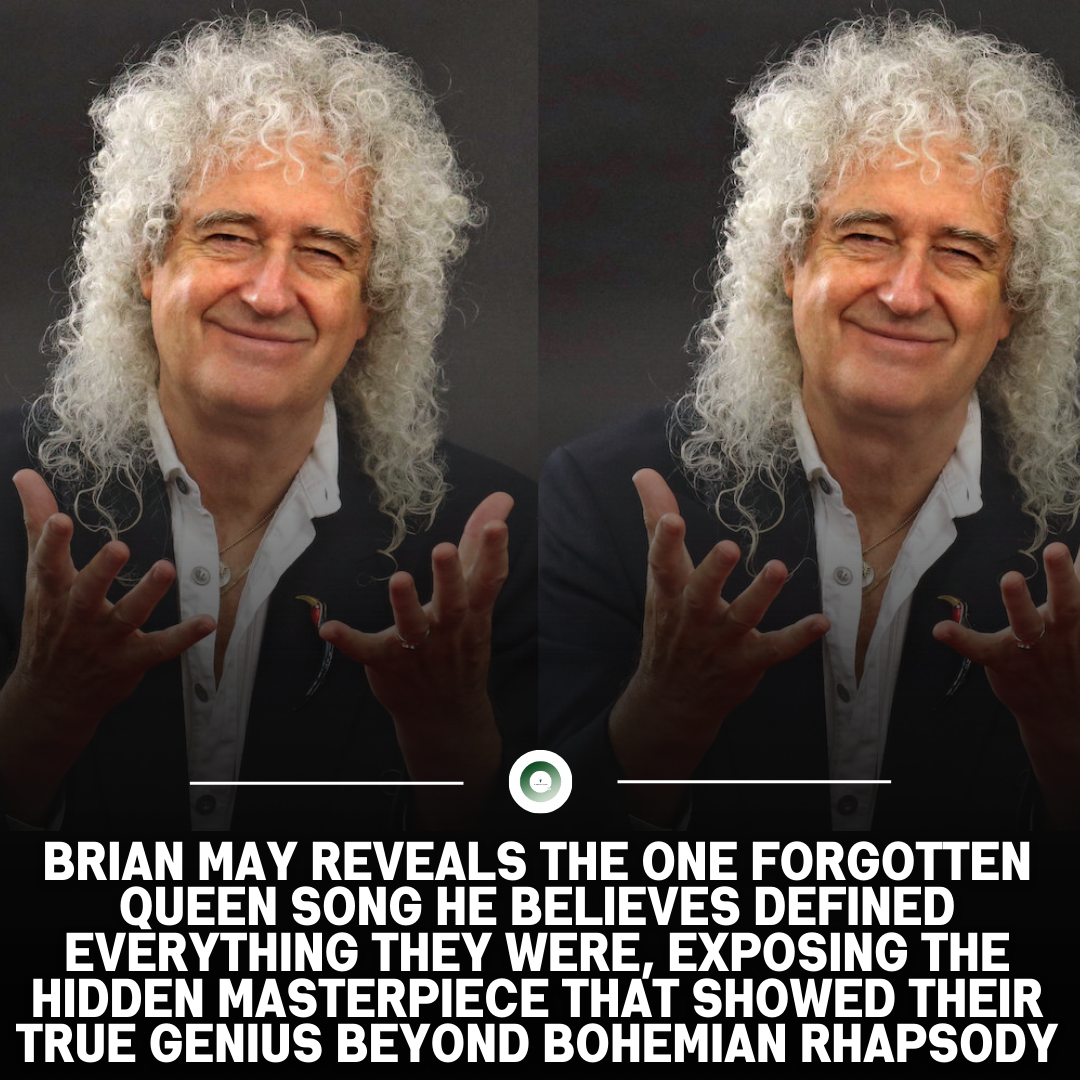
He once pointed to “The Millionaire Waltz,” a lesser-known track from A Day at the Races, as the purest expression of Queen’s identity. Reflecting on the song, May explained, “There’s a song called ‘Millionaire Waltz,’ which actually would sum up most of what we were about. But it’s very seldom played. It’s so incredibly complex that it doesn’t program on the radio, I suppose. But, boy, there’s some stuff in there.”
And he was right.
From its delicate piano introduction to its sudden rhythmic shifts and intricate instrumental interplay, “The Millionaire Waltz” moves through multiple musical dimensions without warning. Freddie Mercury’s vocals glide between elegance and urgency. John Deacon’s bass refuses to remain static, constantly evolving beneath the surface. Brian May’s guitar doesn’t dominate—it weaves itself into the composition like another voice in a larger conversation.
Nothing pauses. Nothing simplifies.
It’s not a song designed for easy consumption. It’s a song built to explore possibility.
Perhaps that complexity explains why it never became a staple of Queen’s live performances. It wasn’t built for repetition. It was built for creation.
While Queen’s greatest hits defined their connection with audiences, “The Millionaire Waltz” revealed something deeper. It showed the band operating not as performers, but as architects—pushing beyond expectation to discover what music could become when limitations were removed.
It may not feature their most famous vocal moment. It may not contain their most recognizable guitar solo. But it captures something more essential.
It captures Queen at their most fearless.
Not chasing success.
Not chasing trends.
But chasing imagination itself.