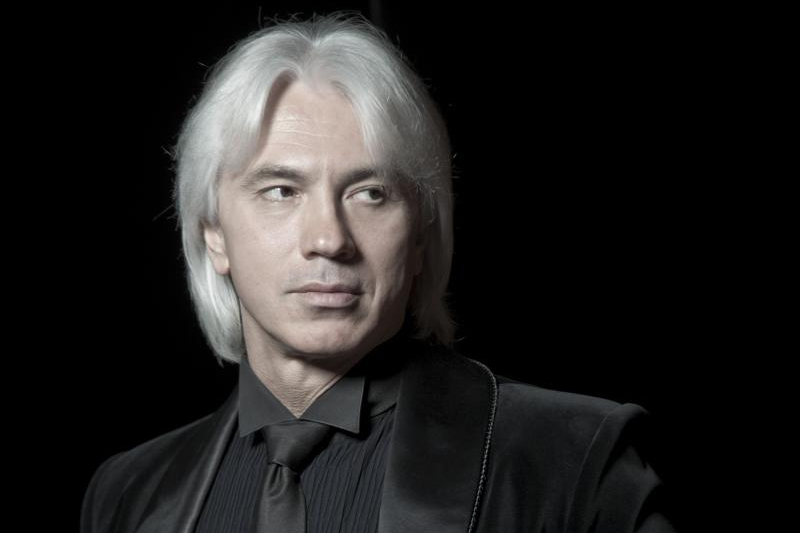
Dmitri Hvorostovsky’s Katyusha: Where a Siberian Baritone’s Fragile Silver Voice Turned Longing into Eternal Light

When Dmitri Hvorostovsky sang “Katyusha”, it wasn’t just a song — it was his soul leaving traces of light behind. The great Siberian baritone, already fighting the shadows of illness, gave the melody new meaning: love, longing, and the quiet courage of a final farewell. His silver voice, once powerful enough to shake opera houses, grew tender, fragile, almost human in its breaking. And yet, in that fragility, he became eternal. This wasn’t performance — it was prophecy. “Katyusha” now belongs to him forever, echoing like an immortal hymn carried on the wind.

When the voice became eternal — Dmitri Hvorostovsky sang “Katyusha” as if it were his final goodbye, a soldier’s hymn wrapped in love, exile, and immortality

It was never just a song. For Dmitri Hvorostovsky, “Katyusha” was memory, homeland, and farewell all in one breath. When the great Siberian baritone, already weakened by illness, let his silver voice pour into that wartime melody, time itself seemed to halt. His voice carried not only Russia’s sorrow and fire but also his own — a farewell note, disguised as a folk hymn.

Remembering Dmitri Hvorostovsky – damian fowler

“Katyusha” had always been about distance, longing, and the soldier who may never return. In Hvorostovsky’s trembling yet radiant performance, it transformed into a prophecy of his own leave-taking. The velvet depth that once conquered opera’s grandest stages now softened, vulnerable, breaking hearts with its fragility.

Review: Dmitri Hvorostovsky Sings of Life, Love and Sadness at Carnegie Hall - The New York Times

Audiences knew. They clutched their chests, some whispering prayers, others silently crying, as if sensing that this was not merely music — it was Dmitri’s soul ascending note by note.

Dmitri Hvorostovsky in recital at Davies Hall Sunday, May 25, 2014 | ARThound

When he finished, there was silence first, then waves of unstoppable applause, but Hvorostovsky simply bowed, as if saying: remember me not as a man fading, but as a voice that will never die.

And he was right. “Katyusha” remains — not just a song, but his eternal echo.

0 Shares:
Leave a Reply

Your email address will not be published. Required fields are marked *

You May Also Like
Read More

When Pop Met Rock: Taylor Swift And Mick Jagger Electrify Nashville With Iconic Surprise Duet

[Nashville, TN – 2015] — It was a night already brimming with excitement. Thousands of fans packed into the Nissan Stadium, eagerly anticipating another dazzling stop on Taylor Swift’s 1989 World Tour. But what no one expected was a moment that would go down as one of the most unforgettable in the tour’s history — a surprise collaboration that fused generations, genres, and pure star power. Midway through her setlist, Swift paused, teasing the crowd with a promise: “Tonight, I thought we’d do something special.” Moments later, the unmistakable guitar riff of The Rolling Stones’ classic “(I Can’t Get No) Satisfaction” burst through the speakers — and Mick Jagger himself strutted onto the stage. The stadium exploded. A Collision Of Legends Swift, then at the peak of her 1989 era, and Jagger, the living embodiment of rock ‘n’ roll swagger, joined forces for a powerful, high-energy rendition of the Stones’ 1965 hit. What made the performance so electric wasn’t just the surprise — it was the seamless chemistry between the two. Swift brought her signature charisma and vocal control, while Jagger danced and sang with the same fire that had defined his decades-long career. The contrast — and connection — between them was magnetic. The performance wasn’t rehearsed to perfection. It wasn’t polished. And that’s what made it feel alive. How It Happened: From Text To Tour Backstage sources later revealed that the collaboration had come together almost by chance. Swift, hearing that Jagger was in Nashville, sent him a message. According to her, “He was hesitant at first…