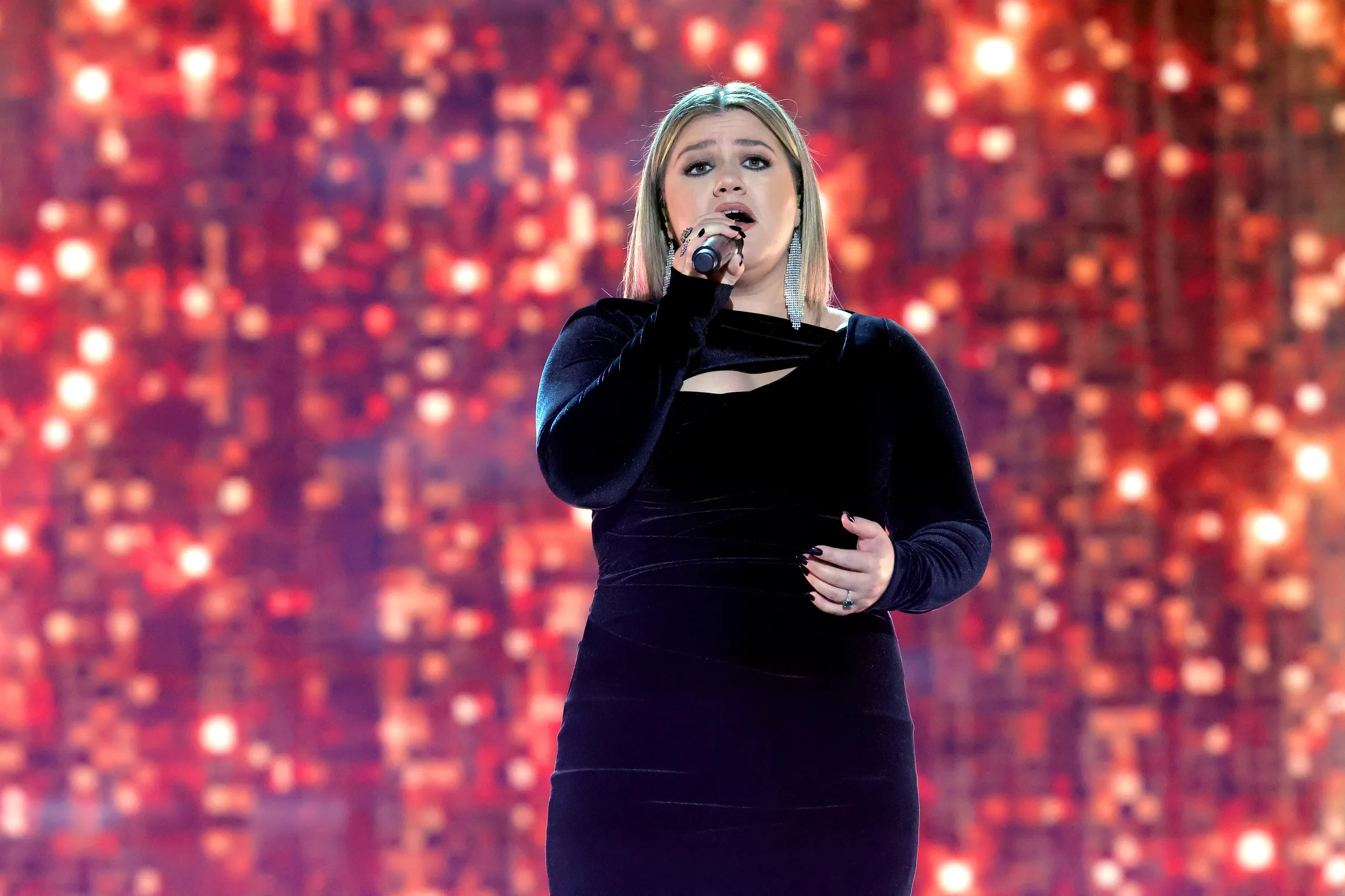
Some performances are impressive. Others are unforgettable. And then there are those rare moments when a song, a voice, and a lifetime of meaning collide in real time.
That’s what happened at the Kennedy Center Honors when Kelly Clarkson stepped onto the stage to honor Garth Brooks.
There was no spectacle to lean on. No distraction to soften the moment.
Just a song that already carried decades of emotion—and a singer who understood exactly what it meant.
A Song That Outgrew Its Era
Released in 1990, The Dance has never belonged to a single interpretation. On paper, it’s a country ballad. In practice, it’s something far more universal.
It’s been heard as:
-
a love story
-
a reflection on loss
-
a quiet philosophy about risk and regret
At its core, the song asks a disarming question: Would you avoid the pain if it meant losing the beauty that came with it?
That question doesn’t age. It follows people through their lives.
And for Brooks, it’s never been just another track—it’s one of the emotional pillars of his career.
Clarkson’s Approach: Precision Over Power
Kelly Clarkson is known for vocal strength—the kind that can fill arenas and dominate arrangements. But this performance wasn’t built for domination.
It was built for restraint.
From the opening lines, she resisted the instinct to “perform” the song in a traditional sense. Instead, she treated it like a conversation already in progress—one that the audience was being invited into rather than dazzled by.
Her choices were deliberate:
-
Soft entry: She let the melody unfold gently, without forcing attention
-
Measured phrasing: Each lyric landed with clarity, never rushed
-
Controlled build: The emotion rose gradually, never tipping into excess
The result was something deceptively difficult: a performance that felt effortless but was anything but.
The Audience Reaction: Silence First, Then Everything Else
In a room filled with artists, dignitaries, and longtime admirers, the shift was immediate.
The energy didn’t spike—it settled.
Conversations stopped. Movement faded. The theater became still in the way only a truly attentive audience can be. It wasn’t silence out of politeness. It was silence out of absorption.
For those few minutes, the performance didn’t feel like part of a program.
It felt like the only thing happening.
Garth Brooks: When the Song Comes Back to You
As Clarkson sang, cameras occasionally cut to Garth Brooks in the audience.
His reaction told its own story.
There was no theatrical display—just quiet, visible emotion. Closed eyes. Subtle nods. The kind of response that suggests recognition rather than surprise.
Because when an artist hears their own work interpreted with care, something unusual happens: the song returns to them, but changed. It carries new perspective, new weight.
Clarkson wasn’t just singing to Brooks.
She was reflecting his own story back to him.
The Line That Landed Hardest
By the time she reached the closing lyric—“I could have missed the pain, but I’d have had to miss the dance”—the performance had fully expanded into something larger than itself.
That line is the emotional thesis of the song. It’s also the reason it endures.
Clarkson didn’t overemphasize it. She didn’t need to.
She let it land exactly as written.
And for a moment, no one moved.
Why This Tribute Endured Beyond the Night
The Kennedy Center Honors often features elaborate tributes—full orchestrations, star-studded collaborations, carefully constructed medleys.
This wasn’t that.
And that’s precisely why it stood out.
It prioritized meaning over scale
The arrangement supported the song without overwhelming it.
It respected the original without imitating it
Clarkson didn’t try to replicate Brooks—she interpreted him.
The audience, the performer, and the honoree were all connected through the same narrative.
When Admiration Becomes Interpretation
For Clarkson, this wasn’t just a professional assignment. Like many artists, she grew up with Brooks’ music—absorbing the storytelling, the emotional honesty, the willingness to be vulnerable in a genre that often leans on tradition.
That history mattered.
Because this performance wasn’t about showcasing her voice.
It was about honoring what the song—and the artist behind it—had meant to her long before she ever stepped onto that stage.
A Reminder of What Music Can Do
In an industry that often celebrates scale, innovation, and visibility, moments like this serve a different purpose.
They remind us that the most powerful performances don’t always come from adding more.
Sometimes, they come from taking everything away except what matters:
-
a meaningful song
-
a voice that understands it
-
and an audience ready to feel it
For four minutes, Kelly Clarkson didn’t just perform The Dance.
She revealed why it still matters—and why it probably always will.