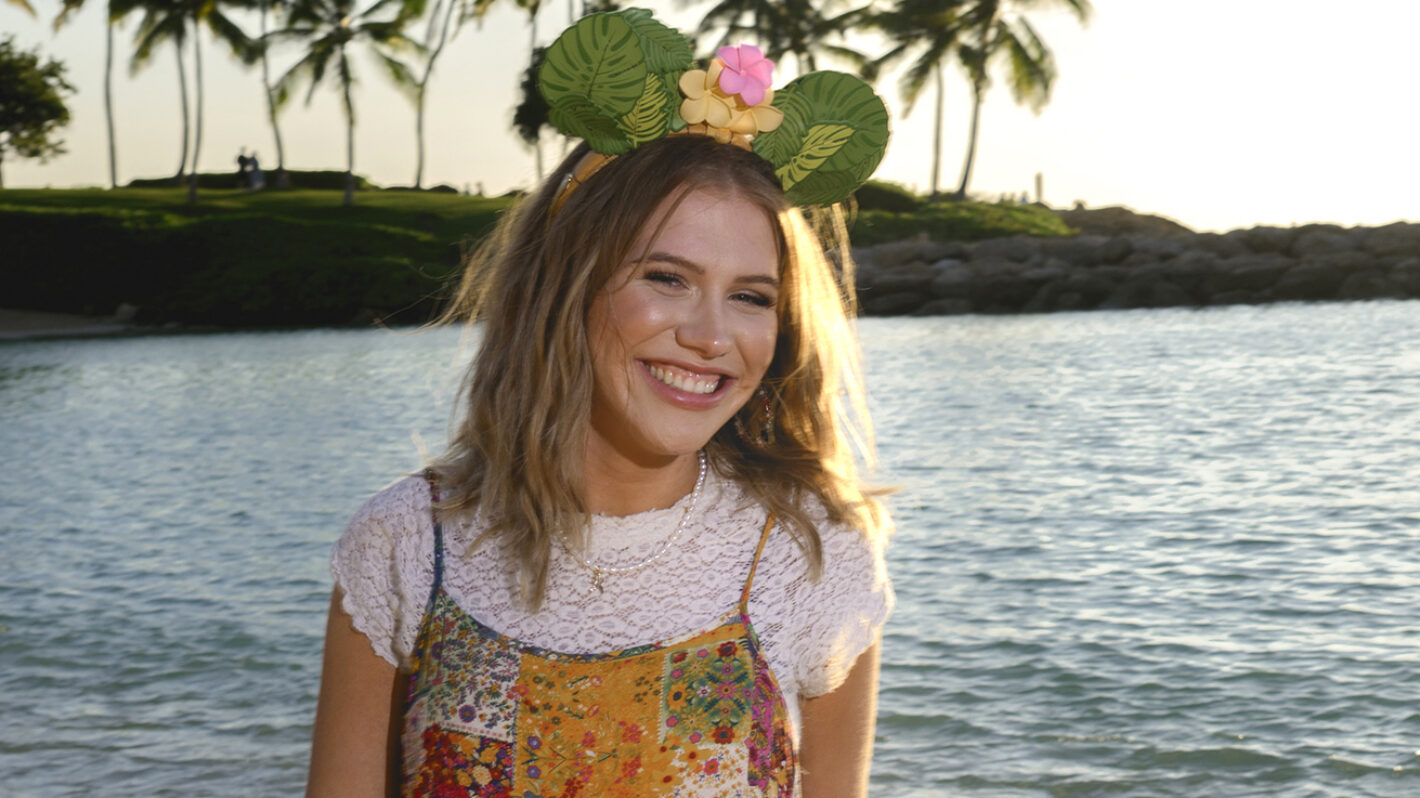
Long before the lights of American Idol found her, Hannah Harper was already shaping something quieter—something steady, rooted, and unmistakably her own. In a simple video, far removed from national television, she stood beside a guitar and delivered a version of “The Lucky One” that now feels like a glimpse into everything that followed.
At the time, it was just a cover.
Now, it feels like a beginning.
A Voice That Didn’t Need The Stage
Singing alongside guitarist Dalton Harper, the performance carries a kind of restraint that draws you in rather than reaching out. There’s no rush, no overstatement—just control, precision, and a natural sense of timing that settles into the song’s rhythm.
Listeners noticed.
Musicians pointed to the way she leaned gently behind the beat, allowing the phrasing to breathe while still landing each accent with intention. It’s the kind of detail that often goes unnoticed to casual ears, but impossible to ignore for those who understand what it takes to hold a song together without forcing it.
What stood out wasn’t just how she sang.
It was how she chose not to.
A Familiar Sound, Reintroduced
Covering a song like “The Lucky One” carries its own weight. Alison Krauss’ original is deeply respected, a standard that doesn’t leave much room for interpretation without risk. But Harper didn’t try to reinvent it.
She understood it.
And in that understanding, she found her own space within it.
Fans began to notice how her phrasing echoed the storytelling tradition the song comes from—soft, deliberate, and emotionally grounded. Some went further, saying her delivery held its own against the original, a comparison rarely made lightly.
It wasn’t imitation.
It was alignment.
The Moment That Changed Everything
When Harper later stepped onto the American Idol stage, the world saw a different side of her—one shaped by vulnerability and personal truth. Her original song “String Cheese” introduced a story rooted in motherhood and struggle, resonating far beyond the performance itself.
The reaction was immediate.
Carrie Underwood’s emotional response, Luke Bryan’s comparisons to artists like Alison Krauss and Dolly Parton—those moments placed Harper into a new conversation.
But for those who had seen “The Lucky One” before all of that, the recognition felt less like a surprise.
And more like confirmation.
What Was Already There
Revisiting that earlier performance now, there’s a clarity to it. The same instincts that carried her through her Idol audition are already present—the restraint, the control, the emotional awareness.
Nothing about it feels newly learned.
It feels revealed.
As new fans continue to discover that video, they’re not just finding a cover—they’re finding context. A reminder that what’s unfolding on national television didn’t appear overnight.
It was built, quietly, long before anyone was watching.
A Voice Waiting To Be Heard
As her journey on American Idol continues, the attention will grow, the stages will get bigger, and the moments will carry more weight. But somewhere behind it all is that earlier performance—unfiltered, unpressured, and deeply grounded.
Because sometimes, the most important part of a story isn’t when the world first hears it.
It’s when it was already there.