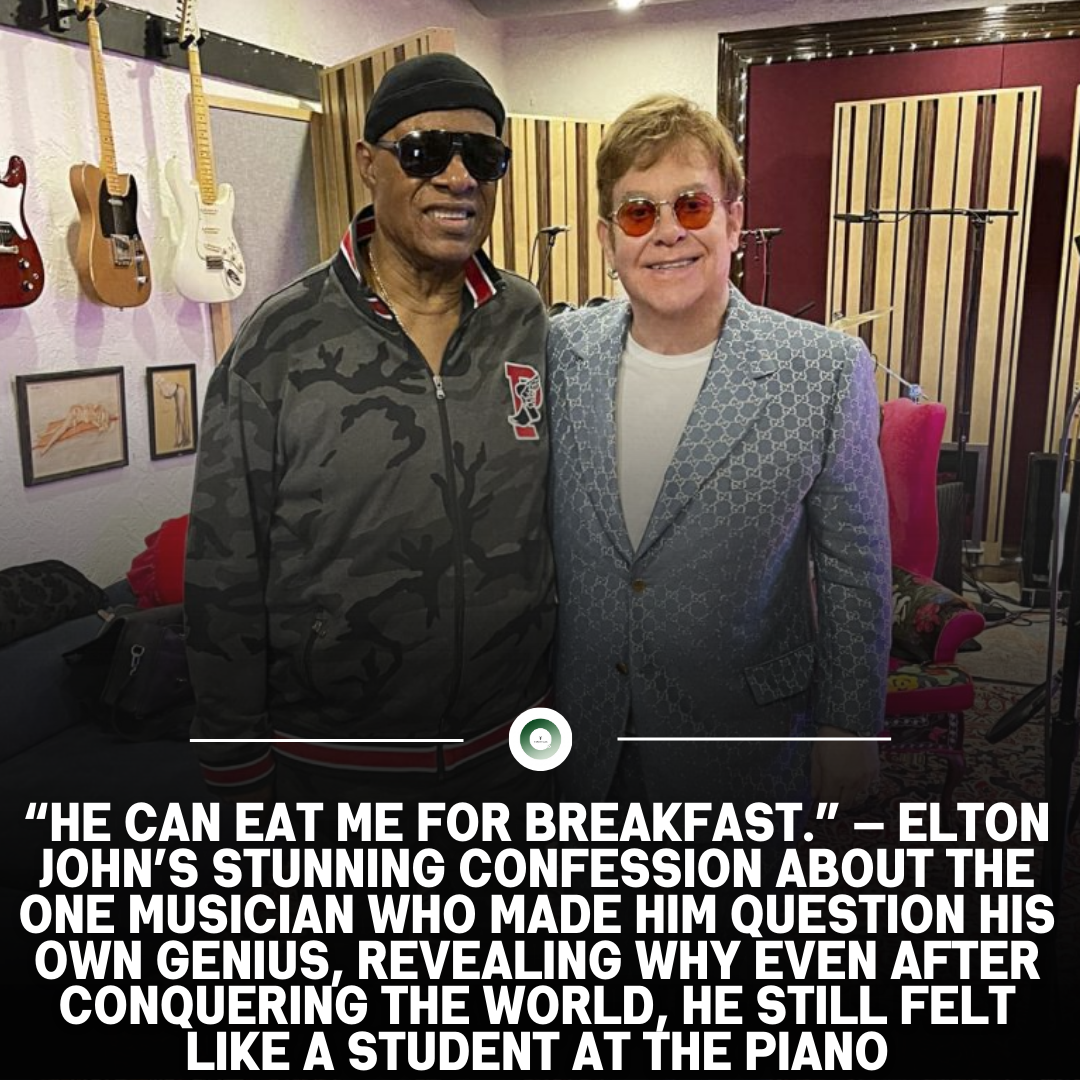
Elton John never approached the piano casually. Every note he played came from a lifetime of obsession, discipline, and deep respect for the musicians around him. He didn’t just perform music—he studied it. And even after building one of the most legendary careers in history, he never stopped seeing himself as a student.
Because for Elton John, greatness wasn’t something to protect.
It was something to chase.
A Master Who Never Stopped Learning
Across decades, Elton John collaborated with artists from nearly every corner of music. From sharing creative space with a Beatle to working alongside modern innovators like Gorillaz and Brandi Carlile, he never confined himself to a single era or style.
He adapted.
Whether it meant softening his touch to serve a darker, moodier sound or expanding his playing to match unfamiliar genres, Elton approached each collaboration with intention. He didn’t overpower the music. He elevated it.
That versatility didn’t come from instinct alone.
It came from preparation.
Elton studied the artists he worked with. He understood their sound, their identity, and their emotional language. And when he sat at the piano, he made sure every note belonged there.
The results spoke for themselves.
His haunting piano work helped define moments in unexpected places—from the dramatic textures of Kanye West’s “All of the Lights” to the delicate sophistication of Kate Bush’s later recordings. His presence wasn’t just symbolic.
It was transformative.
But Even Legends Have Someone They Can’t Catch
Despite everything Elton John accomplished, there was one musician who made him feel like he was still chasing something beyond his reach.
Stevie Wonder.
From the moment Wonder emerged, he didn’t just perform music—he redefined it. His voice carried emotional weight beyond his years, but it was his musicianship that truly stunned his peers. Wonder could move effortlessly between instruments, mastering rhythm, melody, and harmony with a natural fluidity that felt almost unreal.
And when he sat at the piano, he created something entirely his own.
His chords didn’t follow expected patterns. His phrasing bent traditional rules. Songs like “Sir Duke” and “You Are the Sunshine of My Life” weren’t just beautifully written—they were structurally daring, blending jazz complexity with pop accessibility in ways few others could replicate.
For Elton John, it was both humbling and inspiring.
He once admitted with complete honesty, “Stevie Wonder can eat me for breakfast as far as musicianship goes… I’d give anything to have his talent.”
It wasn’t envy.
It was admiration.
Respect That Fueled His Own Greatness
Elton John’s classical training gave him extraordinary control over his instrument. His compositions were precise, emotionally resonant, and instantly recognizable. But Stevie Wonder represented something different—a kind of natural brilliance that didn’t just operate within the rules, but expanded them.
That contrast never discouraged Elton.
It motivated him.
Because even after selling millions of records, performing on the world’s biggest stages, and cementing his place in history, Elton John never believed he had reached the finish line.
He was still searching.
Still learning.
Still chasing that perfect moment where music transcends technique and becomes something unforgettable.
And perhaps that’s the greatest truth behind his legacy.
Even one of the greatest pianists who ever lived still looked at Stevie Wonder—and saw someone to learn from.