When 50 Cent Turned Las Vegas Into Queens
The lights along the Las Vegas Strip have always belonged to spectacle. Massive productions, elaborate choreography, and global pop stars have long defined the city’s entertainment identity. For decades, Las Vegas residencies were built around precision and polish, the kind of shows designed to dazzle tourists and dominate marquees.
But early in 2025, something unexpected happened.
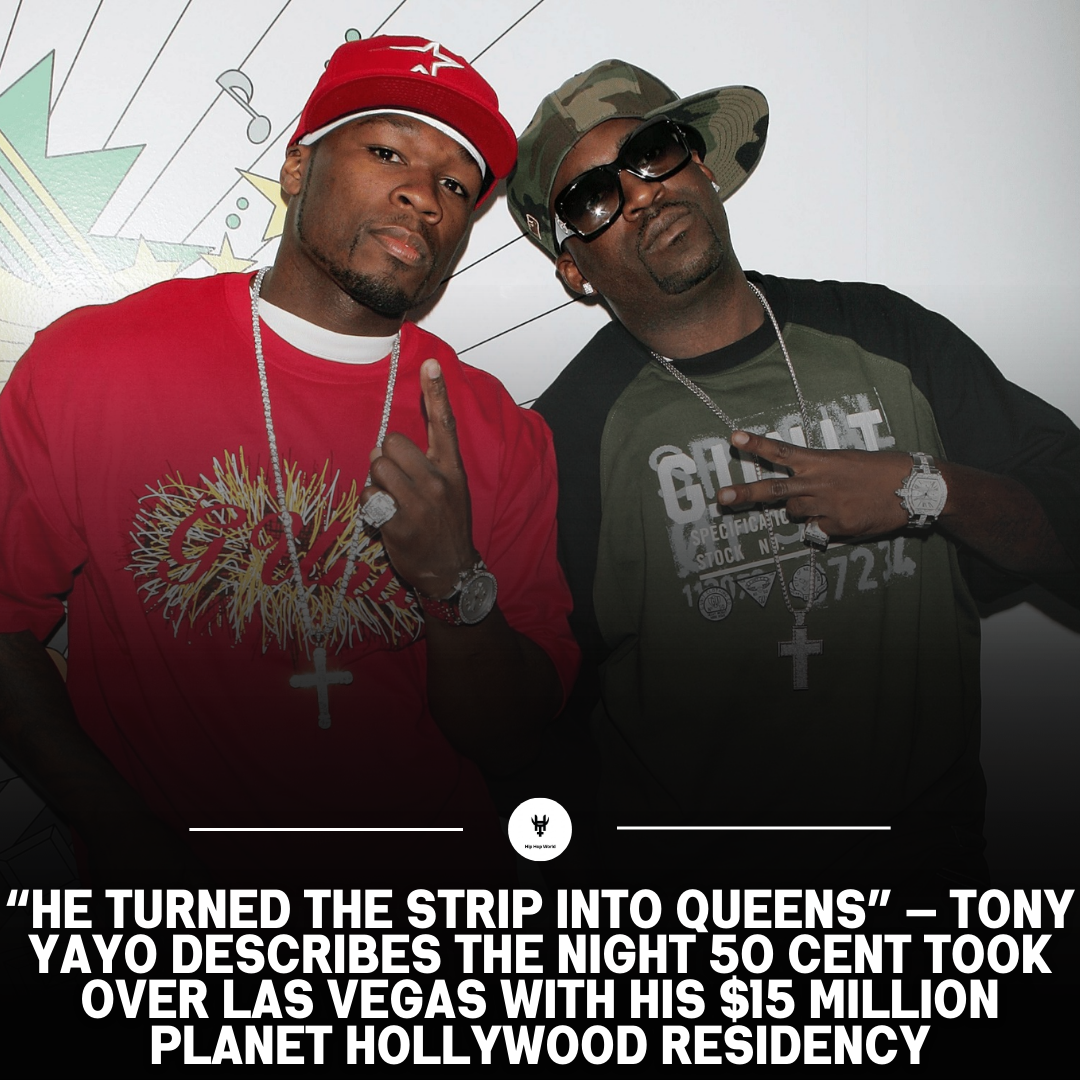
When 50 Cent stepped onto the stage at Planet Hollywood Resort & Casino for his residency titled “In Da Club,” the familiar formula of a Vegas show shifted in a way few had anticipated.
According to longtime collaborator Tony Yayo, the moment felt less like the launch of another residency and more like the arrival of something entirely different.
A Residency Unlike the Others
Las Vegas has traditionally reserved its biggest residencies for global pop icons. Artists build extravagant stage productions designed to run for months, sometimes years, transforming theaters into carefully controlled worlds of lights, visuals, and choreography.
Hip-hop has rarely occupied that space in the same way.
That’s what made 50 Cent’s arrival stand out from the beginning.
The residency reportedly came with a deal valued around $15 million, placing it among the most significant hip-hop residencies the city had seen. But as Tony Yayo later described, the financial side of the deal barely captured what unfolded once the show began.
For six nights, the production took over the venue with a scale more commonly associated with blockbuster concerts than traditional Vegas residencies.
Massive screens filled the stage. Lighting rigs stretched across the ceiling. The sound design pulsed through the theater with cinematic force. The visual presentation carried the intensity of a major arena tour compressed into an intimate residency setting.
Yet the real difference wasn’t just the spectacle.
It was the attitude.
A New Energy on the Strip
Tony Yayo remembers the atmosphere most clearly during the New Year’s Eve performance, one of the most anticipated nights of the run. As the crowd filled the room, the energy inside the venue was already building.
Then 50 Cent appeared.
According to Yayo, the entrance felt less like the opening of a Vegas residency and more like the start of a takeover. Instead of adapting his style to the polished expectations of the Strip, the rapper brought his world with him.
“He turned the Strip into Queens,” Yayo said, referencing the New York borough where both artists built their reputations in hip-hop.
Inside the venue, the mood shifted.
The show carried the same gritty confidence that defined 50 Cent’s early music. The atmosphere felt closer to a block party than a choreographed stage production. The raw identity of New York hip-hop moved through the room without being softened for the city’s usual expectations.
For a moment, the Strip felt different.
The Song That Stopped the Room
One of the most memorable moments came when the opening notes of Many Men echoed through the venue.
The track, first released on 50 Cent’s breakthrough album Get Rich or Die Tryin’, remains one of the most defining songs of his career. When the sirens that introduce the song filled the theater, the reaction was immediate.
The crowd erupted.
What stood out was not just the volume but the range of voices singing along. Longtime fans who had followed 50 Cent since the early 2000s stood alongside younger listeners who had discovered the music years later.
People who had lived through the song’s original era shared the moment with a generation that had only encountered it through streaming playlists and cultural memory.
For a few minutes, the entire room seemed to move as one.
More Than Nostalgia
Moments like that revealed something deeper than nostalgia.
They showed that the music had not simply survived the years since its release. It had expanded, continuing to resonate with audiences across generations.
Las Vegas is a city built on reinvention. Artists often reshape their identities to fit the city’s theatrical traditions. Yet throughout the residency, 50 Cent resisted that impulse.
He did not reinvent himself.
Instead, he leaned further into the persona that first made him famous: confident, unfiltered, and unapologetically rooted in hip-hop’s street origins.
That authenticity became the defining feature of the show.
A Cultural Statement
By the time the residency concluded, the impact of the run extended beyond the performances themselves.
The deal, reportedly worth $15 million, reflected the growing recognition of hip-hop within spaces historically dominated by other genres. Yet the cultural statement of the residency mattered just as much as the financial milestone.
For years, hip-hop artists have toured the world’s biggest arenas and festivals. But Las Vegas residencies often represented a different kind of stage—one that demanded a certain level of theatrical polish.
50 Cent demonstrated that hip-hop did not need to smooth its edges to succeed there.
The music could arrive exactly as it was created: loud, confident, and rooted in the experiences that shaped it.
A Moment Las Vegas Won’t Forget
When the final night of the residency ended, the Strip returned to its usual rhythm. The city moved on to its next shows, its next performers, and its endless parade of spectacles.
But for a brief stretch of nights in early 2025, something unusual had happened.
Las Vegas, a place famous for shaping artists into polished productions, had instead welcomed the raw force of hip-hop without asking it to change.
And for those who were inside the room, it felt like more than just another residency.
For a moment, the city paused—and acknowledged the power of a culture that arrived exactly as it was.