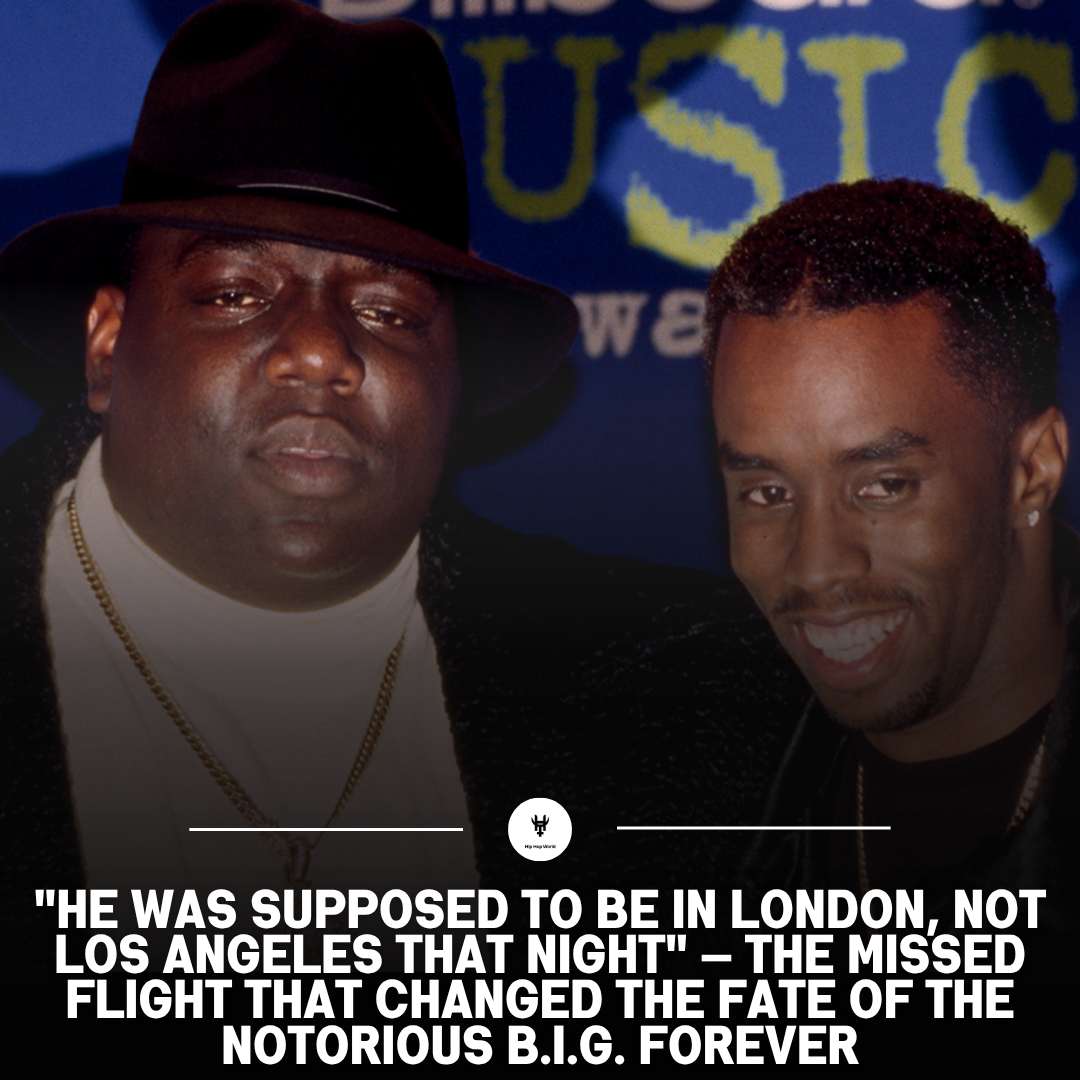
The night carried a certain energy—one of movement, music, and presence. The Notorious B.I.G. had just left a party in Los Angeles, surrounded by the kind of atmosphere that followed him everywhere at the height of his career. It was March 9, 1997, and nothing about the moment suggested it would become one of the most tragic turning points in hip-hop history.
The convoy moved through the city in separate vehicles, a routine exit after a crowded event. Inside one of those cars was Biggie himself, riding through the streets that had already become a tense backdrop for the ongoing East Coast–West Coast rivalry. When the vehicle came to a stop at a red light, everything changed in an instant. Another car pulled alongside. Shots were fired. Biggie was struck multiple times and later died in the hospital.
The loss echoed far beyond that intersection. Just months after the killing of Tupac Shakur, the death of Biggie deepened a sense of unease across the culture. Two defining voices of a generation were gone, and the rivalry that had shaped headlines now carried a far heavier weight.
A Different Path That Was Never Taken
In the years that followed, the story of that night has been told from many angles. But one detail, shared later by Sean “Diddy” Combs, has continued to linger because of what it suggests.
Not long before the trip to Los Angeles, Biggie had been planning to travel to London. The plans were in motion, the destination set. But during a phone call, something shifted. According to Diddy, Biggie made a decision that would quietly alter everything—he chose not to go.
Diddy would later reflect on that conversation as something he could never quite leave behind. He recalled trying to understand the decision, but also recognizing that Biggie was always his own person, someone who made his own choices without being swayed. The trip was canceled, and instead, Biggie remained in the United States.
That decision placed him in Los Angeles on that specific night.
The Weight of a Single Choice
What makes this moment resonate is not just the tragedy itself, but the awareness of how close things came to unfolding differently. Had Biggie boarded that flight to London, he would not have been in that car, at that intersection, on that night.
It is a detail that doesn’t change what happened, but it changes how people think about it.
Diddy later spoke about how that phone call stayed with him, replaying in his mind over the years. Not as a clear answer, but as a question—what if things had gone another way? What if the decision had been different?
There are no conclusions to draw from that kind of reflection, only the recognition that some moments carry more weight than they seem to at the time.
A Culture Changed Forever
The deaths of Biggie and Tupac marked a period that reshaped hip-hop. What had once been competition and expression became something darker, something that forced the industry and its audience to confront the consequences of its own intensity.
Biggie’s legacy, however, did not end with that night. His music continued to define an era, his voice still present in conversations about storytelling, influence, and authenticity. The loss was permanent, but so was the impact he left behind.
And yet, that one decision remains part of the story.
Not as a way to rewrite history, but as a reminder of how fragile moments can be. A flight not taken. A plan changed. A path that led somewhere else.
In the end, the story of The Notorious B.I.G. is remembered for what he created and what he represented. But in the quiet spaces between those memories, there is also that lingering thought—how differently everything might have unfolded if one choice had gone the other way.