In an age engineered for distraction, where every scroll is a tug away from the present, something almost impossible happened last night in that stadium: 55,000 people forgot their phones existed.
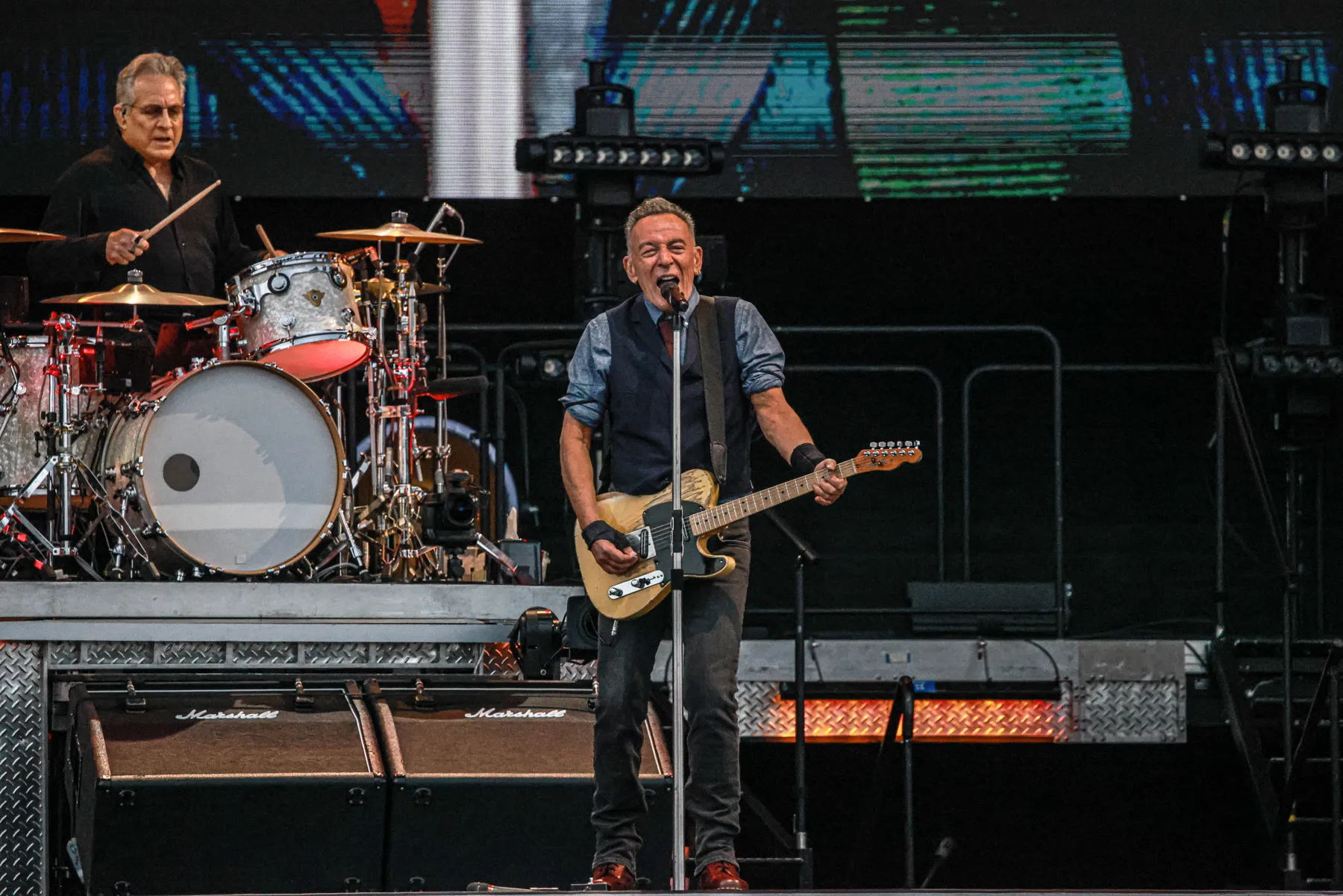
Not in the performative way we usually mean—no grand “put your phones down” speech from the stage, no viral moment of collective virtue. They simply forgot. Hands stayed in pockets. Screens stayed dark. Eyes stayed forward. For three hours and twenty-one minutes, an entire city of strangers breathed in the same rhythm, held together by nothing more than an old man in a faded work shirt and the songs he has carried across five decades like stones smoothed by a river.
Bruce Springsteen is seventy-four now. He moves differently—careful, deliberate, almost reverent—but the voice is still there, cracked open just enough to let the ache through. When he sings “Thunder Road” these days, it isn’t nostalgia; it’s archaeology. He’s digging up the same dream he first unearthed in 1975 and handing it back to us, still warm, still beating, asking the same impossible question: Can you still make a run for it when the years have already run?
And somehow, last night, the answer was yes.
There was a moment—midway through “Backstreets,” when the band dropped out and it was just Bruce and the piano and that long, wounded howl he lets loose on the line “we swore forever friends”—where the entire stadium seemed to lean forward at once, like trees bending in the same wind. No one cheered. No one filmed it. We just listened, as if the song might break if we moved too quickly. I have never heard 55,000 people be that quiet. It felt like church, if church still believed in redemption earned through sweat and gasoline and the stubborn refusal to give up on the kid you used to be.
That is the miracle. Not the endurance—though God knows the endurance is staggering—but the transmission. How does a feeling this specific, this rooted in the blue-collar poetry of a 1970s New Jersey night, still land like a punch in 2026? How does a song about trying to outrun your own ghosts still make teenagers who weren’t born when Born to Run came out scream the chorus like it was written for the specific hurt they carry in their chest right now?
Because Bruce never lied to us. He never promised it would be easy. He promised it would be worth it.
He played “Land of Hope and Dreams” near the end, that big, rolling gospel train of a song, and when he got to the line “this train carries saints and sinners, this train carries broken-hearted, thieves and sweet souls departed,” you could feel the entire crowd step onto it together. Not metaphorically. Physically. Shoulders straightened. Chins lifted. For one verse, 55,000 separate lives became a single congregation, testifying.
When the houselights finally came up and the night air rushed back in, people didn’t leave right away. They stood there blinking, dazed, like swimmers breaking the surface after being down too long. No one wanted to be the first to speak and break the spell.
I walked out past the merch tables, past the Uber surge, past the city trying to remember how to be loud again, and I kept thinking: How does a night like this still happen?
Maybe because some things refuse to die as long as someone is still willing to stand in front of a crowd and bleed the truth, note by note. Maybe because every once in a while, we still need to be reminded that the human heart is bigger than the algorithm, that a three-chord song and a honest voice can still quiet the noise of the whole damn world.
Bruce Springsteen is seventy-four years old, and last night he made time stop.
Faithful and holy, ruthless and true—still running, still carrying us with him.
Don’t tell me miracles don’t happen in 2026. I was there. I felt it land.