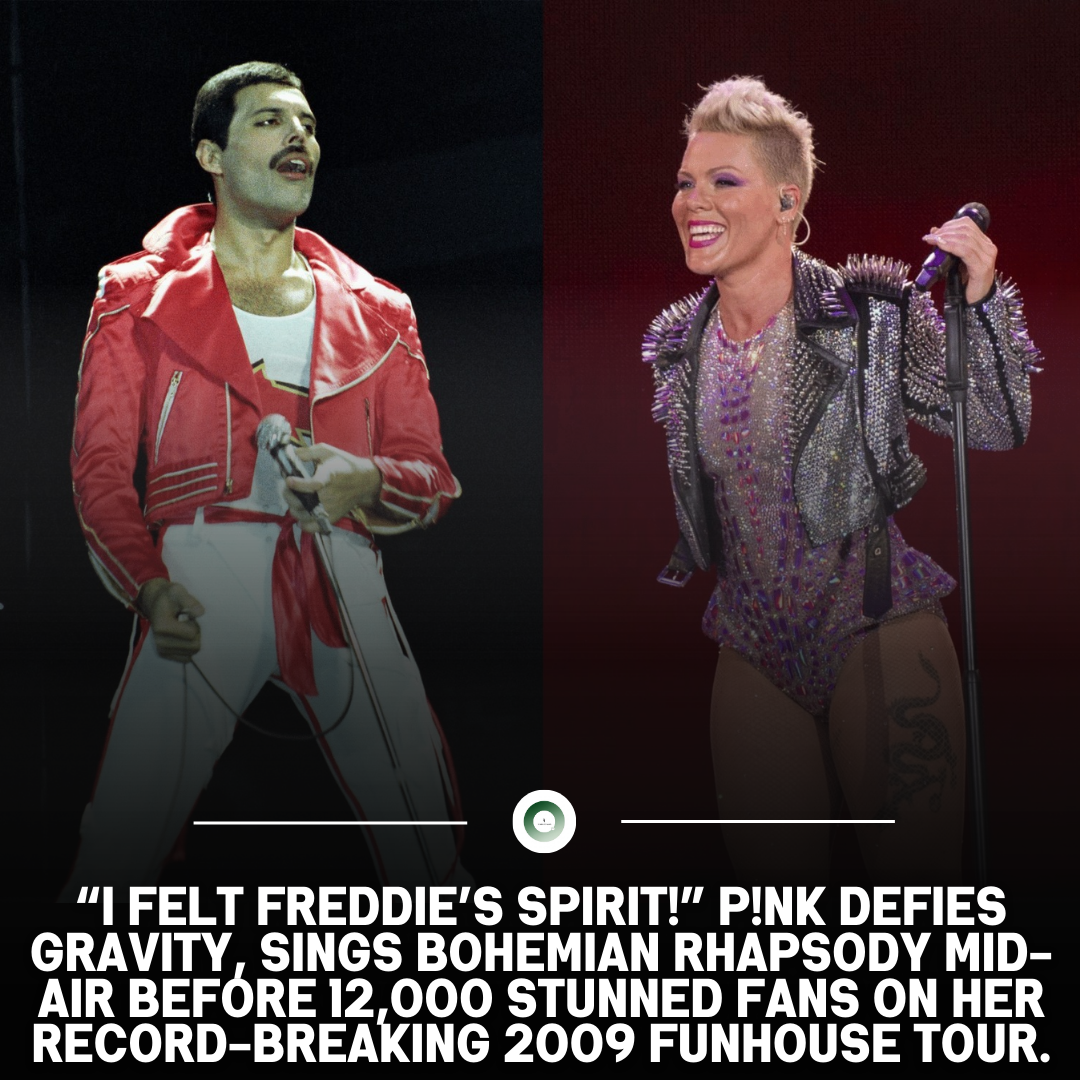
By 2009, P!nk had already earned a reputation as one of pop music’s most physically fearless performers. Her concerts weren’t simply vocal showcases—they were tests of endurance, control, and nerve. But during her record-breaking Funhouse Tour, she chose to take on something far more dangerous than aerial stunts or physical risk. She chose to confront one of the most untouchable compositions ever written.
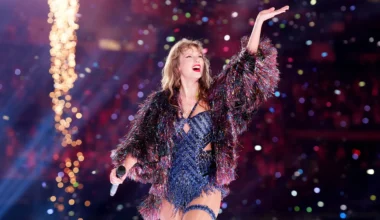
In front of more than 12,000 people at Sydney Entertainment Centre, suspended high above the crowd, P!nk performed Queen’s “Bohemian Rhapsody.”
It wasn’t a gimmick. It was an act of reverence.
The Song That Exists Beyond Imitation
Since its release in 1975, Bohemian Rhapsody, written by Freddie Mercury, has existed in a category of its own. It defies structure. It moves through vulnerability, chaos, theatrical madness, and explosive release—all within a single composition. Its demands are not merely technical. They are psychological. Emotional. Spiritual.
Most artists understand this instinctively. That’s why many avoid it. Some attempt fragments. Others reinterpret it entirely.
Very few dare to stand inside it exactly as it was created.
P!nk didn’t reinterpret it. She stepped into it.
Singing While Fighting Gravity
As the first fragile piano notes filled the arena, P!nk began to rise slowly above the audience, lifted by aerial silks. Her body rotated in slow, controlled motion, suspended in open space. Every movement required intense muscular precision. Every breath had to be managed carefully. Even the smallest loss of control could destabilize both body and voice.
Yet her vocal delivery never faltered.
She performed the song in its original key. There was no lowering to accommodate physical strain. No simplification to ensure safety. No protective rearrangement.
She honored the composition as it was written.
Performing aerial acrobatics while maintaining vocal control is one of the most physically demanding feats a singer can attempt. The core remains constantly engaged. The diaphragm must stabilize against motion. Balance, breath, and tone must exist in perfect alignment.
She was not standing on stage. She was suspended between strength and surrender.
Later, reflecting on the moment, she described it with quiet simplicity:
“I felt Freddie’s spirit right there.”
The Moment the Crowd Forgot to Breathe
As the operatic section gave way to the song’s explosive rock climax, P!nk inverted her body completely, flipping upside down while sustaining the vocal intensity. The risk was absolute. The margin for error was nonexistent.
For several seconds, the arena fell silent.
It wasn’t confusion. It wasn’t hesitation. It was recognition. Twelve thousand people instinctively understood they were witnessing something fragile, dangerous, and real.
Then the eruption came.
The applause wasn’t polite. It was violent. Emotional. Relieved.
Critics would later note that the power of the performance did not come from imitation. P!nk never attempted to become Freddie Mercury. Instead, she honored the very quality that defined him—fearlessness.
She met risk with risk. Courage with courage.
The Tour That Redefined What Pop Performance Could Be
The Funhouse Tour would go on to become one of the most successful tours of its era. Nowhere was its impact more profound than in Australia. P!nk performed an unprecedented 17 sold-out shows at Sydney Entertainment Centre, breaking records no international artist had touched before.
These performances were later preserved in P!nk: Live in Australia, ensuring that the aerial “Bohemian Rhapsody” would not fade into rumor, but remain documented as one of the most daring live covers ever attempted.
It was no longer just a tribute. It became part of performance history.
Why the Performance Still Matters
Legends are not honored through imitation. They are honored through courage.
Freddie Mercury built his legacy by refusing to perform safely. He embraced theatricality, risk, and emotional exposure without apology. P!nk understood that honoring him required the same willingness to step into uncertainty.
She didn’t shrink in the presence of greatness.
She rose to meet it.
For one suspended moment in Sydney, gravity loosened its grip, fear lost its authority, and a modern performer proved that legacy is not something preserved carefully in silence.
It is something carried forward—by those brave enough to rise.