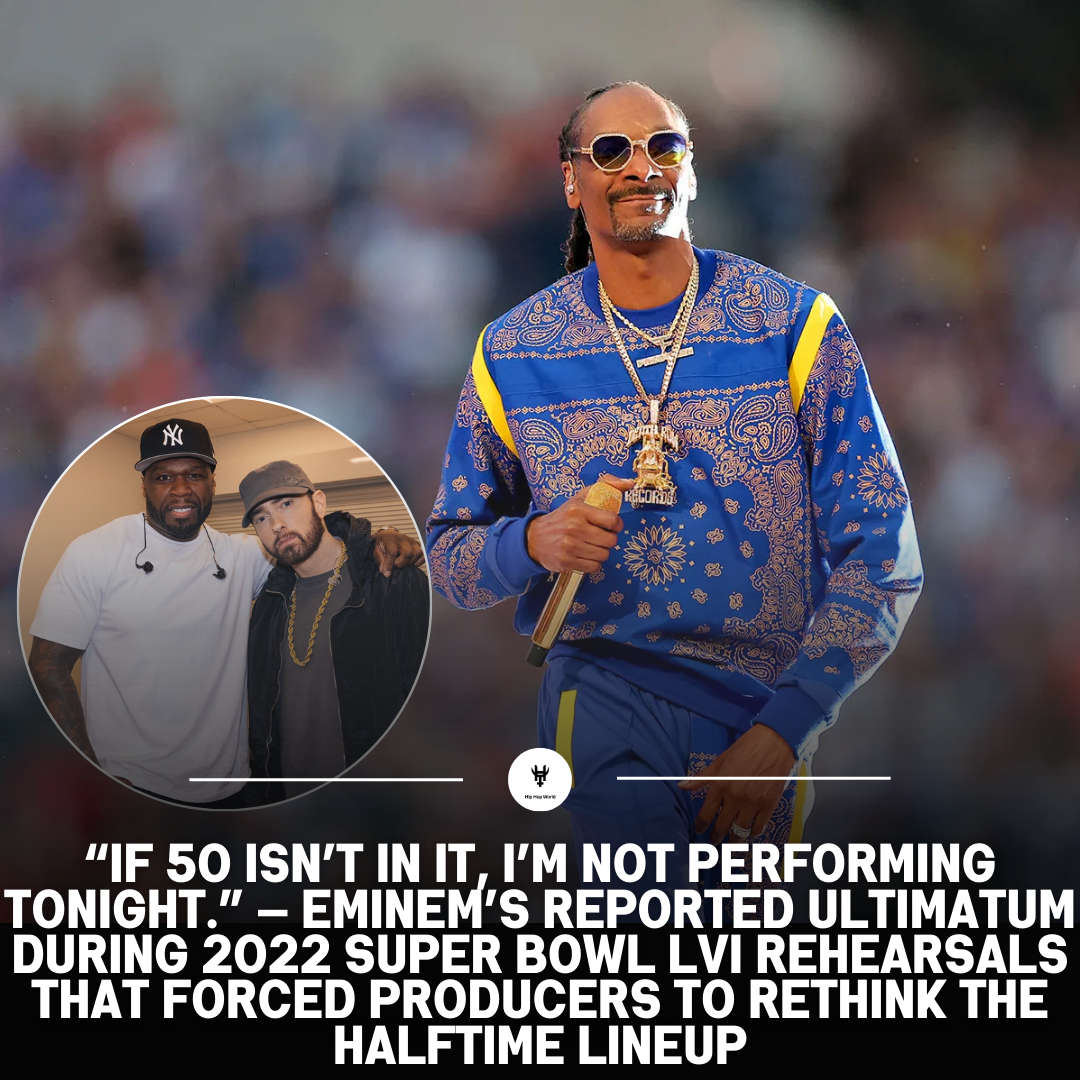
On the night of Super Bowl LVI, the stage inside SoFi Stadium looked less like a football halftime set and more like a living monument to hip-hop history. Beneath the bright lights and the sprawling Los Angeles skyline backdrop, a lineup of artists who had defined entire eras of rap music prepared to step onto one of the most watched stages in the world.
The performance would feature Dr. Dre, Snoop Dogg, Eminem, Mary J. Blige, and Kendrick Lamar—a cross-generational gathering that reflected decades of West Coast and mainstream hip-hop influence. For the culture, the halftime show represented something bigger than a performance. It was recognition. Hip-hop, once treated as an outsider genre by major television events, was now being placed at the center of the most watched broadcast in American entertainment.
But behind the scenes, as rehearsals intensified and the schedule was refined down to the second, a different conversation began to unfold.
A Halftime Show Built on Precision
The Super Bowl halftime show operates under strict timing. Every transition, camera movement, and verse must be coordinated with near-surgical precision. With so many legendary performers involved, the challenge of fitting everything into the allotted time became increasingly complicated.
Producers were forced to make difficult decisions about pacing and structure. The goal was to keep the show moving smoothly without sacrificing the energy or identity of the artists involved.
At some point during those discussions, one name reportedly became the subject of debate: 50 Cent.
Adding another performer meant adding more rehearsal time, more stage coordination, and additional pressure on an already tight broadcast window. From a production standpoint, the logic was simple. Removing a segment could streamline the entire show.
But for one artist in the lineup, the issue wasn’t logistical. It was personal.
Eminem Draws a Line
According to recollections shared later by Snoop Dogg, the discussion about trimming the performance reached a tense moment during rehearsals. When the possibility of removing 50 Cent from the lineup surfaced, Eminem reportedly made his stance clear.
For Eminem, 50 Cent was not simply another guest performer. Their history ran deep, tracing back to the early 2000s when Dr. Dre introduced a young Queens rapper to the world through Shady Records and Aftermath Entertainment. Together, the artists helped reshape the sound and commercial reach of hip-hop during that era.
To Eminem, the halftime show was meant to represent that shared legacy.
Snoop Dogg later described Eminem’s reaction as firm and direct. If the show was going to celebrate hip-hop’s history, then leaving out one of its defining figures made little sense. According to Snoop’s account, Eminem told organizers that if 50 Cent wasn’t part of the performance, he wouldn’t participate either.
It was an extraordinary position to take.
Performing at the Super Bowl halftime show is widely considered one of the most prestigious opportunities in entertainment. The broadcast regularly reaches more than one hundred million viewers worldwide, offering artists a platform that few stages can match.
Walking away from that spotlight would have been unthinkable for many performers.
But Eminem’s response reflected a deeper principle within hip-hop culture: loyalty.
A Brotherhood Forged in Music
The relationship between Eminem and 50 Cent had been built through years of collaboration, mentorship, and shared success. In the early 2000s, albums like Get Rich or Die Tryin’ helped establish 50 Cent as one of the most dominant figures in rap music.
At the same time, the partnership strengthened the influence of the Shady and Aftermath camps, shaping the direction of mainstream hip-hop during that period.
By the time Super Bowl LVI approached, the artists’ careers had already been woven into the broader story of hip-hop’s rise from underground movement to global force.
For Eminem, the halftime stage was not simply an individual performance opportunity. It was a celebration of that entire journey.
The Night the Plan Came Together
When the show finally aired in February 2022, the final lineup reflected that shared history.
As the performance unfolded, each artist delivered a carefully choreographed segment that blended nostalgia with modern spectacle. Dre opened the show at the piano, setting the tone for a set that would move through decades of influential records.
Snoop Dogg followed with his signature West Coast style, while Mary J. Blige brought a powerful vocal performance that bridged hip-hop and R&B traditions. Kendrick Lamar’s segment injected a contemporary energy that connected past and present generations of rap.
Then came one of the night’s most memorable visuals.
From the structure above the stage, 50 Cent appeared suspended upside down, recreating the iconic imagery from the music video for In Da Club. As the beat dropped, the crowd erupted, instantly recognizing the moment.
For fans watching around the world, the entrance felt both nostalgic and celebratory—a reminder of an era when the song dominated radio and reshaped the sound of mainstream hip-hop.
Within seconds, the stadium atmosphere shifted from anticipation to celebration.
A Moment That Meant More Than Entertainment
The halftime show quickly became one of the most widely discussed musical performances in recent memory. Critics and fans praised its ability to capture multiple eras of hip-hop while maintaining the authenticity of the artists involved.
Behind the scenes, the story shared later by Snoop Dogg added another layer to the performance’s legacy.
In an industry often driven by business decisions and strategic calculations, Eminem’s reported stance stood out as something simpler and more human. It was a reminder that the relationships behind the music still matter.
For millions of viewers, the halftime show was a spectacular piece of entertainment.
For the artists involved, it also represented something deeper: a moment when the culture that built hip-hop—its loyalty, history, and shared identity—stood at the center of the biggest stage in the world.