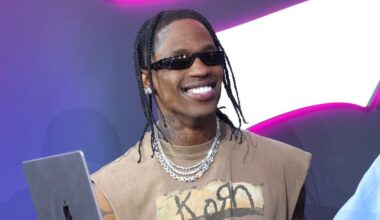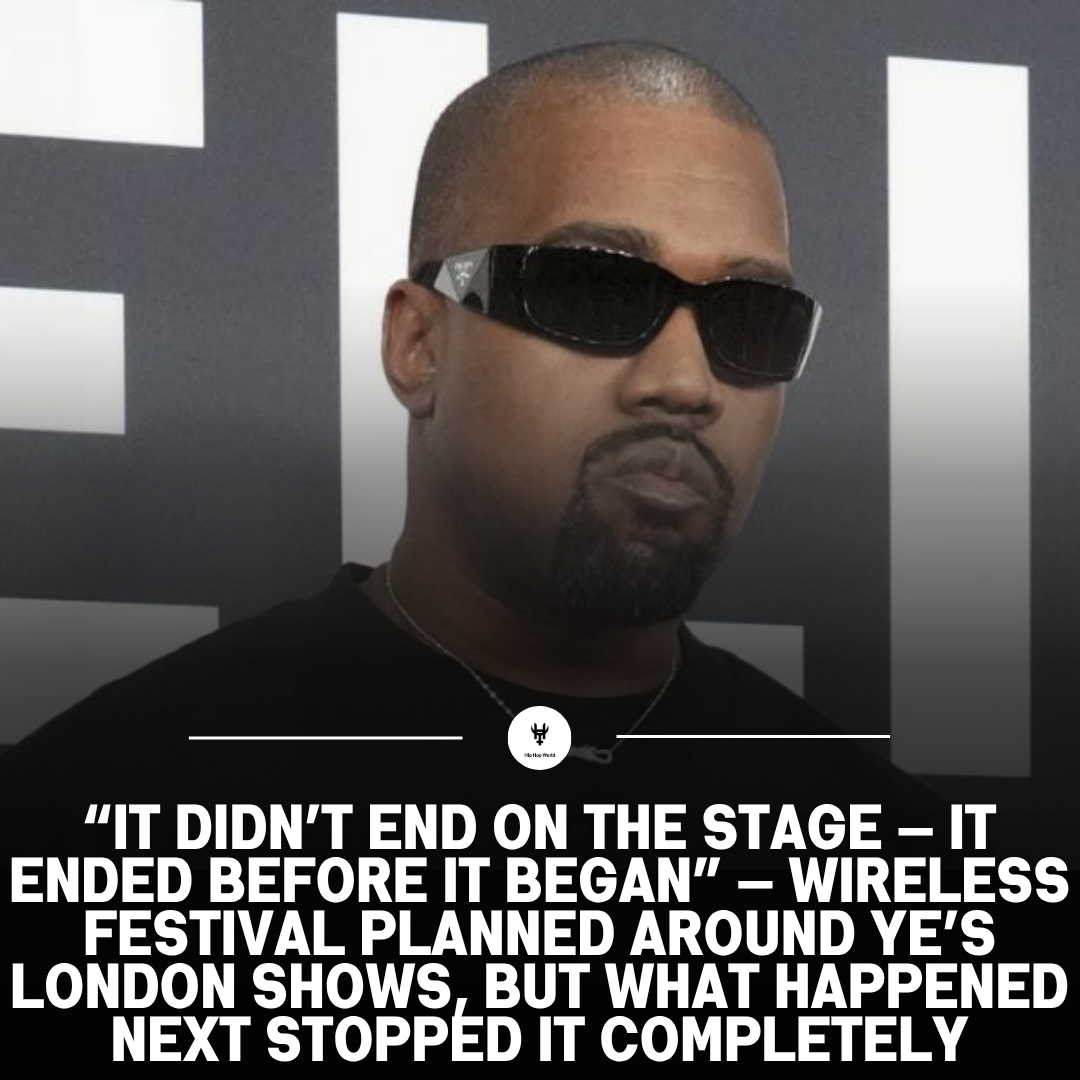
The announcement didn’t arrive with anticipation—it landed with finality. One of the UK’s biggest music festivals was suddenly off the calendar, and the reason traced back to a decision that had been building quietly behind the scenes.
A Headline That Changed Everything
Wireless Festival had been set to return to Finsbury Park in July, with Ye positioned as the headline act across three nights. It was a booking that immediately drew attention, not just for the scale of the event, but for the context surrounding his recent years.
Then, on April 7, that plan unraveled.
Reports confirmed that Ye had been barred from entering the United Kingdom, a move that left the festival with no path forward. Shortly after, organizers made it official. “As a result of the Home Office banning YE from entering the United Kingdom, Wireless Festival has been forced to cancel,” they stated. “All ticket holders will receive an automatic full refund.”
What had been scheduled as a major summer moment was gone in a single update.
The Decision Behind the Ban
According to the Home Office, Ye had submitted an application to travel to the UK on April 6 through an Electronic Travel Authorisation. The request was denied, with officials determining that his presence would not be “conducive to the public good.”
The decision came against a backdrop that hadn’t fully settled. His past antisemitic remarks continued to follow him, shaping how institutions and governments responded to his return to public stages.
UK Prime Minister Keir Starmer addressed the situation directly, stating, “It is deeply concerning Kanye West has been booked to perform at Wireless despite his previous antisemitic remarks and celebration of Nazism.” He added, “Antisemitism in any form is abhorrent and must be confronted firmly wherever it appears. Everyone has a responsibility to ensure Britain is a place where Jewish people feel safe.”
A Divided Reaction
Not every response aligned. While criticism of Ye’s past statements remained consistent, there were differing views on the decision to block his entry entirely. Nigel Farage, leader of Reform UK, acknowledged the severity of the comments, calling them “vile,” but questioned the broader implication of the ban.
“The rabbit hole of antisemitism and straight Nazi-sm is vile,” he said. “But I think if we start banning people from entering the country because we don’t like what they say, I worry where that ends up.”
At the same time, Ye himself has framed his current direction differently, claiming he wants to bring “unity, peace and love” through his music and demonstrate change through his actions.
An Outcome That Reaches Beyond One Event
The cancellation of Wireless Festival is more than a logistical shift. It reflects the ongoing tension between public accountability, artistic presence, and the limits of return after controversy.
What was meant to be a major live music moment now stands as something else entirely—a reminder that, for some artists, the stage is no longer the only place where decisions are made.