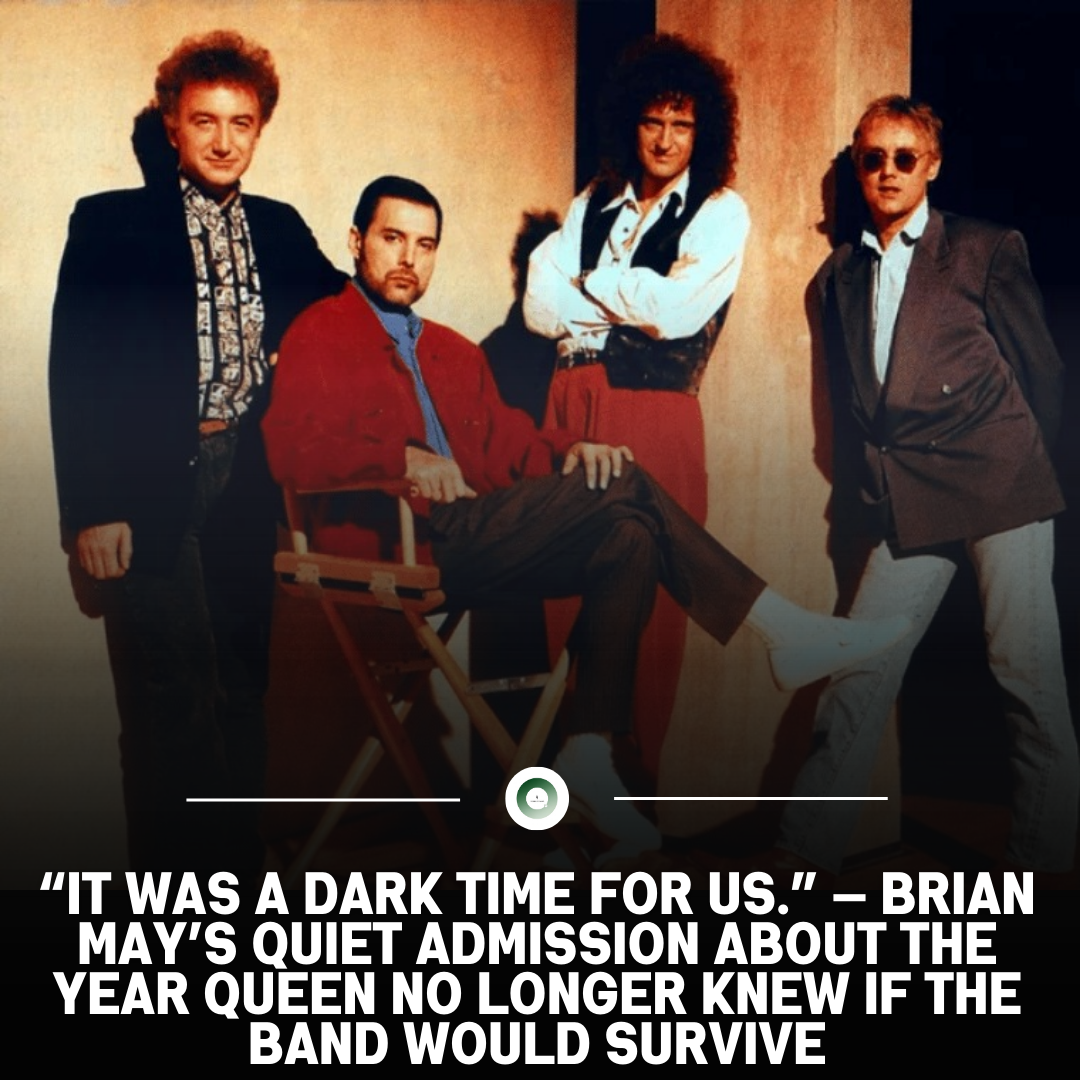
By 1983, Queen had stopped moving.
Not publicly. There was no announcement, no formal pause, no moment that marked the end of anything. From the outside, they remained intact — a band whose authority had been built across more than a decade of uninterrupted ascent. But inside the structure that had once carried them forward without hesitation, something essential had begun to weaken. For the first time since their formation, continuation was no longer automatic.
For years, motion itself had sustained them. Albums followed tours. Tours followed albums. Each project eliminated the space where doubt might otherwise form. But when that motion slowed, something unfamiliar appeared in its place. Stillness.
Stillness made uncertainty visible.
The Album That Changed Internal Balance
The shift followed Hot Space, released in 1982.
The album reflected Freddie Mercury’s growing interest in rhythm-driven production, pushing Queen away from the guitar-centered foundation that had defined their earlier identity. It did not dismantle the band, but it altered equilibrium. What had once felt instinctively unified now revealed separate creative impulses moving alongside each other rather than as one.
This divergence was not explosive. It was quiet.
Roger Taylor continued pursuing solo work, expanding his voice outside Queen’s internal negotiation. Brian May immersed himself in external collaborations, temporarily stepping outside the friction that had once sharpened the band’s direction. Freddie Mercury began moving toward solo recording, exploring ideas that existed beyond the structure Queen had built together. John Deacon remained present but increasingly private, maintaining his role while withdrawing from the emotional center that had once held them together.
None of these movements ended Queen.
But they changed its gravity.
When Continuation Became a Choice
For most of their existence, Queen had never needed to ask whether they would continue. Continuation had been assumed. But by 1983, that assumption had disappeared.
There was no clear next project. No shared urgency. No external force requiring immediate return. The band still existed, but its future depended on decision rather than inevitability.
Brian May would later describe how fragile that period had felt. Queen had not formally ended. But its continuity was no longer guaranteed by momentum. The structure remained intact. The certainty sustaining it had weakened.
This change coincided with a larger transformation happening around them. The industry itself was reorganizing. MTV reshaped exposure. Visual immediacy began to replace musical scale as the primary currency of survival. Queen, whose authority had been built on musical architecture and internal precision, now existed inside a system that rewarded different instincts.
For the first time, permanence no longer felt automatic.
The Return That Restored Structure
When they returned to record The Works in 1984, the act carried meaning beyond production. It was not simply another album. It was confirmation that the structure could still hold.
Songs like “Radio Ga Ga” restored more than commercial presence. They restored alignment. They proved Queen still existed not only in history, but in function.
But something fundamental had already changed.
The interruption had revealed fragility beneath permanence. It had shown that Queen’s survival depended not on its past, but on its continued willingness to exist together.
From the outside, their legacy would continue uninterrupted. Their authority would solidify. Their permanence would appear complete.
Inside, they understood something different.
Because once inevitability disappears, continuation never feels the same again.