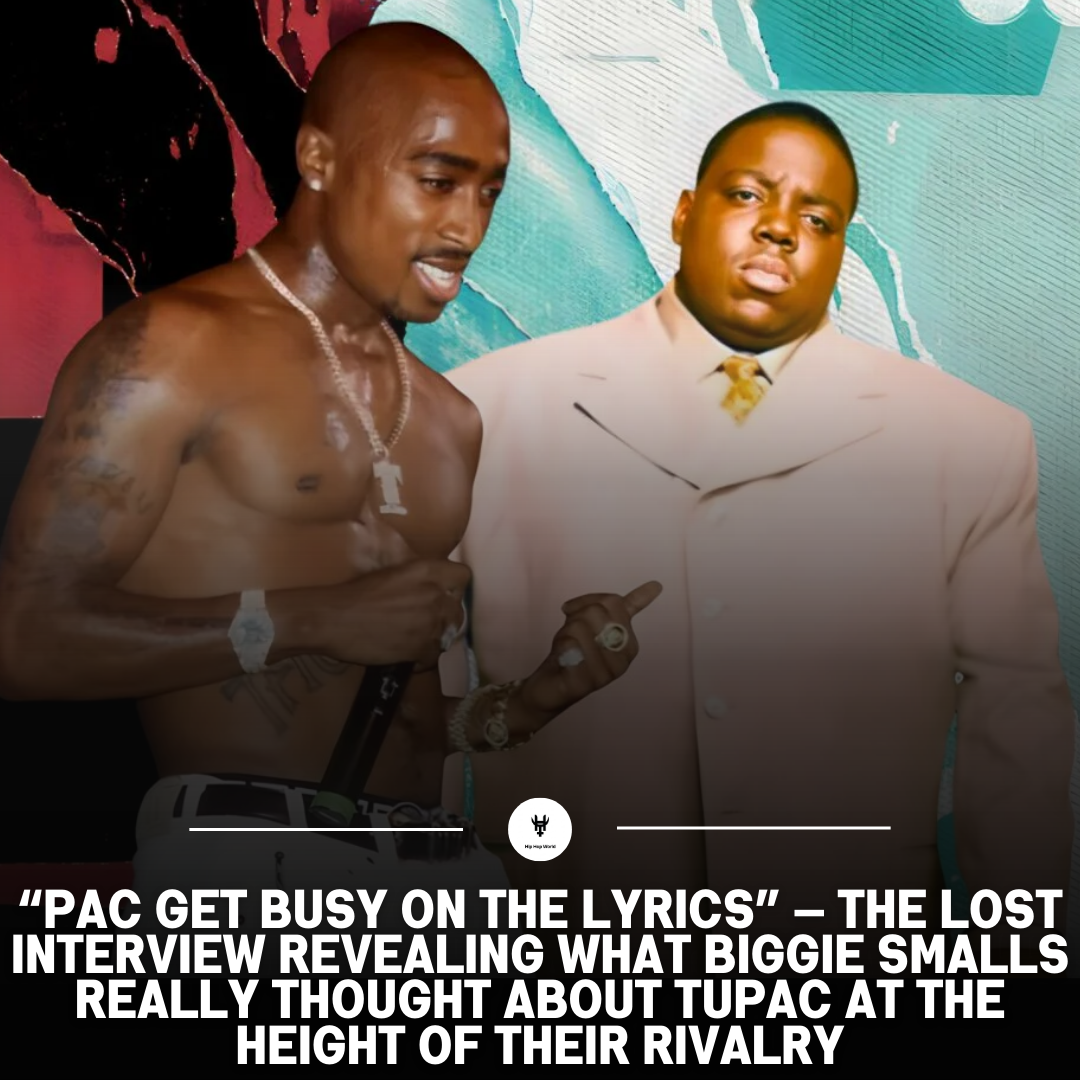
In the mythology of hip-hop, few rivalries loom as large as the one between Tupac Shakur and The Notorious B.I.G.. Their conflict came to symbolize the East Coast–West Coast divide that defined much of the genre’s most turbulent era in the 1990s.
Yet beneath the headlines, diss tracks, and cultural tensions, the reality of their relationship was far more complex than the rivalry history remembers.
Long before their names became permanently linked through one of hip-hop’s most dramatic feuds, Tupac and Biggie shared something simpler: mutual respect.
The Early Days Of Mutual Admiration
In the early 1990s, as both artists were rising through the ranks of the rap world, their paths crossed during Tupac’s visits to New York. At the time, neither man had yet become the towering cultural figure he would later become.
Instead, they were simply two young artists with growing reputations.
They performed together, spent time in the same circles, and recognized the talent in each other’s music. Those who witnessed their early interactions often described a sense of camaraderie between the two rising stars.
Both understood that the other possessed something special.
Biggie’s mastery of storytelling and effortless flow was already earning attention across the East Coast scene. Tupac, meanwhile, was developing a voice that blended raw emotion with political and social commentary.
For a time, the two artists seemed less like rivals and more like parallel forces shaping hip-hop’s future.
The Moment Everything Changed
As their careers exploded in popularity, the atmosphere surrounding hip-hop began to shift. What had once been regional pride between coasts gradually hardened into something more confrontational.
The East Coast–West Coast rivalry intensified.
Tupac became one of the most visible figures representing West Coast rap, while Biggie emerged as the defining voice of the East Coast. The tension between the scenes grew with every magazine cover, radio interview, and chart-topping single.
Then came a moment that altered everything.
In 1994, Tupac was shot and robbed in Manhattan while visiting a recording studio. The incident deeply affected him, and he came to believe that people within the New York rap scene had known about the attack beforehand.
Among those he suspected was Biggie.
Biggie denied any involvement or prior knowledge, but the damage to their relationship had already begun. In the years that followed, Tupac released several diss tracks aimed at Biggie and his associates, escalating what had once been a quiet rivalry into one of the most visible feuds in music.
To the public, it seemed like a complete breakdown between two former allies.
But privately, the story was not always so simple.
The Interview That Revealed Another Side
In an interview given to the Canadian magazine Peace, Biggie offered a surprisingly thoughtful perspective on Tupac.
Rather than dismissing his rival, Biggie openly acknowledged Tupac’s talent and the impact of his music.
“Pac get busy,” Biggie said. “People can’t take nothing from him. On the lyrics he get busy, straight up.”
It was a moment of respect that stood in stark contrast to the public perception of their rivalry.
Biggie continued, reflecting on Tupac’s musical direction during the period when he was working on what would become Me Against The World.
“That n*gga got some hard shit dog for real,” he said, noting that Tupac had been collaborating with several respected East Coast producers during the album’s creation.
In fact, Biggie revealed that he had even helped introduce Tupac to some of the producers shaping the project.
“I put him on to Mo Bee,” he explained. “I put him on to L.G.”
For Biggie, Tupac’s talent was never in question. His comments suggested that even as tensions grew between them, he continued to view Tupac as an artist capable of greatness.
A Rivalry That Defined An Era
By the mid-1990s, the feud between Tupac and Biggie had become one of the most visible conflicts in the music world.
Their names appeared constantly in headlines, interviews, and songs, each new development fueling the narrative of a deepening rivalry between coasts.
For fans and media outlets, the story seemed straightforward: two giants of hip-hop locked in an escalating battle.
But behind the scenes, the respect between them may never have completely disappeared.
Those who knew both artists often suggested that their relationship contained layers of admiration and frustration at the same time — a complicated mix shaped by fame, loyalty, and the pressures surrounding the music industry at the time.
A Tragic Ending To Two Legendary Careers
Tragically, the story did not end with reconciliation.
In September 1996, Tupac Shakur was killed in a drive-by shooting in Las Vegas. Just six months later, in March 1997, Biggie was also killed in a drive-by shooting in Los Angeles.
Both murders remain officially unsolved.
The similarities between their deaths — two of hip-hop’s most influential voices lost within months of each other — have often been described as one of the most haunting chapters in the genre’s history.
What remained afterward was the music.
Biggie’s albums set new standards for storytelling and lyrical precision, while Tupac’s work blended personal vulnerability with political awareness in ways that continue to resonate decades later.
Two Legacies That Still Shape Hip-Hop
Today, Tupac Shakur and The Notorious B.I.G. stand as two of the most influential figures hip-hop has ever produced.
Their music continues to inspire new generations of artists, and their rivalry remains one of the most discussed stories in the culture’s history.
Yet moments like Biggie’s candid interview reveal something deeper beneath the mythology.
Even at the height of their conflict, there were glimpses of the respect that once existed between them.
Two artists from opposite coasts.
Two voices that helped shape the sound of a decade.
And a rivalry that, despite everything, may never have erased the admiration they held for each other’s craft.