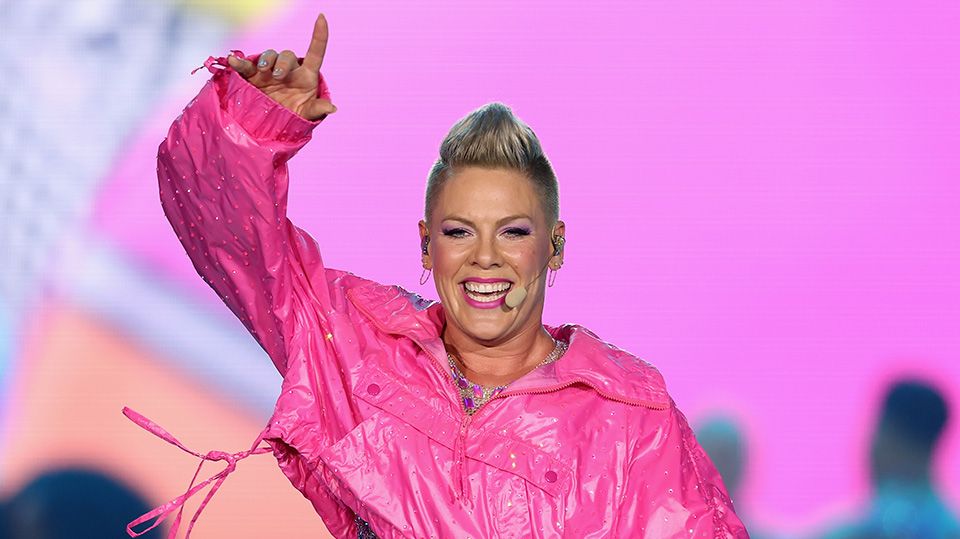
When people think of Pink, they picture spectacle: aerial stunts over stadium crowds, powerhouse vocals, and a persona built on defiance. But behind that larger-than-life image is a relationship story that feels strikingly grounded—and, at times, uncomfortably real.
After nearly two decades with Carey Hart, Pink distilled her experience into a simple, disarming idea:
Love doesn’t sustain itself. People do.
That perspective may not sound revolutionary, but in a culture saturated with highlight reels and fairy-tale expectations, it cuts deeper than most grand romantic gestures.
The Myth of Effortless Love
Modern love is often marketed as something that “just works” when you find the right person. Compatibility is portrayed as frictionless, chemistry as self-sustaining. But long-term relationships rarely follow that script.
Pink and Hart’s story disrupts that illusion. Their relationship has included separation, reconciliation, therapy, and ongoing adjustment. It hasn’t been a smooth arc—it’s been a cycle of breaking, rebuilding, and recalibrating.
And that’s precisely why it matters.
Because the uncomfortable truth is this: lasting relationships are not defined by the absence of conflict, but by how conflict is handled.
From the beginning, their dynamic was intense. Pink’s fiercely independent identity collided with Hart’s high-adrenaline, risk-taking lifestyle. The result wasn’t a calm, predictable partnership—it was volatile, passionate, and, at times, unsustainable.
Their 2008 separation could have been the end. For many couples, it would have been.
Instead, it became a turning point.
What brought them back together wasn’t nostalgia or convenience. It was a deliberate decision to try again—with more awareness, more structure, and more honesty than before.
The Unspoken Reality: Maintenance
We maintain cars, careers, and physical health without hesitation. Yet relationships are often expected to run indefinitely without upkeep.
Hart has challenged that mindset directly, framing relationships as something that requires active maintenance, not passive hope. That includes:
-
Honest (and sometimes uncomfortable) conversations
-
Accountability on both sides
-
A willingness to revisit the same issue more than once
-
External support, like counseling
This approach reframes effort not as a sign of failure—but as a sign of investment.
Why Therapy Became a Turning Point
One of the more unexpected aspects of their story is how openly they’ve discussed counseling.
In many public narratives, therapy is treated as a last resort—a final attempt before things fall apart. But in their case, it became part of the foundation.
That shift in framing is important.
Instead of asking, “Is something wrong with us?” the better question becomes:
“What tools do we need to do this better?”
By normalizing that perspective, Hart in particular has influenced how many people—especially men—view emotional work within relationships. Not as vulnerability alone, but as skill-building.
Choosing Each Other—Daily, Not Dramatically
The idea of “choosing each other every day” can sound poetic, but in practice, it’s rarely glamorous.
It looks like:
-
Staying in a conversation when it would be easier to shut down
-
Listening without immediately defending yourself
-
Showing up even when you feel disconnected
-
Rebuilding trust in small, repetitive ways
These actions don’t make headlines. They don’t translate into viral moments. But they are the quiet mechanics of longevity.
Why Their Story Connects
What makes Pink and Hart’s relationship resonate isn’t that it’s perfect—it’s that it’s recognizable.
Most people don’t see themselves in idealized love stories. They see themselves in:
-
Miscommunication
-
Emotional distance
-
Cycles of conflict and repair
-
The tension between independence and partnership
By speaking openly about these realities, they’ve unintentionally become a reference point—not for how to avoid struggle, but for how to move through it.
A More Honest Definition of Love
After twenty years, the takeaway isn’t a secret formula or a romantic cliché. It’s something far more practical:
Love is not a fixed state. It’s an ongoing negotiation.
It evolves with time, stress, personal growth, and changing priorities. And sustaining it requires more than feeling—it requires intention.
Pink’s message strips away the fantasy and replaces it with something sturdier:
Not “happily ever after,” but “continuously choosing, even when it’s hard.”
And for many people, that version of love feels a lot more achievable—and a lot more real.