For a brief moment, something unusual happened inside the arena.
Not noise. Not applause.
Silence.
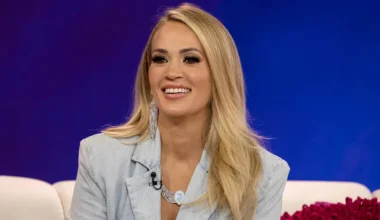
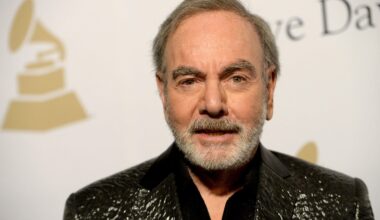
It arrived the instant Carrie Underwood finished her line and the lights widened to reveal John Foster standing beside her. No introduction followed. No explanation. No reassuring words to frame what the audience was about to see.

Just space.
And in that space, expectations shifted.
This wasn’t staged as a generous co-sign or a symbolic duet meant to elevate a promising newcomer. It felt sharper than that. Almost deliberate. Carrie Underwood, one of the most commanding figures in modern music, didn’t guide the moment—she stepped aside and let it unfold.
That decision changed everything.
Until recently, John Foster occupied a comfortable narrative: the rising artist, the “next one,” the name spoken with cautious optimism. His career had been defined by steady growth, intimate performances, and an audience that admired his sincerity without demanding spectacle.

But standing on that stage, under that light, comfort vanished.
Underwood’s presence brought gravity, but her restraint brought pressure. She didn’t shield him. She didn’t soften the moment. By offering no verbal context, she forced the crowd to judge Foster not as a guest—but as an equal presence.
And that is a far more dangerous position.
When Foster began to sing, the test became clear. He didn’t chase power. He didn’t try to out-sing or impress. Instead, he leaned into restraint—measured phrasing, controlled emotion, a voice that stayed grounded while the room waited for cracks.
None came.
What made the performance unsettling—in a compelling way—was how little it resembled a traditional breakthrough moment. There were no theatrical cues, no dramatic build designed to announce arrival. Instead, the tension lived in what wasn’t happening: no rescue, no narrative safety net, no obvious signal that this was meant to succeed.
Carrie Underwood sang with precision, but she didn’t dominate. She allowed space between lines. She listened. That choice quietly transferred responsibility. The spotlight wasn’t shared—it was divided.
And Foster held his half.
Midway through the performance, the audience responded instinctively. Applause broke out early. Cheers surfaced not at climaxes, but in moments of restraint. The reaction wasn’t excitement alone—it was recognition. Something had shifted in how he was being seen.
This was no longer curiosity.

It was evaluation.
By the final harmony, the dynamic had changed again. Underwood took the upper register. Foster anchored the lower, steady and unflinching. The last note lingered longer than expected, suspended in the air like a held breath.
Then silence returned.
Not awkward. Not uncertain. Heavy.
When applause followed, it carried weight—not approval, but expectation. The kind that comes when an artist crosses from being “promising” to being accountable.
Underwood turned toward Foster with a small smile. Not congratulatory. Not maternal. Professional. Equal. The kind exchanged between artists who understand the stakes of what just occurred.
That detail mattered.
Because what happened that night wasn’t about exposure—it was about positioning. Carrie Underwood didn’t elevate John Foster by association. She placed him under scrutiny and let the moment decide.
In an industry built on moments, this one was quietly consequential. Executives don’t forget performances like this. Neither do audiences. It reframes how an artist is measured, compared, and discussed.

John Foster walked onto that stage as a rising name.
He walked off as something less comfortable and far more demanding: an artist expected to deliver.
Whether this moment defines his future or complicates it remains to be seen. Expectations rise quickly, and the margin for error narrows just as fast.
But one thing is certain.
This was not a favor.
It was a line drawn in silence—and John Foster stepped across it.