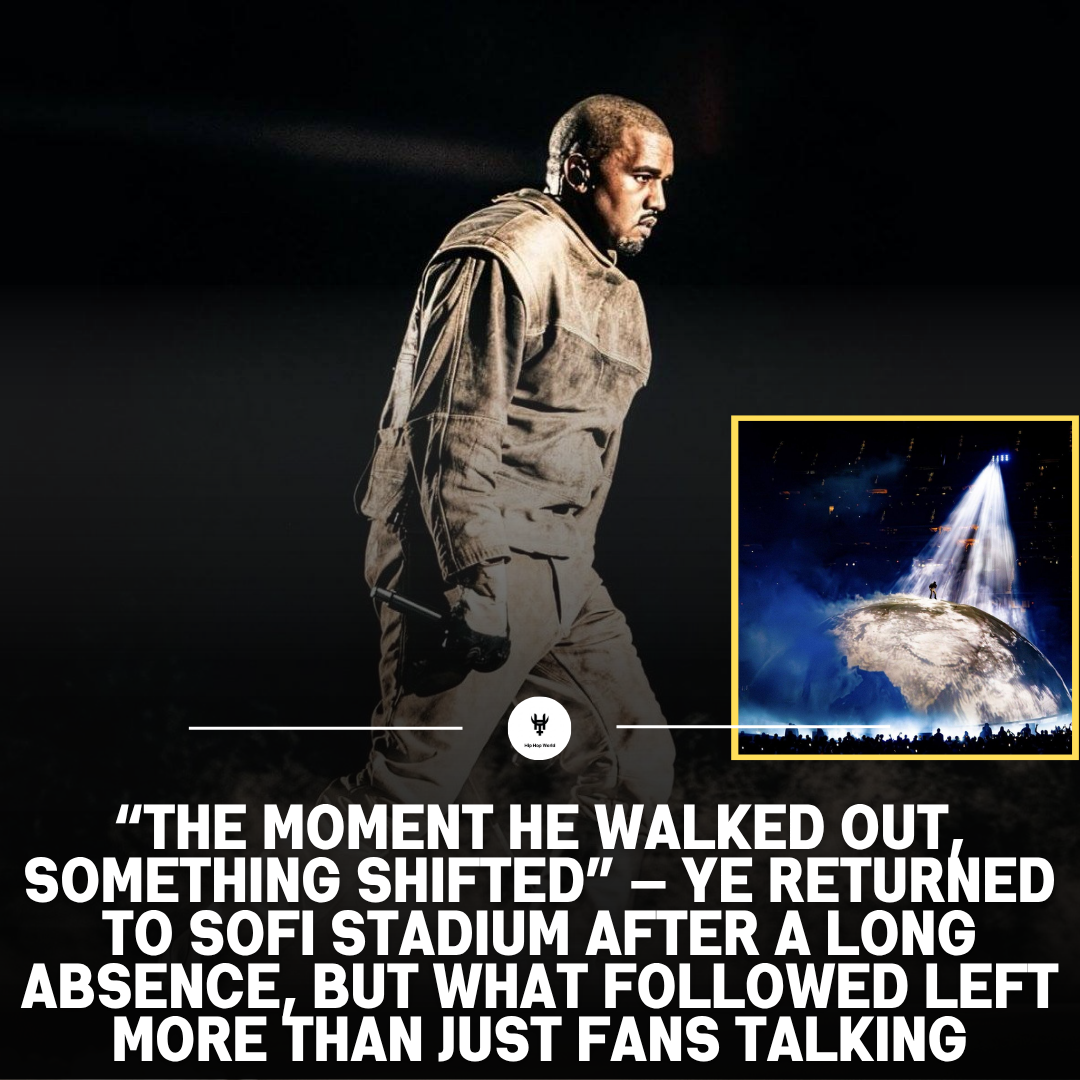
The lights cut through the darkness at SoFi Stadium as 70,000 voices settled into anticipation. At the center of it all stood Ye, returning to a U.S. stage for the first time in years, framed by a towering half-orb structure that turned the stadium floor into something closer to a cinematic set than a concert. What followed wasn’t just a performance—it was a statement of scale.
A Return Measured in Numbers
By the end of the night on April 3, the numbers began to tell their own story. Roughly $18 million from a single show, the highest ever recorded by a rapper. Combined with the sold-out night just days earlier, the total climbed to around $33 million—figures that didn’t just break records at SoFi Stadium, but redefined what a hip-hop concert could generate at the highest level.
But the significance of the moment went beyond revenue. This was Ye’s first performance in the United States since 2021, following a period defined less by music and more by controversy. Lost partnerships, public fallout, and a long absence had reshaped his position in the industry. The SoFi shows weren’t just concerts—they marked the beginning of a return many weren’t sure would happen this way.
The Weight of a Catalogue
The setlist leaned into that history. Across two hours, Ye moved through the records that built his reputation, from early defining moments to his most recent work. Tracks like “Through the Wire” and “Jesus Walks” carried the weight of origin stories, while “Runaway” closed the night with a sense of reflection that lingered beyond the final note.
Guests appeared throughout, each adding another layer to the scale of the event. Lauryn Hill’s presence tied back to a moment from decades earlier, while Travis Scott, North West, and others brought different eras of Ye’s world onto the same stage. It wasn’t just a lineup—it was a timeline.
The “Bully” Era Begins
The performances arrived alongside the release of “Bully,” an independently distributed album that quickly surged across streaming platforms. Within its first week, the project generated hundreds of millions of streams and climbed to the top of global charts. Even the reported numbers around its debut sparked debate, reflecting a release that carried both commercial weight and industry tension.
A deluxe version was announced just days after the SoFi shows, extending the momentum at a time when attention had fully returned to Ye’s music.
More Than a Comeback
The scale of the SoFi run didn’t exist in isolation. Earlier in the year, Ye had already drawn record-breaking crowds in Mexico City, and the tour now stretches across Europe, with major festival appearances and stadium dates scheduled through the summer. Even as sponsorship questions continue to follow him, the demand for the shows remains intact.
What the SoFi numbers ultimately reveal is something the industry is still trying to define. Whether it signals a broader cultural shift or simply reflects the enduring power of a catalogue that shaped a generation, the outcome is clear in one respect. At the level of pure concert economics, Ye is still operating in a space very few artists can reach—and for now, that may be the only metric that matters.