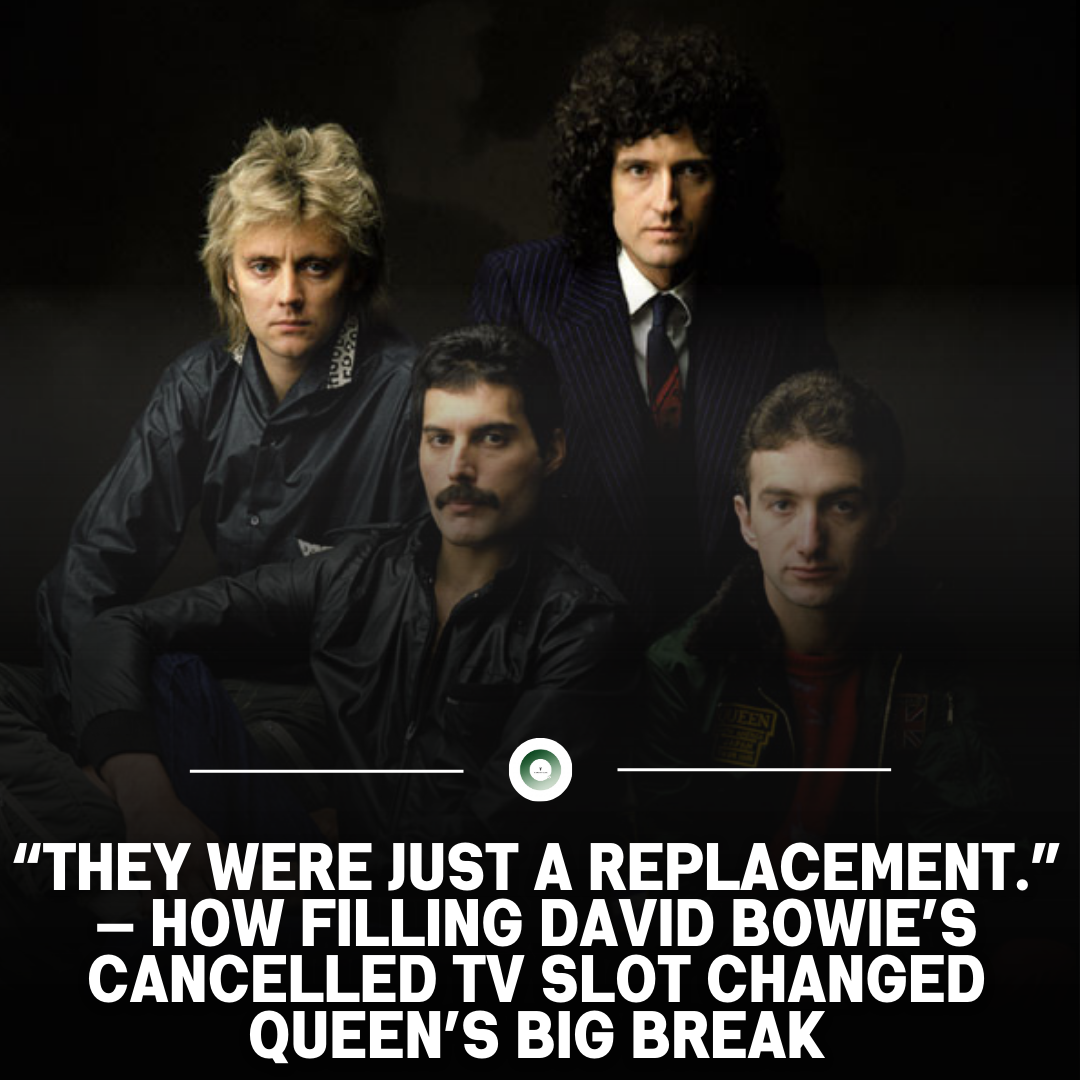
In early 1974, Queen were not yet legends. They were not stadium giants, not cultural icons, not the untouchable force the world would later know. They were a young band still searching for a moment—still waiting for the door that would open everything. That door appeared suddenly, and unexpectedly, because another star failed to walk through it.
David Bowie had already ascended beyond the normal rules of the music industry. His single “Rebel Rebel” was dominating attention, and his presence on BBC’s Top of the Pops was expected. But when Bowie didn’t deliver the promotional performance the show required, it left producers facing a crisis. The program could not afford an empty slot.
They needed someone immediately.
They needed someone ready.
They found Queen.
The Opportunity That Didn’t Belong to Them—Until It Did
When BBC producer Robin Nash reached out to EMI, he wasn’t asking for Queen specifically. He was asking for anyone who could fill the gap Bowie had left behind. EMI promotions executive Ronnie Fowler made the decision quickly. He knew Queen were hungry. He knew they were prepared.
But there was one problem.
Queen didn’t even have an official single ready to promote.
Still, they didn’t hesitate.
They rushed to BBC Television Centre, stepping into a moment that hadn’t been built for them. The conditions weren’t glamorous. The performance didn’t take place inside a massive concert hall filled with screaming fans. It happened inside a small weather studio, stripped of spectacle, stripped of audience.
There was no roar of approval waiting for them.
There was only the camera.
The Song That Arrived Before Its Time
With nothing formally prepared, Queen made a bold decision. They chose to perform “Seven Seas of Rhye,” a song that hadn’t even been released yet. It existed only as part of their upcoming album, still unknown to the world. The performance wasn’t backed by hype or expectation. It was backed only by belief.
Freddie Mercury himself hadn’t even wanted to appear on Top of the Pops. He saw it as beneath the kind of artistic seriousness he envisioned for the band. It took persuasion from both his bandmates and their label to convince him. But once he stood before the camera, something changed.
He wasn’t just performing.
He was announcing himself.
The confidence, the presence, the authority—it was already there, even if the world hadn’t fully noticed yet.
The Moment That Quietly Changed Everything
The impact was immediate. The performance introduced Queen to millions of viewers who had never seen them before. The exposure gave the band something they had never had: visibility. Urgency followed. The song was rushed to vinyl within days, transforming from an unreleased track into their first true chart breakthrough.
For the first time, Queen entered the UK Singles Chart.
For the first time, Freddie Mercury could leave behind his job selling clothes at Kensington Market.
For the first time, the future they had imagined began to feel real.
What had started as a replacement performance became their arrival.
The Accident That Created a Legacy
David Bowie never intended to give Queen their break. He never planned to open that door. But by failing to appear, he created space for another band to step forward.
Queen didn’t ask for the opportunity.
They accepted it.
And in that quiet television studio, without an audience, without fanfare, without certainty, they performed as if the world was already watching.
Because somewhere inside them, they believed it would be.