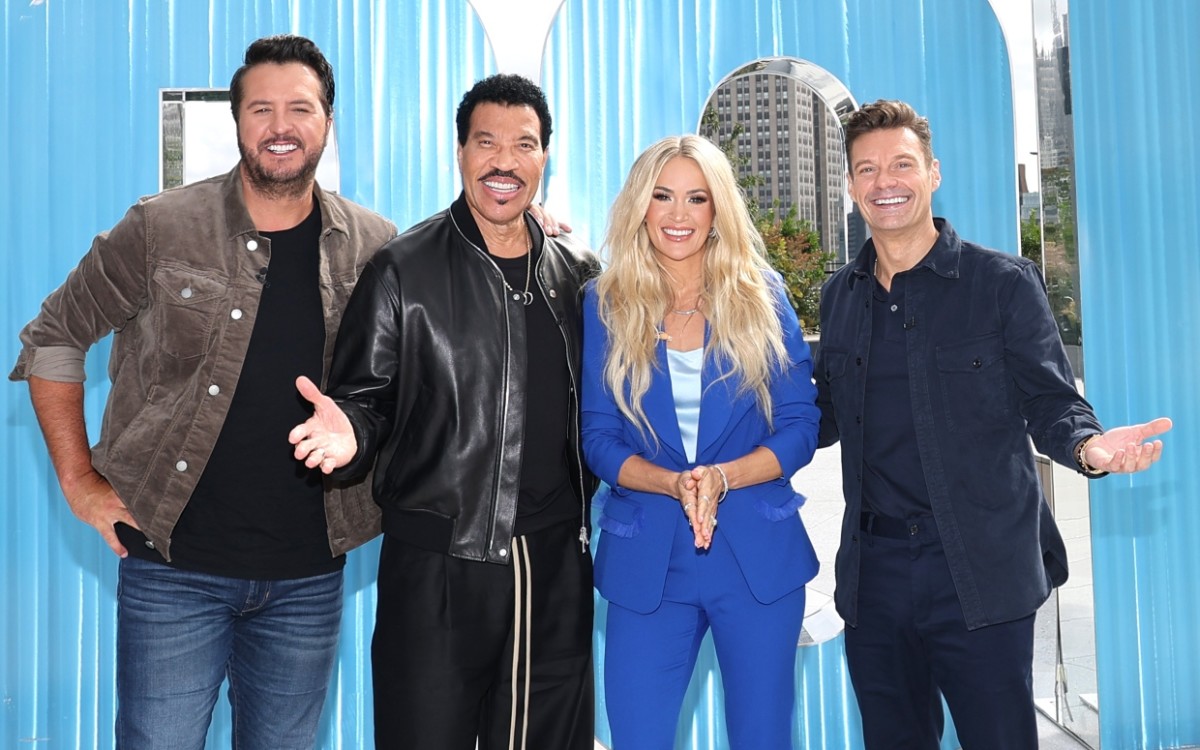
As American Idol prepares to enter its first live shows on March 30, the spotlight begins to shift in a way that isn’t immediately obvious. Up until now, performances have been guided by judges, shaped by feedback, and filtered through production. But beneath all of that, another layer has already been forming—one driven entirely by the audience.
And for the first time this season, that layer is starting to tell its own story.
The Signals Beneath The Surface
Long before results are announced, patterns begin to emerge. In recent years, one indicator has consistently aligned with outcomes: how audiences respond online. Performances uploaded after each episode don’t just exist for replay—they become a measure of connection. The more people return to watch, the more likely that artist is to remain in the competition.
This season adds another dimension. With voting now tied closely to social media platforms, visibility is no longer just a bonus—it’s a deciding factor. Contestants who already hold attention online are stepping into the live shows with an advantage that goes beyond a single performance.
A Clear Divide Begins To Form
At the top, a few names have begun to separate themselves from the rest. Hannah Harper, whose audition quickly gained traction, now leads by a wide margin in YouTube views, with her most recent performance reaching 333,000. Her presence online mirrors that momentum, with a following that continues to grow as the competition progresses.
Close behind, Kyndal Inskeep holds the largest Instagram following among the Top 20, while maintaining strong viewership numbers. Brooks Rosser follows with one of the highest view counts, suggesting a steady and engaged audience that continues to return.
Then there’s Keyla Richardson, whose recent performance surged quickly, gathering 174,000 views in just a short window—an early sign of rising momentum at exactly the right time.
These aren’t just numbers. They are indicators of something more important: who people are choosing to watch again.
The Middle Ground: Still Within Reach
Beyond the frontrunners, a group of contestants remains within striking distance. Artists like Braden Rumfelt, Daniel Stallworth, and Jesse Findling continue to show solid engagement, balancing view counts with growing social followings.
This is where the competition becomes unpredictable. These contestants may not lead the numbers yet, but they remain close enough that one defining performance could shift everything.
In a format driven by public voting, momentum is never fixed. It only needs the right moment to change direction.
Where The Risk Becomes Visible
At the lower end of the rankings, the challenge becomes clearer. Contestants such as Abayomi, Ruby Rae, and Madison Moon are currently trailing in both views and social presence. Others, including Kutter Bradley and Lucas Leon, remain in a similar position—close enough to compete, but without the same level of audience traction.
This doesn’t define their talent. But it does define their position going into the live shows.
Because at this stage, it’s not just about how well you perform. It’s about whether people choose to come back to you afterward.
The Moment Where It All Becomes Real
As the live shows begin, the structure of the competition changes completely. The judges step back. The audience steps in. And the margin for error narrows instantly.
What these early indicators suggest is not a final outcome, but a direction. A sense of who is building something sustainable—and who is still trying to break through the noise.
Because once the voting begins in real time, there is no buffer. No delay. No second interpretation.
Only connection.
And in a competition like this, connection is the only thing that lasts.