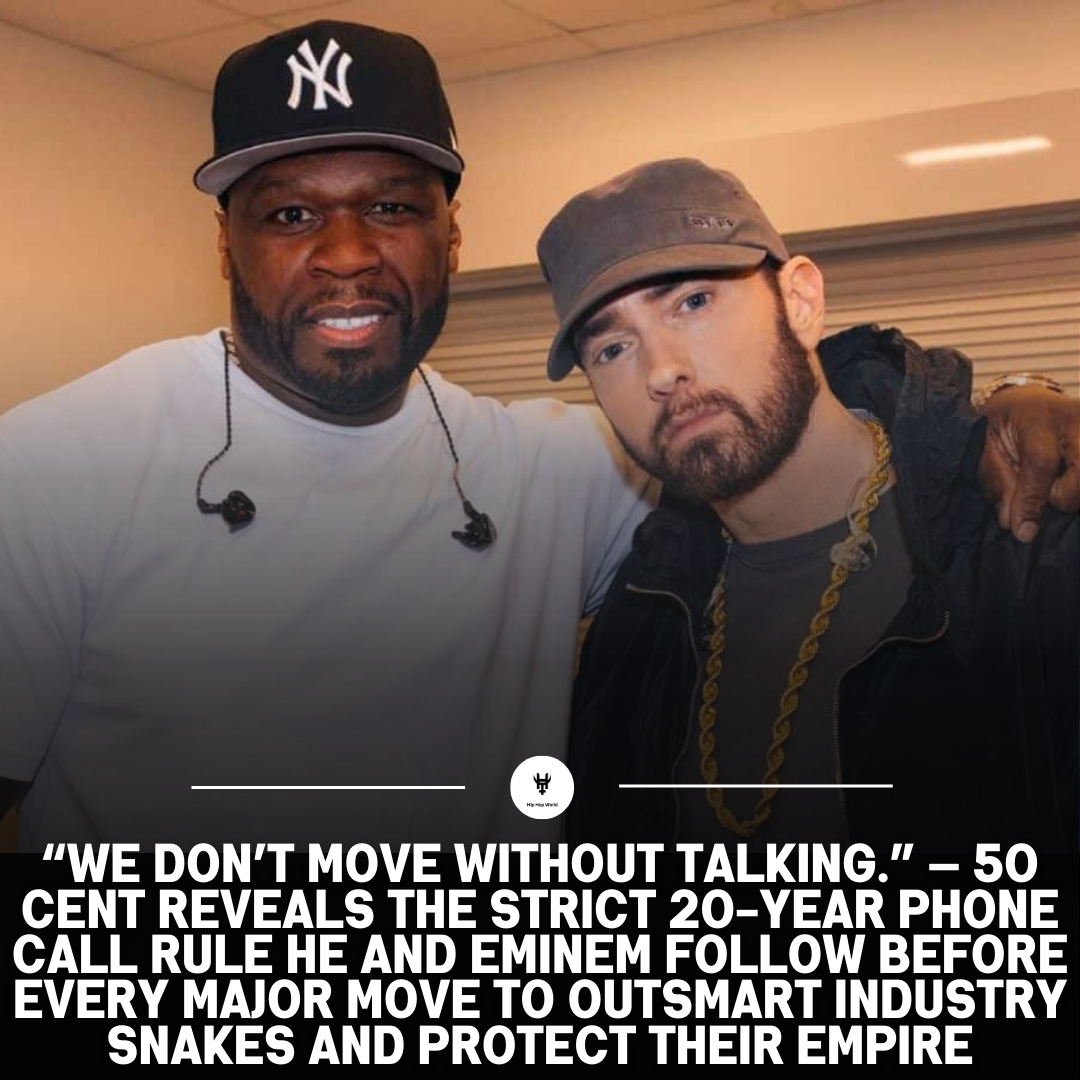
For more than twenty years, the partnership between 50 Cent and Eminem has survived the kind of turbulence that usually tears hip-hop alliances apart. Label restructures. Public feuds. Changing executives. Cultural shifts. Through it all, their bond has remained unusually intact.
This week, while making media rounds, 50 offered a rare glimpse into the structure behind that longevity. It isn’t a contract clause or a public display of loyalty. It’s a rule.
“We don’t move without talking.”
According to 50, no meaningful business decision happens without a direct call between the two. Not a text. Not a message relayed through managers. A call. Whether Eminem is locked away in Detroit refining verses or 50 is overseeing television productions and global ventures, nothing major advances without that conversation.
On the surface, it sounds obvious. In practice, it’s rare.
The music industry is built on urgency and ego. Deals get made quickly. Narratives spin faster than facts. Minor misunderstandings escalate once they reach blogs and social media. Hip-hop history is crowded with fractured partnerships that collapsed under the weight of miscommunication and pride. The Shady Records era that propelled 50 into superstardom could have easily followed that pattern.
Instead, they created what 50 describes as protection against “industry snakes.”
From the beginning, their alliance was mutually reinforcing. Eminem’s early co-sign under the Shady umbrella altered 50’s trajectory overnight. In return, 50’s commercial dominance strengthened the cultural and financial weight of the label. Over time, the relationship matured beyond artist and executive. It became a strategic brotherhood built on direct access and shared alignment.
That structure matters more now than ever.
In recent months, online speculation suggested distance between the two as joint appearances became less frequent. Eminem’s long-standing preference for privacy—especially when working in Detroit—has fueled those rumors. 50’s public reaffirmation of their rule feels intentional. It reframes absence not as separation, but as discipline.
The timing is significant. Both men are operating in new phases of influence. Eminem remains a technical force with one of the most loyal global audiences in rap. 50 has expanded his footprint into television production, brand partnerships, and large-scale entertainment ventures. Their empires now function on different fronts, yet remain tethered by a single constant: before anything shifts publicly, there’s a private call.
Industry observers note that this kind of structure prevents narrative drift. It aligns messaging. It protects shared equity. In a digital environment where a single tweet can ignite weeks of headlines, direct communication eliminates ambiguity.
For fans, that reassurance carries weight. The Shady alliance symbolizes a foundational era in hip-hop’s mainstream rise—an era where loyalty and strategic unity mattered as much as chart positions. Seeing that discipline extend into 2026 reinforces something rare in entertainment: durability.
The rule itself isn’t flashy. It won’t trend. It won’t dominate timelines.
But before contracts are signed, before announcements are drafted, before rumors spiral—there’s a conversation.
In a business fueled by noise, that quiet consistency may be their sharpest move.