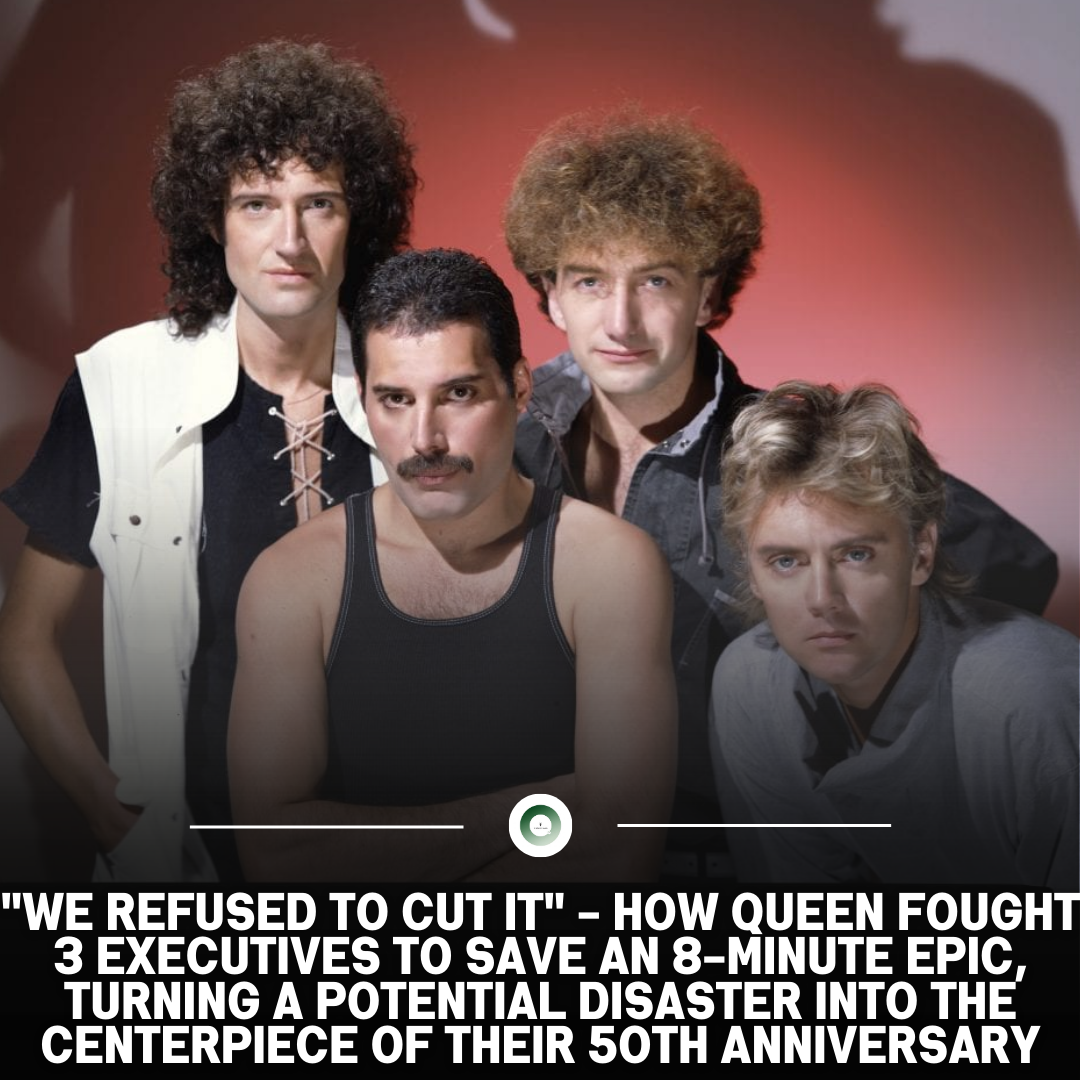
As the music world reflects on the 50th anniversary of A Night at the Opera, attention has naturally returned to “Bohemian Rhapsody,” the song that rewrote the rules of what rock music could be. But behind the album’s most famous rebellion was a quieter, more personal standoff—one that unfolded around a darker, more uncompromising creation. According to Brian May and Roger Taylor, the real confrontation wasn’t about the hit single. It was about an eight-minute epic few executives believed should exist at all: “The Prophet’s Song.”
Recorded in 1975 at Rockfield Studios in rural Wales, the track was born from something deeply internal. May has described its origin as a vivid, almost unsettling vision shaped by biblical flood imagery—a dream that lingered long enough to demand translation into sound. What emerged was dense, atmospheric, and structurally fearless. It didn’t follow the patterns radio expected. It didn’t even try. And that, more than anything, made it a problem.
At the time, Queen were in a fragile position. Despite their growing reputation, they had recently escaped a restrictive management deal that left them financially exposed. Stability wasn’t guaranteed. Label executives, focused on survival and commercial safety, urged the band to shorten or remove the track entirely. Their argument was simple and familiar: radio wouldn’t touch something this long. Audiences wouldn’t wait. The risk wasn’t artistic—it was practical.
But to Queen, the request wasn’t practical at all. It was existential.
Brian May would later reflect on the moment with clarity. The song, he explained, wasn’t indulgence—it was identity. Removing it wouldn’t just trim the album; it would reshape what the band stood for. At eight minutes and twenty-one seconds, “The Prophet’s Song” became the longest studio recording Queen ever released. More importantly, it became one of their most technically ambitious.
The centerpiece of the track—the haunting vocal canon—was achieved without the digital tools modern artists rely on today. Freddie Mercury’s voice was layered, looped, and manually synchronized using analog tape, creating an eerie cascade of sound that felt alive and unpredictable. Each vocal line chased the next, building tension in a way that executives heard as chaos, but the band understood as possibility.
That refusal to compromise didn’t isolate the song. It defined the album.
When A Night at the Opera was released, it became Queen’s first number-one record in the UK, transforming their status overnight. The success gave them something far more valuable than chart placement: independence. The instincts that protected “The Prophet’s Song” were the same instincts that later defended “Bohemian Rhapsody,” a track initially dismissed by executives before radio listeners proved them wrong.
Half a century later, Queen have marked the anniversary with a limited “crystal clear” vinyl pressing, carefully mastered to preserve the original recordings in their full form. It’s more than a commemorative release. It’s a reminder of the moment when restraint was rejected in favor of conviction—when length, complexity, and ambition were preserved instead of polished away.
Time has shifted the perspective. What once sounded impractical now feels inevitable. “The Prophet’s Song” is no longer seen as excess or risk. It stands as evidence of something rarer: a band willing to protect its vision even when doing so threatened everything else.
In refusing to cut eight minutes of music, Queen protected more than a song. They protected the principle that their identity would never be negotiated—and built a legacy that still refuses to be shortened.