Some performances entertain. Others interrupt you.
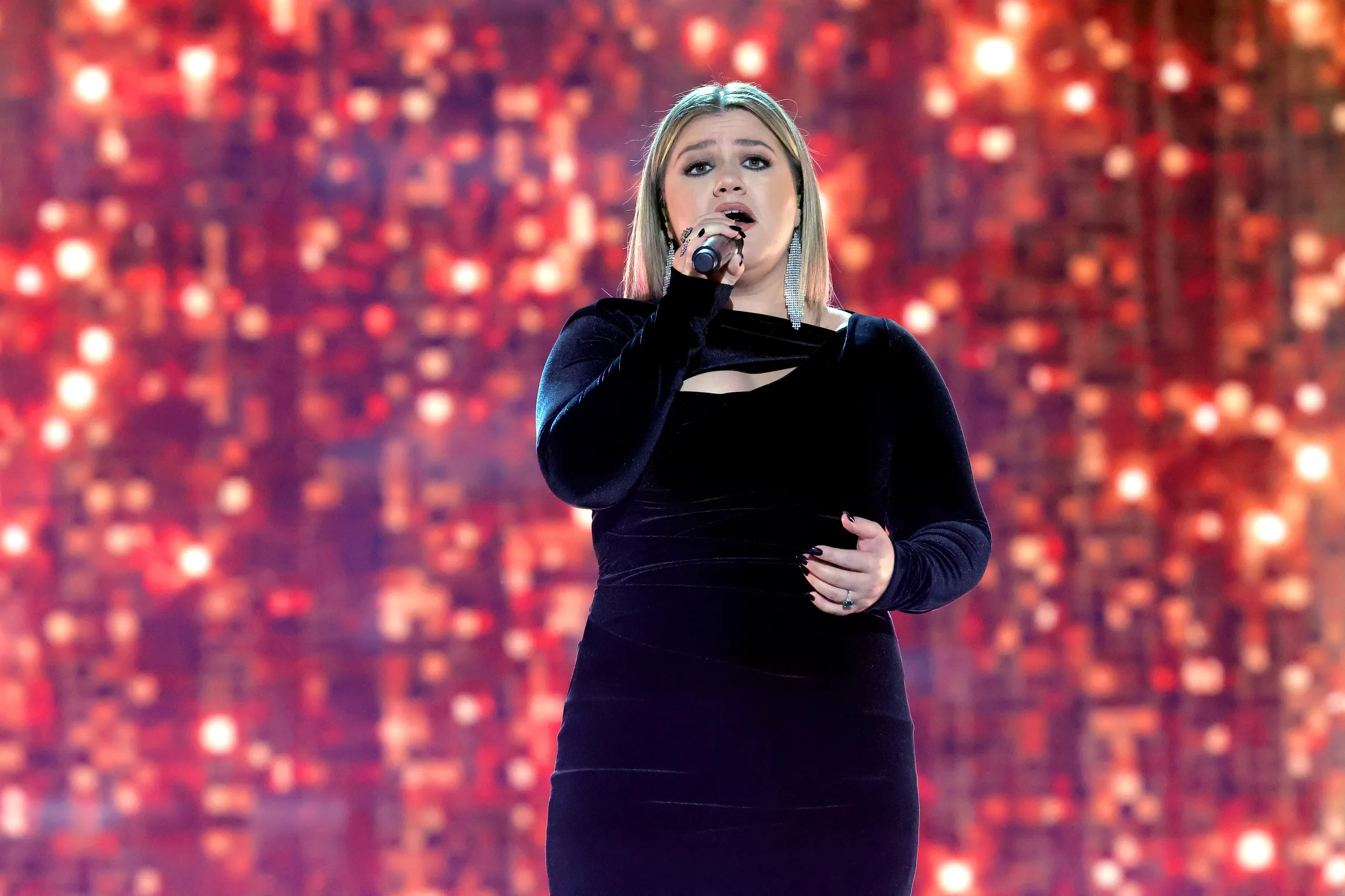
When Kelly Clarkson stepped into her “Kellyoke” spotlight to take on Happier Than Ever—originally by Billie Eilish—she didn’t just reinterpret a hit song. She cracked it open, rewired its emotional core, and delivered something that felt less like a cover and more like a public unraveling.
By the time she hit the final note, the room didn’t erupt immediately. It hesitated—like everyone needed a second to process what they had just felt.
The Evolution of “Kellyoke”: From Segment to Stage
What began on The Kelly Clarkson Show as a fun, flexible segment has quietly become one of the most compelling live music platforms on television.
“Kellyoke” works because Clarkson doesn’t treat songs as fixed artifacts. She treats them as living material.
Instead of mimicking the original artist, she asks a different question: What does this song sound like coming from me?
That mindset is exactly what made “Happier Than Ever” such a risk—and such a payoff.
A Song Built on Contrast—and Pressure
The original track is famously split in two:
-
A soft, restrained opening filled with quiet resignation
-
A sudden, explosive shift into anger and release
That structure is what made the song a cultural moment—but it also made it notoriously difficult to cover. Lean too far in either direction, and the balance collapses.
Clarkson didn’t try to replicate the balance.
She reinterpreted it.
The Slow Burn: Intimacy That Pulls You In
The performance began almost deceptively small.
Under dim lighting, Clarkson delivered the opening lines with near-whispered control. Her phrasing stretched the silences, letting each lyric settle before moving on. It felt less like a performance and more like overhearing a private thought.
The band followed her lead—minimal, restrained, patient.
And that patience mattered. Because it created tension.
You could feel the room waiting.
The Break: When Restraint Turns Into Release
Then it happened.
As the song pivoted into its second half, the entire atmosphere shifted. The band surged forward, guitars cutting through the quiet like a rupture. Clarkson didn’t ease into it—she launched.
Her voice didn’t just get louder. It got sharper, rougher, more volatile.
Where Billie Eilish delivered controlled chaos in the original, Clarkson leaned into something more visceral—channeling a rock intensity that felt closer to a live concert than a daytime TV set.
It wasn’t polished. It wasn’t pretty.
It was deliberate.
The Voice as an Instrument of Emotion
Clarkson’s strength has never been just range—it’s interpretation.
In this performance, she used her voice like a pressure valve:
-
Clean tones in the opening to signal restraint
-
Grit and vocal fry to introduce tension
-
Full-bodied belts to release it
The result was a version of the song that felt heavier—not just sonically, but emotionally.
She didn’t just sing frustration. She expanded it.
The Moment the Room Froze
By the final chorus, the performance had crossed into something else entirely.
Clarkson pushed into the upper limits of her voice, holding nothing back. The last note didn’t just land—it lingered, trembling with exhaustion and intensity.
And then—silence.
For a brief second, the studio didn’t react. Not because it wasn’t impressive, but because it didn’t feel like something you clap over immediately.
It felt like something you absorb.
Then the applause came—loud, immediate, almost corrective.
Within hours, clips of the performance spread across platforms, racking up millions of views and reactions.
But virality wasn’t driven by novelty alone. It was driven by recognition.
People weren’t just impressed—they connected.
Because underneath the technical skill was something universal:
-
The slow build of suppressed emotion
-
The tipping point
-
The release that follows
Clarkson didn’t just perform the song. She translated that emotional arc into something unmistakably human.
A Masterclass in Making a Song Your Own
Covering a song like “Happier Than Ever” comes with an unspoken challenge: stay faithful, but stand out.
Clarkson ignored that tension entirely.
She didn’t aim for fidelity. She aimed for truth—her version of it.
That’s why the performance didn’t feel like a reinterpretation of Billie Eilish’s work. It felt like a parallel version of the same emotional story, told through a different lens.
What This Says About Clarkson as an Artist
Moments like this reinforce something Clarkson has proven for years: her greatest skill isn’t just singing—it’s understanding songs.
She identifies their emotional center and rebuilds them around her own instincts.
That’s why “Kellyoke” has outgrown its original premise. It’s no longer a segment.
It’s a showcase of musical empathy.
The Takeaway: When a Cover Stops Being a Cover
By the end of the performance, one thing was clear:
This wasn’t about outperforming the original.
It wasn’t about vocal gymnastics.
It wasn’t even about reinvention for its own sake.
It was about expression.
Clarkson took a song already loaded with emotion and pushed it further—louder, sharper, more exposed.
And in doing so, she created a rare kind of moment:
One where a familiar song feels completely new—not because it changed, but because we experienced it differently.