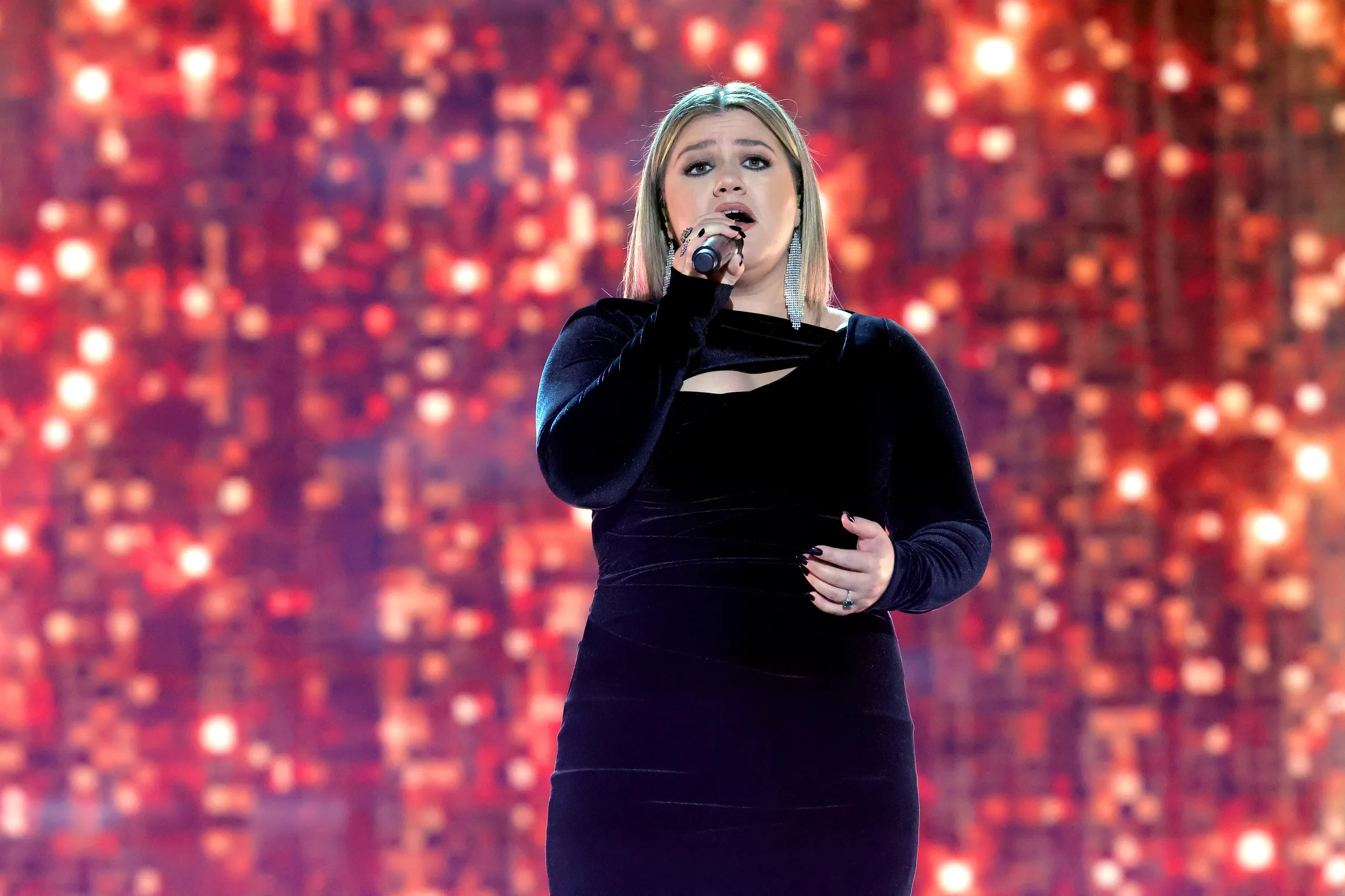
There are certain moments in music that feel almost untouchable—notes so iconic they become inseparable from the artist who first delivered them. Aerosmith’s “Dream On” has one of those moments. That final, sky-splitting high note isn’t just part of the song; it’s the song’s identity. For decades, it has stood as a kind of vocal summit—admired, attempted, and very rarely conquered.
Then Kelly Clarkson stepped up to it.
The Note That Built a Legacy
Steven Tyler’s climactic scream in “Dream On” is more than a technical feat. It’s a defining statement—raw, unfiltered, and emotionally charged. It carries the tension of the entire song and releases it in one explosive instant.
Singers have tried to replicate it for years. Many get close. Most don’t quite reach it. And even fewer capture the emotional urgency behind it. Because the challenge isn’t just hitting the pitch—it’s delivering it with conviction, control, and character.
That’s what makes the moment so elusive.
Clarkson’s Approach: Precision Over Imitation
Kelly Clarkson didn’t approach “Dream On” like a tribute act trying to mirror Tyler’s every inflection. She approached it like a storyteller.
Her performance builds gradually, almost deceptively. The opening lines feel grounded, controlled—like she’s holding something back on purpose. There’s a sense of restraint that gives the song room to breathe.
And that’s exactly what makes the payoff work.
By the time she reaches the final stretch, the tension has been carefully constructed. When she finally launches into the high note, it doesn’t feel forced or theatrical. It feels earned.
What Made the Moment Different
Technically, Clarkson hitting that note is impressive. But technical accuracy alone doesn’t explain why the moment resonated so strongly.
What set it apart was how complete it felt.
- Clarity: The note wasn’t strained or brittle. It carried a clean, focused tone even at its peak.
- Control: Instead of sounding like a desperate reach, it felt deliberate—placed exactly where it needed to be.
- Emotion: She didn’t just hit the note; she delivered the release the song demands.
That combination is rare. It’s what separates a strong vocalist from a transformative one.
Crossing Genre Lines Without Friction
Clarkson has long been labeled as a pop powerhouse, but performances like this challenge that narrow definition.
Rock, at its core, isn’t about genre—it’s about attitude and emotional intensity. And Clarkson brought both. She didn’t need to roughen her voice artificially or mimic rock stylings. Instead, she leaned into her natural strengths: dynamic control, vocal stamina, and emotional clarity.
The result didn’t feel like pop stepping into rock. It felt like music being interpreted by someone who understands its core.
Steven Tyler’s Shadow—and What It Means to Step Into It
Taking on “Dream On” means stepping into the shadow of one of rock’s most recognizable voices. That shadow is long for a reason.
What makes Clarkson’s performance notable isn’t that it replaces Tyler’s—it doesn’t. It’s that it stands beside it without shrinking.
Moments like this expand the legacy of a song rather than compete with it. They show that great music isn’t fixed in time. It evolves with each artist who brings something new to it.
The Myth of “Unreachable” Notes
Music history is full of so-called “impossible” moments—notes or passages believed to belong to one voice alone. But those myths tend to fade when the right artist comes along with the right combination of skill and interpretation.
Clarkson’s performance is a reminder that vocal limits are often more psychological than physical. The barrier isn’t just range—it’s the ability to deliver under pressure, to connect technique with emotion in real time.
That’s the real challenge. And that’s where she succeeded.
More Than a Cover
It’s easy to frame performances like this as technical victories—who hit what note, how high, how clean. But that misses the bigger picture.
What Clarkson did wasn’t just about reaching a pitch. It was about reinterpreting a moment that has lived in the collective memory of music fans for decades—and making it feel immediate again.
That’s what great covers do. They don’t replace the original. They remind you why it mattered in the first place.
In the end, “Dream On” still belongs to Steven Tyler. That legacy isn’t up for debate.
But what Clarkson proved is that the song’s emotional and vocal terrain isn’t off-limits. It can be explored, reimagined, and even expanded—without losing its essence.
And maybe that’s the most compelling part of the moment.
Not that someone finally reached the peak.
But that the peak, once thought unreachable, turned out to be wide enough for more than one voice.